

Benefits of Buying Artisan Handmade Jewelry
Table of Contents
- Why Artisan Handmade Jewelry Stands Apart
- The Case for Buying Fair Trade Jewelry
- Craftsmanship and Quality You Can See
- How to Identify Authentic Artisan Jewelry
- Durability and Longevity of Handcrafted Pieces
- Supporting Communities and Preserving Tradition
- Care and Maintenance for Lasting Beauty
- Conclusion
Last Updated: August 23, 2026
Why Artisan Handmade Jewelry Stands Apart
When you choose artisan handmade jewelry, you're not buying a product off an assembly line. You're acquiring something shaped by human hands, guided by skill developed over years, infused with intention that mass production simply cannot replicate. Each piece carries the fingerprint of its creator, literally and figuratively.
The difference between artisan handmade jewelry and mass-produced alternatives goes deeper than aesthetics. A handcrafted piece tells a story: the artist's vision, the time invested, the materials selected with care. At Prideful Pieces of Africa, every item is shaped by a single artisan, never a machine, ensuring that no two pieces are exactly alike. This fundamental distinction creates jewelry that functions as wearable art rather than disposable fashion.
What separates true artisan work from factory imitation is structural integrity. When an artisan crafts a ring or bracelet, they understand how metal flows, how stones seat properly, how joints will hold under real-world wear. This knowledge translates into pieces that age gracefully rather than deteriorate.
The craftsmanship philosophy extends to material selection. Artisans choose stones, metals, and components based on longevity and beauty, not cost minimization. A handmade piece designed to last decades costs more upfront but delivers value over time that mass-produced jewelry cannot match.
The Case for Buying Fair Trade Jewelry
Fair trade jewelry operates on a principle that mass production deliberately obscures: transparency about where money actually goes. When you purchase artisan handmade jewelry through ethical channels, you know whether your purchase supports a family, funds education, or provides clean water access.
The fair trade model inverts the typical retail chain. Instead of a designer marking up a manufacturer's work, then a distributor adding margin, then a retailer adding theirs, fair trade connects you directly to the maker. Fewer middlemen means more of your investment reaches the artisan.
Prideful Pieces of Africa operates this way intentionally. Each purchase supports a family in Kenya, contributes to a child's school day, and provides a village with clean water. The regenerative practices embedded in production mean your purchase doesn't just benefit today, it invests in sustainable livelihoods for the future.
The ethical sourcing commitment extends beyond wages. Fair trade artisans typically work in conditions they control, at paces they set, using methods aligned with their cultural traditions. This stands in stark contrast to factory workers on production quotas, where speed overrides quality and working conditions often remain hidden.
When you buy fair trade artisan handmade jewelry, you participate in an economic model that respects human dignity and cultural heritage. The slightly higher price reflects the actual cost of ethical production, not marketing overhead.
Craftsmanship and Quality You Can See
Handcrafted jewelry reveals its quality through observable details that mass production cannot fake. The way a stone is set, the smoothness of a clasp, the balance of a pendant, these elements expose the maker's skill level immediately.
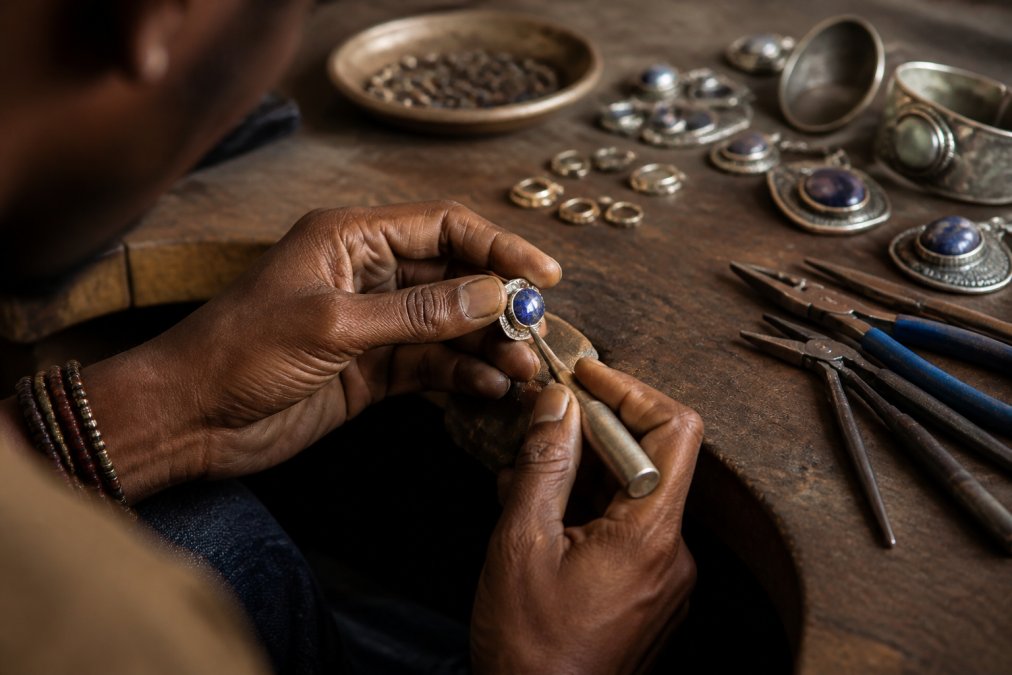
Artisans invest time in techniques that machines skip. Hand-polishing metal takes hours but creates a depth of finish that buffing alone cannot achieve (peer-reviewed research). Stone setting by hand allows for micro-adjustments that ensure the gem sits perfectly, minimizing risk of loosening over time. Soldering connections by hand means the artisan can control heat precisely, preventing damage to surrounding materials.
The attention to detail extends to invisible elements. A handmade clasp is engineered to open and close smoothly for years. Jump rings are closed properly so they won't slip. Prongs holding stones are filed smooth so they won't catch on skin or clothing. These details matter because they determine whether a piece survives daily wear or fails within months.
Material quality reflects the artisan's commitment to longevity. Handmade jewelry typically uses sterling silver, solid gold, or gold-fill rather than plating that wears away (the FTC). Stones are selected for durability and beauty rather than price. This means your artisan handmade jewelry piece actually improves with age, developing patina and character rather than showing wear.
The craftsmanship philosophy includes finishing touches. Artisans often hand-stamp details, etch patterns, or add personalized elements that transform a functional object into a meaningful artifact. These touches cannot be rushed or automated without losing the human artistry that makes them valuable.
How to Identify Authentic Artisan Jewelry
Not everything labeled "handmade" is actually handcrafted. The term has become diluted by manufacturers using it loosely, a piece assembled by hand from mass-produced components is technically "handmade" but lacks the artistry of true artisan work.
Authentic artisan handmade jewelry displays specific characteristics. First, ask about the maker. Real artisans have stories, their background, training, design philosophy, the techniques they use. If a seller cannot tell you about the maker, the piece likely came from a factory using "handmade" as marketing language.
Second, examine the piece closely. Slight variations in symmetry, minor irregularities in pattern, and visible tool marks indicate human creation. Perfect uniformity suggests machine production. Look at how stones are set, hand-set stones often sit at slightly different angles depending on the artisan's positioning, while machine-set stones are identical.
Third, verify material claims. Authentic artisans use quality materials and can explain their choices. They'll tell you whether a piece is sterling silver, solid gold, or gold-fill. They understand the difference between gemstones and glass imitations. If specifications are vague, the piece probably isn't what it claims to be.
Fourth, check sourcing transparency. Ethical artisans know where their materials come from and can discuss their sourcing practices. They understand sustainability and can explain their environmental impact. Vague claims about "ethical sourcing" without specifics are red flags.
Fifth, look for consistency in artist voice. Real artisans develop a recognizable style, their pieces share design DNA even when they vary. If a "maker's" collection looks like it came from ten different designers, it probably did, meaning it's assembled rather than created by one person.
Prideful Pieces of Africa represents authentic artisan work because each piece is shaped by a single artisan, never a machine, and the maker's identity and story are central to the product. This transparency allows you to verify authenticity directly.
Durability and Longevity of Handcrafted Pieces
Handcrafted jewelry outlasts mass-produced alternatives by design. An artisan creating a piece expects it to be worn, treasured, and passed down. This intention shapes every decision, material selection, construction method, finishing quality.
The structural integrity of artisan handmade jewelry stems from how pieces are built. Soldered joints are stronger than glued connections. Hand-finished edges are smoother and less likely to snag. Clasps engineered by someone who understands metal mechanics work reliably for decades.
Mass-produced jewelry, by contrast, is engineered for a shorter lifespan. Thinner metals reduce material costs. Glued rather than soldered components fail predictably. Plated finishes wear away within months. This isn't accidental, it's built-in obsolescence that drives repeat purchases.
Real artisan work develops character over time. Metals develop patina that many wearers find beautiful. Stones may shift slightly in their settings, but properly made settings accommodate this without failure. Worn areas develop a soft luster that polishing cannot replicate. These changes mark the piece as genuinely lived-in rather than factory-fresh.
The durability advantage compounds financially. A handcrafted piece worn daily for thirty years costs less per year than a mass-produced piece replaced every three years (peer-reviewed research). More importantly, the handmade piece becomes an heirloom, something with sentimental value that grows rather than diminishes.
Proper care extends durability further. Handmade pieces respond well to regular maintenance because artisans design them with longevity in mind. A professional cleaning and occasional re-polishing keeps a piece looking new while preserving its character. This is impossible with glued components or plated finishes that deteriorate regardless of care.
Supporting Communities and Preserving Tradition
When you purchase artisan handmade jewelry from ethical sources, you participate in cultural preservation. Many traditional jewelry-making techniques are disappearing as younger generations pursue different livelihoods. Supporting artisans creates economic incentive to continue these practices.
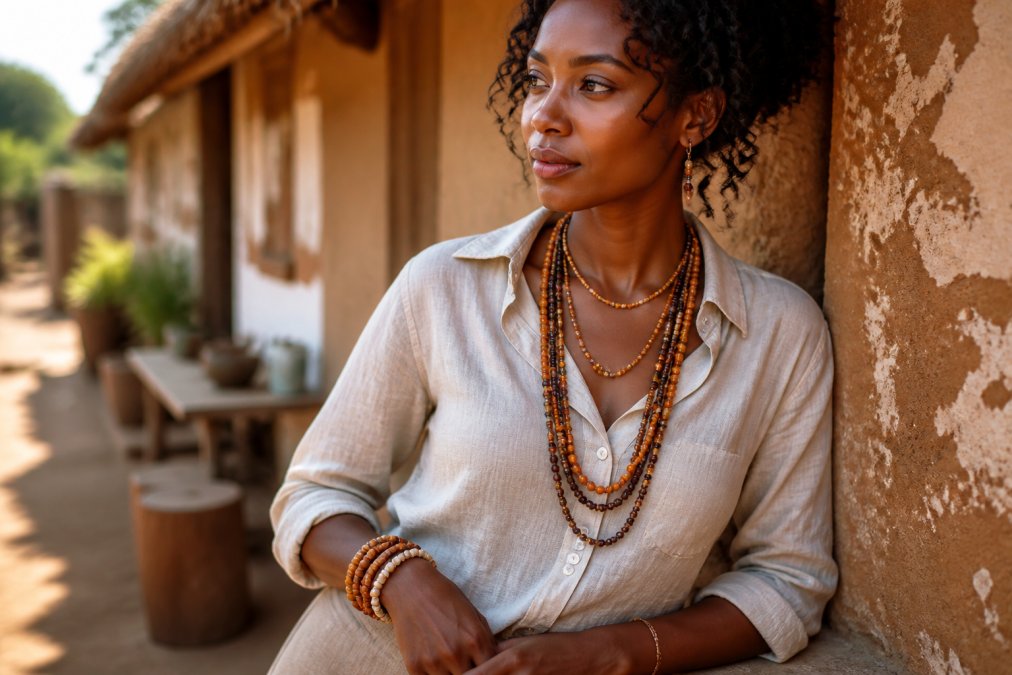
The economics of artisan work directly impact community survival. When fair trade models ensure artisans earn sustainable income, they can afford to teach their craft to the next generation. When traditional techniques command fair prices, young artisans see value in mastering them. This creates a virtuous cycle where cultural heritage becomes economically viable.
Prideful Pieces of Africa embodies this principle. Each purchase supports a family in Kenya, contributes to a child's school day, and provides a village with clean water. This isn't corporate charity, it's direct economic support that strengthens communities from within. The regenerative practices mean your purchase today invests in sustainable livelihoods tomorrow.
Artisan communities often possess knowledge that cannot be replicated elsewhere. Specific techniques, material sources, design traditions, these represent intellectual property developed over generations. When you buy from authentic artisans, you're valuing that knowledge and incentivizing its preservation.
The cultural significance of artisan handmade jewelry extends beyond economics. Each piece carries aesthetic traditions, symbolic meanings, and historical context. Wearing these pieces connects you to communities and histories you might not otherwise encounter. For people with East African heritage, authentic artisan jewelry provides tangible connection to cultural identity.
Care and Maintenance for Lasting Beauty
Proper care transforms handcrafted jewelry from a purchase into a lifelong companion. Unlike mass-produced pieces designed for disposal, artisan handmade jewelry responds beautifully to maintenance and actually improves with thoughtful care.
Regular cleaning preserves both appearance and structural integrity. For most metals, warm soapy water and a soft brush remove daily buildup without damage. For delicate pieces, consider professional cleaning annually. This prevents dirt accumulation that can hide loose settings or developing problems.
Storage matters significantly. Keep jewelry in a dry place away from direct sunlight, which can fade some stones over time. Separate pieces to prevent scratching, metals scratch each other easily. For pieces with gemstones, store away from extreme temperature changes that can cause stones to crack.
Different materials require specific care approaches. Sterling silver develops patina, which many wearers appreciate as character. If you prefer shine, gentle polishing restores luster without damaging the metal. Gold-filled pieces are more durable than plated jewelry but still benefit from occasional professional cleaning. Gemstones vary, some require special care while others are nearly indestructible.
Avoid exposing artisan handmade jewelry to harsh chemicals. Chlorine in pools, salt water, and harsh soaps can damage metals and loosen stones. Remove jewelry before swimming, showering, or cleaning. This simple habit extends lifespan dramatically.
Professional maintenance becomes worthwhile for valuable pieces. A jeweler can inspect settings, tighten loose components, and address wear before it becomes damage. For heirloom pieces, professional care ensures they remain beautiful for generations.
The investment in care reflects the value of artisan work. A piece worth caring for is a piece worth creating skillfully. This relationship between maker and wearer, where the wearer honors the maker's work through proper care, completes the artisan jewelry experience.
Conclusion
Choosing artisan handmade jewelry means choosing quality, ethics, and meaning over convenience and cost-cutting. These pieces outlast mass-produced alternatives, support communities directly, and carry the cultural significance that machine-made objects cannot replicate.
When you invest in artisan handmade jewelry from Prideful Pieces of Africa, you're purchasing pieces shaped by skilled artisans using fair wages and transparent sourcing, where each purchase supports families in Kenya, contributes to children's education, and provides clean water access to villages. This is jewelry that means something, to the maker, to the wearer, and to the community it supports. Shop with intention, and wear your purchase as the meaningful piece of history it truly is.
Frequently Asked Questions
What makes artisan handmade jewelry different from mass-produced pieces?
Artisan handmade jewelry is crafted by individual artisans using traditional techniques, meaning each piece is unique and shaped by human skill rather than machines. Mass-produced jewelry relies on factory processes that create identical copies. Handcrafted pieces show individual character, attention to detail, and structural integrity that factory items cannot replicate. Because a single artisan creates each piece, you're wearing something with genuine artistry and intention built into its design.
How do I verify that jewelry is truly artisan-made and not just mass-produced with an artisan label?
Authentic artisan jewelry shows signs of hand-craftsmanship: slight variations between pieces, visible tool marks, unique design details, and transparency about the maker's identity and process. Ask for the artisan's story, material sourcing information, and production methods. Legitimate makers provide clear documentation of fair wages, ethical sourcing, and often share photos of their workspace. Be wary of identical-looking pieces or vague claims about 'handcrafted' without specific artisan details or community information backing the claim.
Is artisan handmade jewelry more durable than store-bought jewelry?
Yes, quality artisan jewelry typically lasts longer than mass-produced alternatives. Handcrafted pieces use superior material selection and construction techniques that ensure structural integrity. Artisans often employ traditional methods that create stronger joints and settings. However, durability depends on materials and care. Handmade pieces with precious metals and quality gemstones outperform factory jewelry made with cheaper materials. Proper maintenance extends the life of any piece, but artisan craftsmanship provides a foundation for longevity that mass production rarely achieves.
Why should I buy fair trade jewelry instead of regular handmade pieces?
Fair trade jewelry guarantees that artisans receive fair wages, work in safe conditions, and benefit directly from your purchase. When you buy fair trade, your money supports families, education, clean water access, and community development in the regions where pieces are made. Regular handmade jewelry may not offer these protections. Fair trade certification provides transparency about material sourcing and production practices, giving you proof that your purchase creates meaningful social and environmental impact beyond just owning a beautiful piece.
This article was written using GrandRanker