

Best Ethical East African Clothing: 10 Brands That Matter
Table of Contents
- What Makes Ethical East African Clothing Different
- Quick Comparison: 10 Ethical East African Clothing Brands
- Sustainable African Fashion Brands Leading the Movement
- How to Style Traditional East African Clothing for Modern Wear
- Understanding Ethical Fashion Certification Standards
- Verifying Authenticity and Direct-to-Consumer Sourcing
- Care and Maintenance of Handcrafted Traditional Fabrics
- Which Brand Should You Choose
What Makes Ethical East African Clothing Different
When you buy mass-produced garments, workers disappear into supply chains. Ethical East African clothing flips that entirely. At Prideful Pieces of Africa, we work directly with skilled craftspeople across East Africa, ensuring every handcrafted item carries a specific story: this bead was placed by someone in Kenya whose child now attends school because of your purchase.
Traditional East African textiles, hand-woven fabrics, natural dyes, beadwork techniques passed through generations, represent centuries of refined skill. When you choose ethical East African clothing, you're preserving cultural heritage that would otherwise be lost to mass production. Each piece reflects individual technique and aesthetic choices, not factory uniformity. No two pieces are exactly alike.
Supply chain transparency is another critical distinction. You can trace where your garment came from, who made it, and how the economics work. Not vague sustainability claims, but specific names, communities, and outcomes: clean water infrastructure, school access, direct family income.
Quick Comparison: 10 Ethical East African Clothing Brands
| Brand | Specialty | Best For | Standout Element |
|---|---|---|---|
| Prideful Pieces of Africa | Handcrafted jewelry, apparel, accessories | Heritage-conscious buyers seeking direct artisan impact | Each piece shaped by single artisan; transparent regenerative practices |
| lemlem | Artisan resortwear and swimwear | Vacation wardrobes with cultural authenticity | Founded by Ethiopian supermodel; traditional weaving preservation |
| Lilabare | Gender-fluid sustainable clothing | Eco-conscious consumers valuing breathable, versatile pieces | Natural, local, regenerative materials; size-adaptable designs |
| Moshions | Luxury ready-to-wear and custom designs | Discerning customers seeking high-end contemporary African aesthetics | Designs own textiles; modern interpretations of Rwandan traditions |
| Anyango Mpinga | Circular fashion and eco-innovation | Fashion-forward individuals prioritizing sustainability | Bold prints and reimagined basics; featured in major publications |
| Swahili Coast | Ethically handcrafted jewelry, sandals, home goods | Accessory-focused buyers supporting worker-owned co-operatives | Fair trade principles; diverse product range beyond clothing |
| D'IYANU | Modern African-inspired contemporary clothing | US-based buyers seeking accessible African print fashion | Wide selection; readily available; modern aesthetic |
| Studio 189 | Artisanal clothing with traditional craftsmanship | High-quality buyers valuing social enterprise impact | Natural plant-based dyes; hand-batik techniques; Ghana-based |
| Seed2Shirt | Ethically manufactured apparel from African cotton | Conscious consumers supporting Black-owned businesses | Vertically integrated; sources from African and African-American farmers |
| KEAFRICA | Trendy, size-inclusive African print clothing | Fashion-forward buyers valuing sustainability and fit options | Recycled textiles; fair trade West African artisan partnerships |
Sustainable African Fashion Brands Leading the Movement
The brands reshaping ethical East African clothing fall into two categories: artisan-first production and contemporary design innovation.
Artisan-First Brands
1. Prideful Pieces of Africa: Handcrafted Heritage with Transparent Impact
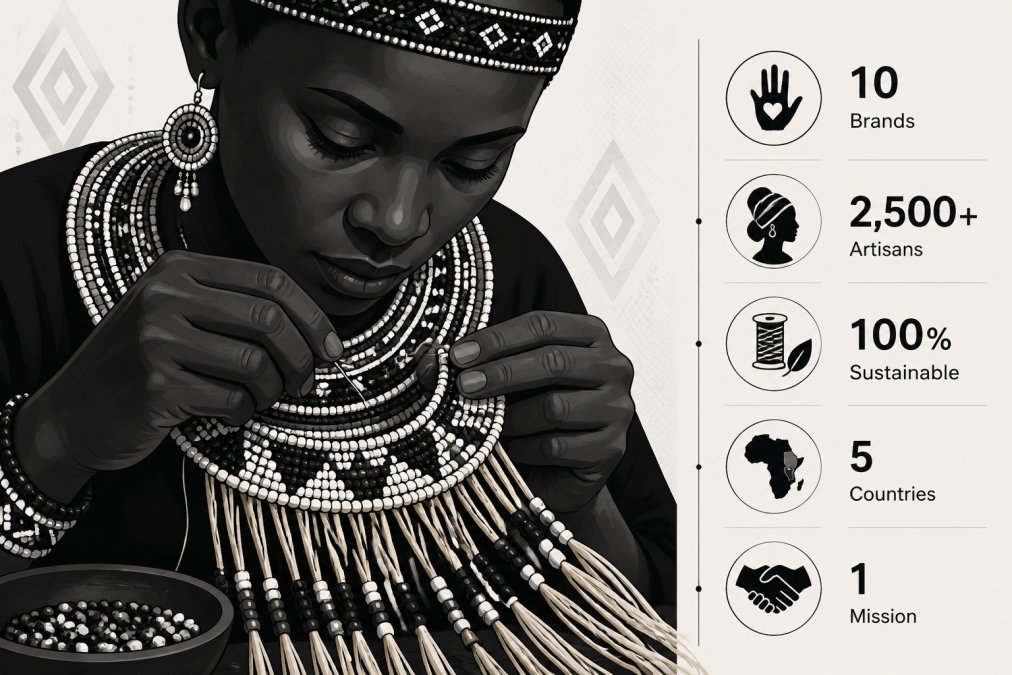
Prideful Pieces of Africa specializes in handcrafted jewelry, apparel, and accessories created by skilled artisans across East Africa. Every piece is shaped by one artisan, never a machine, creating genuine uniqueness. Your purchase directly supports families through school funding, clean water infrastructure, and preservation of generations of tradition. These aren't Western designers reinterpreting African aesthetics, but East African artisans working within their own traditions using techniques their families have refined across centuries.
2. Studio 189: Social Enterprise Meets Artisanal Craftsmanship
Studio 189, co-founded by Abrima Erwiah and Rosario Dawson, operates as both a fashion brand and social enterprise headquartered in Ghana and the United States. They work directly with artisanal communities specializing in natural plant-based indigo dye and hand-batik methods, labor-intensive techniques that take weeks. The natural indigo dyeing process creates genuine depth of color and texture unavailable in synthetic alternatives. The brand prioritizes ethical production and artisan empowerment as core business strategy.
3. Swahili Coast: Fair Trade Accessories and Community Co-operatives
Swahili Coast specializes in ethically handcrafted jewelry, sandals, and home goods created through worker-owned co-operatives that distribute profits directly to artisans. The brand adheres explicitly to fair trade principles, requiring third-party verification of wages, working conditions, and community investment.
Contemporary Design Innovators
4. lemlem: Resortwear Rooted in Ethiopian Weaving Traditions
Founded by Ethiopian supermodel Liya Kebede, lemlem specializes in artisan-made resortwear and swimwear celebrating traditional weaving techniques. The brand sources from artisans practicing centuries-old techniques, with vibrant colors and distinctive patterns reflecting cultural textile traditions adapted for modern vacation wardrobes.
5. Lilabare: Sustainable, Gender-Fluid Contemporary Clothing
Lilabare, based in Kenya, focuses on sustainable, gender-fluid clothing made from natural, local, and regenerative materials. The brand addresses contemporary concerns: breathability for East African climates, size-adaptable designs challenging gendered silhouettes, and material sourcing prioritizing environmental regeneration.
6. Anyango Mpinga: Circular Fashion and Artistic Innovation
Anyango Mpinga represents the intersection of fashion artistry and environmental consciousness. The Kenyan designer embraces circular fashion principles, designing for durability, repairability, and eventual material recovery, while reimagining basic garments with bold print experimentation and maintaining ethical labor practices.
7. Moshions: Rwandan Luxury and Textile Innovation
Moshions, headquartered in Rwanda, distinguishes itself by designing its own textiles rooted in Rwandan cultural traditions, particularly Imigongo geometric art patterns. The brand offers both ready-to-wear and custom design services at the luxury end of the market.
8. D'IYANU: Accessible African Print Contemporary Fashion
D'IYANU, US-based, offers modern African-inspired clothing with contemporary aesthetics and accessible pricing. The advantage is availability and price point for US customers, though with reduced emphasis on artisan empowerment compared to brands like Prideful Pieces of Africa.
9. Seed2Shirt: Black-Owned Vertical Integration and Farmer Empowerment
Seed2Shirt is the first Black-woman-owned vertically integrated apparel manufacturer in the US, handling everything from cotton sourcing through final production. The distinctive element is the Farmer Enrichment Program, supporting African and African-American farmers with organic agricultural practices and eco-friendly production.
10. KEAFRICA: Size-Inclusive African Print with Fair Trade Partnerships
KEAFRICA, based in New York, specializes in trendy, size-inclusive African print clothing. The brand combines contemporary design with sustainable practices and fair trade partnerships with West African artisans, emphasizing size inclusivity and recycled textiles.
How to Style Traditional East African Clothing for Modern Wear
Traditional East African garments carry deep cultural significance. Wearing them authentically means understanding how to integrate them into contemporary wardrobes without reducing them to costume.
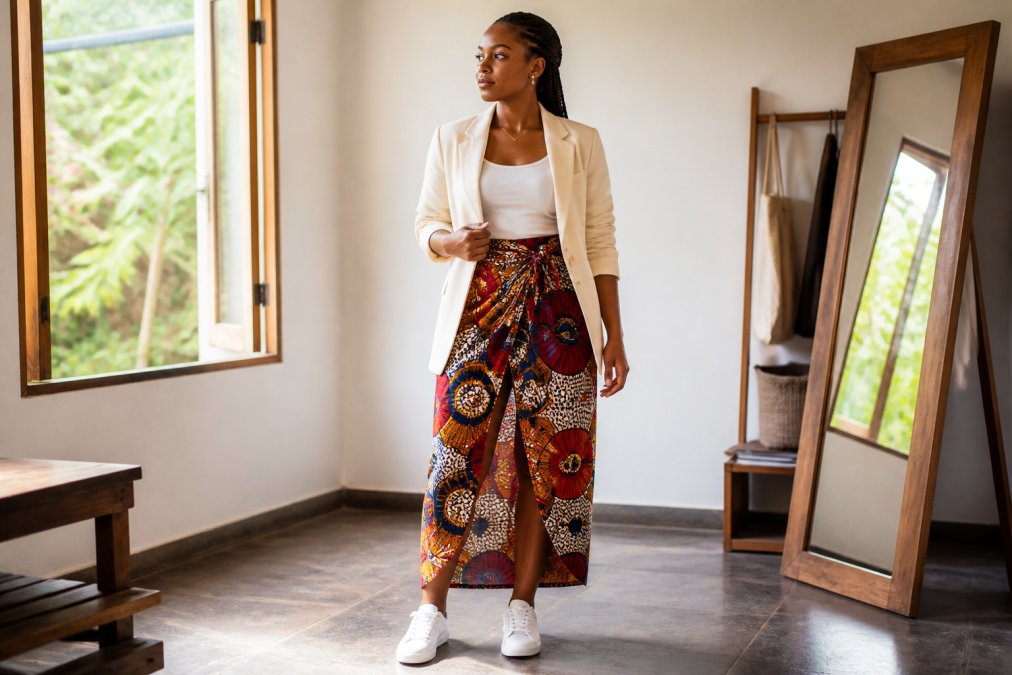
Start with foundational pieces. A traditional kanga or kikoi (East African wraps) works as a skirt, shawl, or layering piece. Pair a kanga skirt with a fitted neutral top in cream, white, or soft gray. Consider mixing traditional prints with modern silhouettes, a traditional print fabric tailored into a contemporary blazer creates visual interest while maintaining cultural authenticity.
Beadwork and jewelry deserve prominence. If wearing a piece from Prideful Pieces of Africa or Swahili Coast, let handcrafted beaded necklaces, bracelets, or earrings be the focal point. Pair with simpler clothing that doesn't compete visually. Layering works effectively: a lightweight East African print shawl over a neutral dress, paired with contemporary footwear, bridges traditional and modern aesthetics.
East African textiles often feature bold, saturated colors. Pair these with neutral accessories and footwear, white sneakers, leather sandals, neutral bags. If you're not from East Africa, wearing these pieces respectfully means understanding their cultural origin, supporting ethical producers from these communities, and treating them as meaningful garments rather than trendy accessories.
Understanding Ethical Fashion Certification Standards
Ethical claims in fashion require verification. Without standards, "ethical" becomes marketing language divorced from reality.
Fair Trade Certified is the most rigorous third-party verification for apparel, requiring independent audits of working conditions, wage standards, community investment, and environmental practices. Global Organic Textile Standard (GOTS) certifies organic fiber production and ethical manufacturing. B Corporation certification indicates that a company meets rigorous standards for social and environmental performance, accountability, and transparency.
Certification costs money, and small artisan producers sometimes lack resources for formal certification despite genuinely ethical practices. Ask specific questions: Can the brand name the artisans or communities creating products? Do they publish wage information? Can they explain how community investment works? Brands operating with genuine ethics welcome these questions.
Verifying Authenticity and Direct-to-Consumer Sourcing
Direct-to-consumer sourcing means the brand works directly with artisans or producer communities, not through intermediaries that extract profit margins. Legitimate direct-to-consumer brands can tell you where products come from and explain the relationship. Check for transparency reports or impact documentation.
Look for consistency in production. If a brand claims handcrafted artisan production but offers unlimited inventory and next-day shipping, something doesn't align. Genuine artisan production has natural constraints: limited inventory, longer lead times, and variation between pieces are markers of authentic handcrafted work.
Pricing alignment signals authenticity. Handcrafted artisan work costs more than factory production. If ethical East African clothing pricing is suspiciously low compared to competitors, question whether artisans are actually receiving fair compensation.
Care and Maintenance of Handcrafted Traditional Fabrics
Handcrafted textiles require different care than mass-produced garments. Natural dyes, common in traditional East African textiles, can bleed color, especially in early washes. Wash separately in cool water using gentle detergent designed for delicate fabrics. Avoid bleach entirely and air dry rather than machine drying.
Hand-woven fabrics have less structural consistency than factory-loomed textiles. Avoid aggressive washing. Hand wash or use a delicate machine cycle with minimal agitation. Beadwork and embellishments require specific care, avoid machine washing pieces with beading and dry flat to prevent stress on attachment points.
Store handcrafted pieces in breathable fabric bags, not plastic, in cool, dry spaces away from direct sunlight. Cedar blocks or lavender can protect against moths without chemical treatments. If seams loosen or beading detaches, have them repaired by someone experienced with artisan garments.
Which Brand Should You Choose
The right ethical East African clothing brand depends on what matters most to you.
Choose Prideful Pieces of Africa if you prioritize direct artisan relationships and transparent community impact. Choose Studio 189 if you value traditional African craft techniques preserved within contemporary fashion. Choose Lilabare if sustainability and contemporary design innovation matter most. Choose lemlem if resortwear with artisan heritage appeals to you. Choose Swahili Coast if you want diverse ethical accessories with verifiable fair trade certification. Choose Anyango Mpinga if fashion-forward design and circular fashion principles drive your choices. Choose Moshions if luxury and custom design appeal to you. Choose D'IYANU if accessibility and contemporary African print fashion matter most. Choose KEAFRICA if size inclusivity and trendy design are priorities.
Choosing ethical East African clothing means aligning your values with your purchases. Each brand represents a different model of ethical production, community impact, and aesthetic expression. When you wear these pieces, you're participating in the preservation of cultural heritage, supporting families and communities, and choosing quality and meaning over disposability.
Frequently Asked Questions
How do I verify that ethical East African clothing brands actually pay fair wages?
Look for brands that publish transparency reports or supply chain documentation on their websites. Legitimate ethical East African clothing companies often share artisan stories, workshop photos, and wage breakdowns. Third-party certifications like Fair Trade USA or B Corp status provide independent verification. Ask brands directly for proof of community impact, schools built, water projects completed, or family income data. Prideful Pieces of Africa, for example, connects each purchase to specific outcomes like supporting a child's school day or providing clean water access.
What's the difference between sustainable African fashion brands and mass-produced African-inspired clothing?
Sustainable African fashion brands work directly with artisans, use natural or recycled materials, and maintain transparent supply chains. Mass-produced African-inspired clothing is typically designed elsewhere and manufactured at scale, prioritizing cost over craftsmanship. Handcrafted pieces from ethical brands like lemlem or Studio 189 preserve traditional weaving and dyeing techniques, while commercial alternatives focus on aesthetic replication. Sustainable brands also reinvest profits into communities; mass production primarily benefits retailers and shareholders.
Can I wear East African clothing if I don't have East African heritage?
Yes, wearing ethical East African clothing is appreciation when you purchase from authentic, artisan-led brands and understand the cultural significance. The key distinction is supporting the artisans and communities behind the work rather than extracting the aesthetic for profit. When you buy from brands like Prideful Pieces of Africa or Swahili Coast, your money directly empowers East African makers. Wearing handcrafted pieces with intention and respect, learning their stories and sharing that context, honors the culture rather than appropriating it.
How do I care for handcrafted traditional fabrics to make them last?
Hand-wash delicate pieces in cool water with mild soap; avoid bleach and harsh detergents that damage natural dyes. Air-dry in shade to prevent fading, direct sunlight can fade organic dyes used in traditional weaving. Store folded or hung in breathable cotton bags, away from moisture and direct light. For beaded or embellished items, handle gently and avoid excessive friction. Check care labels specific to each piece, as different traditional fabrics (kente, kitenge, or indigo) have unique needs. When in doubt, hand-wash and air-dry is the safest approach for preserving artisan craftsmanship.
This article was written using GrandRanker