

East African Jewelry Alternatives to Soko Market
Table of Contents
- Why Shoppers Seek East African Jewelry Alternatives
- Etsy: The Global Marketplace for Independent Artisans
- NOVICA: Fair Trade Jewelry with National Geographic Backing
- Ten Thousand Villages: Nonprofit Fair Trade Since 1946
- Ethical African Jewelry Brands Worth Exploring
- Where to Buy Authentic Maasai Jewelry Online
- How to Verify Ethical Sourcing and Fair Trade Claims
- Styling Handcrafted East African Jewelry
Last Updated: August 16, 2026
Why Shoppers Seek East African Jewelry Alternatives
When hunting for authentic handcrafted East African jewelry, many shoppers explore alternatives to Soko Market for specific reasons: more variety, different price points, stronger ethical verification, or distinct aesthetics. The market has expanded dramatically from a handful of retailers to include global marketplaces, nonprofit fair trade platforms, and independent brands blending traditional craftsmanship with contemporary design.
At Prideful Pieces of Africa, we recognize that shoppers have diverse needs when selecting handcrafted jewelry honoring East African traditions. Some prioritize direct artisan relationships, others want third-party fair trade certification, and still others seek specific materials like recycled brass or 24k gold-plating. The core tension is real: how do you verify that ethical claims are genuine? The alternatives below address this through nonprofit structures, National Geographic partnerships, direct artisan relationships, or transparent pricing models.
Etsy: The Global Marketplace for Independent Artisans
Etsy functions as the largest decentralized platform for handcrafted East African jewelry, letting thousands of individual artisans list directly. You can message sellers to ask about materials, request custom pieces, or inquire about production methods. Many East African artisans use Etsy as their primary sales channel, meaning you're often buying directly from the source with minimal middlemen.
The challenge is quality control. You're responsible for vetting sellers, checking reviews, and understanding their return policies. Some sellers are genuinely independent artisans; others are resellers using stock photography. Pricing typically ranges lower than curated platforms, reflecting less overhead rather than lower quality. Etsy works best if you're willing to spend time evaluating individual sellers and asking detailed questions about their practices.
NOVICA: Fair Trade Jewelry with National Geographic Backing
NOVICA partners with over 2,000 master artisans globally and applies consistent fair trade standards across all listings. Each product includes detailed information about the maker: their background, techniques, materials sourced, and how the purchase supports their community.
Fair trade certification on NOVICA means artisans receive guaranteed minimum wages regardless of sales volume. The platform handles quality assurance, ensuring products meet baseline standards before listing. The trade-off is price, NOVICA jewelry typically costs more than Etsy equivalents because fair trade premiums and curation infrastructure add cost. For shoppers prioritizing verified fair trade practices, NOVICA's National Geographic partnership offers credibility.
Ten Thousand Villages: Nonprofit Fair Trade Since 1946
Ten Thousand Villages operates as a nonprofit organization with nearly 80 years of direct relationships with artisan groups in over 35 countries, including multiple East African regions. The nonprofit model means all profits reinvest into artisan support rather than shareholder returns.
The organization actively works to keep traditional skills alive by creating sustainable markets for artisans practicing ancestral techniques. Many pieces use recycled or upcycled materials, addressing environmental concerns alongside social impact. For shoppers seeking East African jewelry alternatives with a nonprofit structure and heritage preservation focus, Ten Thousand Villages delivers credibility through longevity and organizational mission.
Ethical African Jewelry Brands Worth Exploring
Beyond marketplaces, standalone brands offer curated collections with distinct aesthetic and ethical philosophies, controlling their entire supply chains for specific design visions and transparent sourcing narratives.
AYAM Africa: Modern Designs with Traditional Roots
AYAM Africa positions itself at the intersection of contemporary fashion and traditional African adornment. All pieces are handmade using brass and beads sourced with attention to fair trade principles. The brand doesn't present jewelry as historical artifacts; instead, it shows how East African design languages evolve and remain relevant in contemporary wardrobes.
Yenáé: Luxury Gold-Plated Collections
Yenáé uses 18-carat real gold-plating over recycled brass and sterling silver bases, creating high-fashion pieces with sustainable materials. Each piece arrives with a story card explaining its inspiration and cultural roots. Pricing reflects the luxury positioning and materials used, appealing to shoppers willing to invest in heirloom jewelry.
Positively Africana: Profits for Women Entrepreneurs
Positively Africana operates with an explicit social mission: 25% of all profits support women entrepreneurs in the Congo. The brand sources handmade jewelry from artisans across the African continent using traditional techniques and materials like hammered brass, copper, silver, cowrie shells, sisal, and beads. The profit-sharing model creates tangible impact, every purchase directly funds women's economic empowerment.
Where to Buy Authentic Maasai Jewelry Online
Maasai jewelry represents a specific cultural tradition within East African craftsmanship. Finding authentic pieces online requires understanding the difference between genuine artisan work and mass-produced imitations marketed as "Maasai-inspired."
The Afropolitan Shop: Direct from Kenyan Artisans
The Afropolitan Shop sources handmade jewelry directly from Kenyan artisans, with a particular focus on traditional designs honoring Maasai and other regional aesthetics. Rather than sourcing through intermediaries, the shop works directly with Kenyan makers, ensuring meaningful revenue reaches artisans. Shipping is available worldwide.
The Little Market: Women-Led Fair Trade
The Little Market is a nonprofit organization focused on helping women artisans globally, partnering with artisan groups in 25 countries, including East African regions. The nonprofit structure means profits reinvest into artisan support. The organization emphasizes women's economic empowerment, making it particularly relevant for shoppers prioritizing gender equity.
Out of Africa Market: Affordable Entry Point
Out of Africa Market offers a broad selection of African jewelry, including beaded bracelets and wooden pendant necklaces, alongside other African goods. This accessibility makes it an excellent entry point for shoppers new to handcrafted East African jewelry or those seeking budget-friendly options. The trade-off is less detailed information about artisan stories and fair trade practices.
How to Verify Ethical Sourcing and Fair Trade Claims
Start by looking for third-party certification. Fair Trade USA, Fair Trade International, and similar organizations provide independent verification. If a platform displays certification logos, verify them through the certifying body's website.
Examine supply chain transparency. Legitimate platforms provide specific information: Which artisans made this piece? Where are they located? What materials were sourced? How much of the purchase price reaches the maker? Vague statements like "supports local communities" are warning signs. Specific details demonstrate transparency.
Look for pricing breakdowns when available. Some platforms explain how your purchase is allocated, materials, labor, platform fees, shipping. Check for impact reporting. Legitimate organizations publish annual reports or impact statements showing how purchases translated to community benefits. Quantified impact claims are harder to fake than generic statements.
Styling Handcrafted East African Jewelry
Handcrafted East African jewelry works best when treated as statement pieces rather than subtle accents. The bold designs, sculptural forms, and rich cultural narratives demand visibility.
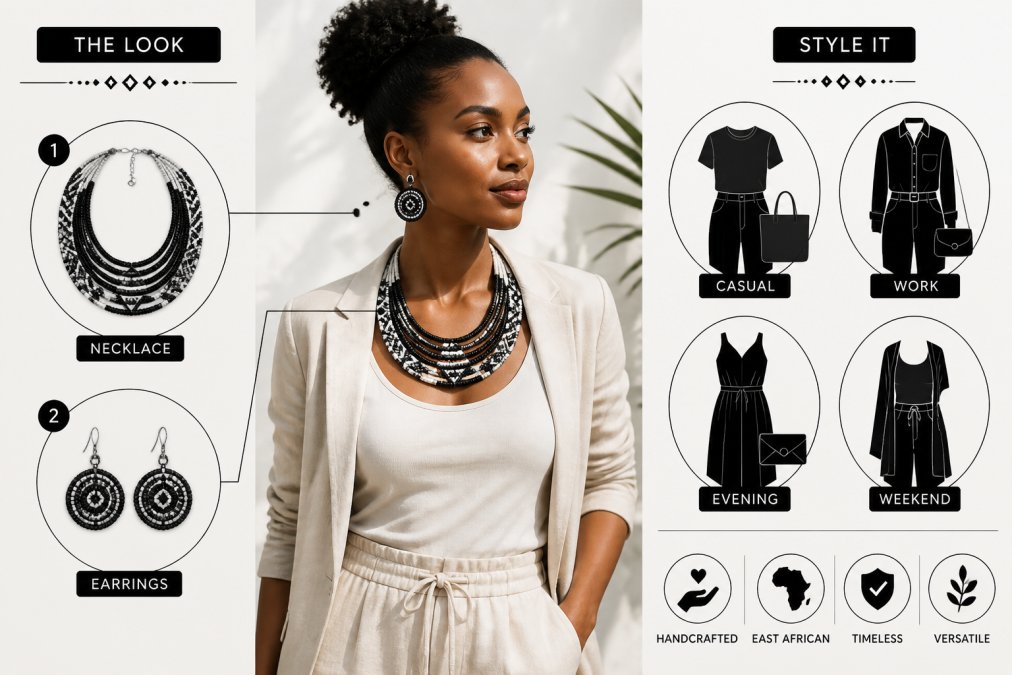
Start with a neutral foundation. Solid-colored clothing in whites, blacks, taupes, or denim allows handcrafted pieces to become the focal point. Choose one dominant piece per outfit, if wearing a sculptural statement necklace, keep earrings minimal or skip them entirely.
Consider material and color relationships. Brass and copper pieces warm against cool-toned clothing. Gold-plated pieces work across color palettes but particularly complement warm neutrals. Beaded pieces with specific color schemes can anchor outfit color stories.
Layering works when pieces have different scales. A delicate beaded bracelet pairs well with a chunky statement necklace because they occupy different visual spaces. Avoid competing scales; multiple large pieces typically clash rather than complement.
Most importantly, wear these pieces with intentionality. Handcrafted East African jewelry carries cultural significance and artisan stories. When you style thoughtfully, you're honoring that meaning rather than treating the pieces as casual accessories.
The alternatives to Soko Market span from massive global marketplaces to mission-driven nonprofits to luxury independent brands. Your choice depends on what matters most: selection and price, verified fair trade certification, nonprofit structure, direct artisan relationships, or luxury materials and design.
Prideful Pieces of Africa combines several of these elements, handcrafted pieces created by skilled East African artisans, transparent sourcing practices, and direct community impact through education and clean water initiatives. Each purchase supports a family in Kenya and preserves generations of tradition and cultural identity. Explore our collection and discover jewelry that carries meaning beyond aesthetics.
Frequently Asked Questions
How can I verify that an East African jewelry marketplace actually supports artisans fairly?
Look for transparent supply chain information, artist profiles with names and stories, and third-party certifications like Fair Trade USA. Reputable platforms publish impact reports showing where profits go. Ask sellers directly about their sourcing, authentic artisans and fair trade organizations answer these questions. Check customer reviews mentioning artisan support and community impact, not just product quality. Marketplaces like NOVICA partner with National Geographic, and nonprofits like Ten Thousand Villages publish annual reports on artisan wages and community benefits.
What's the price difference between ethical African jewelry brands and mass-produced alternatives?
Handcrafted, ethically sourced pieces typically cost more because artisans receive fair wages, materials are sustainably sourced, and no two items are identical. A statement necklace from an ethical brand might range from $30 to $150+, while mass-produced versions cost $10-$30. The higher price reflects actual labor costs, not just a markup for the 'ethical' label. You're paying for transparency, cultural authenticity, and measurable community impact, education funding, clean water access, and family income in artisan communities.
Can I wear East African jewelry if I'm not from East Africa?
Yes, wearing handcrafted East African jewelry is a form of cultural appreciation when you buy from authentic artisans and understand the pieces' significance. The key difference is intention: purchasing directly from artisans or fair trade organizations supports communities and preserves traditional craftsmanship. Many customers from diverse backgrounds wear these pieces as meaningful heirlooms and expressions of global identity. What matters is supporting the artisans behind the work and respecting the cultural heritage these pieces represent, not your own ancestry.
What materials should I look for in authentic East African jewelry?
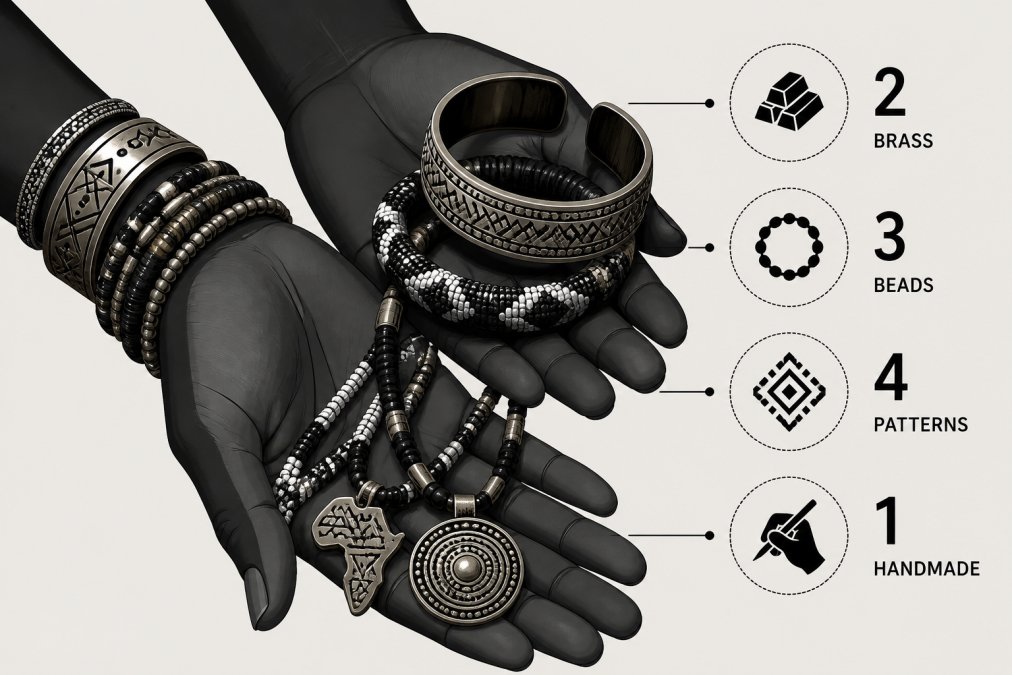
Traditional East African jewelry uses brass, copper, beads, cowrie shells, sisal, and bone. Modern ethical brands also use recycled brass and 18-karat gold-plated finishes for durability and sustainability. Handcrafted pieces often feature sculptural designs and bold statement styles that reflect tribal art traditions. When shopping, check product descriptions for material specifics, authentic pieces list exact materials and crafting techniques. Avoid vague descriptions like 'African-inspired' without artisan attribution; genuine marketplaces name the artisans or regions where pieces originate.
This article was written using GrandRanker