

Ethical Fashion Brands Supporting Clean Water: 10 Top Picks
Table of Contents
- Why Ethical Fashion Brands Supporting Clean Water Matter
- How We Selected These Ethical Fashion Brands
- Quick Comparison Table: Ethical Fashion Brands at a Glance
- 1. Prideful Pieces of Africa: Artisan-Made Impact
- 2. Patagonia: Environmental Activism and Water Protection
- 3. United By Blue: Ocean Cleanup with Every Purchase
- 4. Girlfriend Collective: Recycled Materials and Water-Smart Dyeing
- 5. prAna: Clean Water Partnerships and Organic Cotton Clothing
Last Updated: July 29, 2026
Why Ethical Fashion Brands Supporting Clean Water Matter
When Prideful Pieces of Africa began sourcing handcrafted pieces from East African artisans, the team discovered something critical: access to clean water directly impacts production capacity and community health. The fashion industry consumes approximately 79 trillion liters of water annually. Dyeing a single cotton shirt can require up to 2,700 liters of water. When you choose ethical fashion brands supporting clean water, you're supporting operations that have redesigned these processes to minimize consumption and pollution. At Prideful Pieces of Africa, every purchase directly contributes to clean water access in the regions where artisans live and work.
Most fashion brands claim sustainability while continuing practices that poison water sources. This guide examines brands that have made measurable commitments to water conservation and community health.
Water-Specific Impact Metrics in Fashion
Understanding water impact requires moving beyond vague claims. According to World Water Council water usage data, the fashion industry accounts for roughly 10% of global water consumption. What matters is whether brands measure and reduce their specific water footprint.
Ethical fashion brands supporting clean water track metrics like liters saved per garment, wastewater treatment rates, and community water access improvements. Girlfriend Collective documents that their recycled polyester production saves water compared to virgin polyester. prAna partners with Planet Water Foundation, which measures impact through AquaTower Systems installed in communities. These are trackable outcomes, not guesses.
Brands that matter most publish water impact reports specifying gallons their dyeing processes consume, wastewater treatment rates, and people who gained access to clean water through their initiatives. This transparency separates genuine commitment from greenwashing.
Fashion Industry Water Pollution and Solutions
Textile dyeing ranks as the second-largest water polluter globally, releasing heavy metals and synthetic chemicals directly into waterways. United Nations Environment Programme textile water pollution report documents how this pollution devastates downstream communities.
Solutions exist. BlueSign certified materials eliminate hazardous substances during production. TENCEL lyocell fibers require significantly less water and chemicals than conventional processes. Ethical fashion brands supporting clean water implement these solutions as standard practice.
Real differentiation comes from brands that fund water restoration projects alongside production improvements. United By Blue removes one pound of trash from oceans and waterways per product sold. Outerknown saved over 1 million pounds of water through recycled materials while partnering with Ocean Conservancy for cleanup initiatives.
How We Selected These Ethical Fashion Brands
Our selection criteria prioritized measurable water impact over marketing language. We examined supply chain transparency, third-party certifications, community partnerships, and documented outcomes. Brands needed to demonstrate either water-saving production methods, direct investment in clean water access, or both.
We excluded brands that claimed sustainability without specifics. We required brands to publish impact reports, partner with verifiable organizations, or maintain certifications from recognized standards bodies.
Evaluation Criteria and Transparency Standards
Fair trade certification matters. We prioritized brands with GOTS (Global Organic Textile Standard), SA8000, or Fair Trade USA certifications. Supply chain mapping separates genuine ethical brands from poseurs. The best brands publish factory names, locations, and worker conditions.
Water-specific initiatives were weighted heavily. We verified claims against published reports and partner organization documentation rather than accepting marketing copy at face value.
Quick Comparison Table: Ethical Fashion Brands at a Glance
| Brand | Primary Water Initiative | Best For | Certification Focus |
|---|---|---|---|
| Prideful Pieces of Africa | Clean water access in artisan communities | Handcrafted jewelry & apparel | Fair wages & transparent sourcing |
| Patagonia | 1% for the Planet + stream restoration | Outdoor enthusiasts | Environmental activism |
| United By Blue | Ocean cleanup (1 lb per product) | Casual apparel & accessories | Certified B Corp |
| Girlfriend Collective | Recycled materials + eco-dye processes | Activewear | SA8000 certified factories |
| prAna | Planet Water Foundation partnership | Yoga & climbing wear | Fair trade & organic cotton |
| tentree | Tree planting + kelp forest restoration | Casual wear | TENCEL & recycled materials |
| Outerknown | 1M+ pounds water saved + ocean cleanup | Surf & casual wear | 95% sustainable fibers |
| Conscious Step | Direct water access funding | Socks & basics | Fair trade organic cotton |
| UNIQLO | Charity: water partnerships | Affordable everyday wear | Plastic reduction initiatives |
| The Classic T-Shirt Company | Water For People partnership | Premium organic basics | 1% for the planet model |
1. Prideful Pieces of Africa: Artisan-Made Impact
Prideful Pieces of Africa stands apart because every handcrafted piece directly supports clean water access in East African communities. Each item is shaped by a single artisan, ensuring fair wages flow directly to families. When you purchase from Prideful Pieces of Africa, your money supports employment, education, healthcare, and clean water systems in the regions where artisans live.
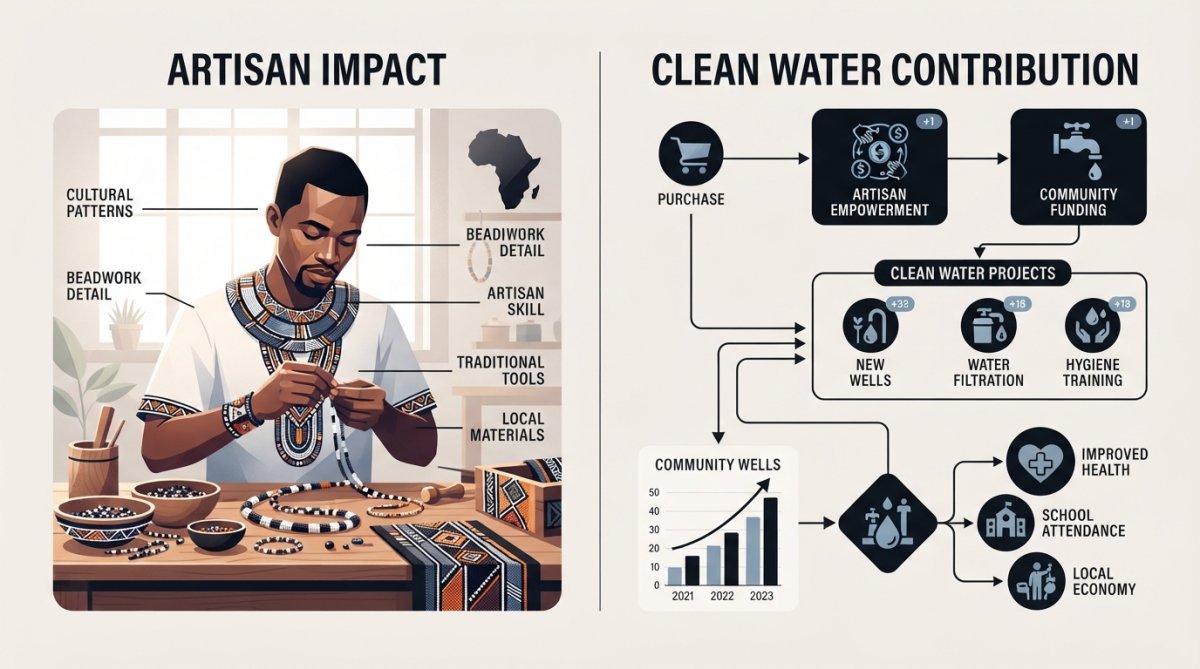
The brand's model reverses the extractive pattern of conventional fashion. Rather than artisans competing for factory jobs with minimal wages, Prideful Pieces of Africa establishes transparent pricing that ensures fair compensation while maintaining cultural practices. Purchases contribute directly to village clean water projects, not distant charities.
2. Patagonia: Environmental Activism and Water Protection
Patagonia donates 1% of all sales to environmental organizations through "1% for the Planet." They partner with organizations like Ocean Blue Project to fund stream restoration and protect wild rivers, directly addressing water pollution and ecosystem health. Patagonia funds the World Trout Initiative, which protects vulnerable salmon species and their habitats.
Patagonia's product durability amplifies their environmental impact. A Patagonia jacket worn for a decade uses far less water per wear than a cheaper alternative replaced annually. This longevity philosophy aligns with circular economy principles that reduce overall resource consumption.
The company maintains transparent supply chain documentation and supports fair labor practices across their manufacturing network.
3. United By Blue: Ocean Cleanup with Every Purchase
United By Blue operates on a simple, measurable model: remove one pound of trash from oceans and waterways for every product sold. Since 2010, they've removed over 4 million pounds of trash. This direct intervention addresses water pollution at the source.
The brand organizes community cleanup events across the United States, creating opportunities for customers to participate directly in water restoration. United By Blue prioritizes organic cotton and recycled polyester, reducing demand for virgin materials that consume enormous quantities of water during production.
Certified as a B Corp, United By Blue undergoes rigorous third-party audits confirming their environmental and social performance. Their water cleanup claims are verified by independent auditors, not self-reported marketing.
4. Girlfriend Collective: Recycled Materials and Water-Smart Dyeing
Girlfriend Collective tackles water consumption from two angles: material sourcing and production processes. Their activewear is made from 80-100% recycled materials, primarily post-consumer plastic water bottles and recycled fishing nets. This approach diverts waste from landfills while reducing demand for virgin materials that require intensive water consumption.
Girlfriend Collective uses OEKO-certified dyes and treats wastewater before release. Their process consumes substantially less water and eliminates the heavy metal and chemical pollution associated with traditional dyeing. Their ReGirlfriend program allows customers to send back worn leggings for recycling into new products, creating a closed-loop system that reduces textile waste.
Girlfriend Collective's factory holds SA8000 certification, confirming fair wages and safe working conditions. Their packaging is 100% recycled and recyclable. The brand proves that ethical manufacturing and sustainable materials don't require premium pricing, with leggings starting around $78.
5. prAna: Clean Water Partnerships and Organic Cotton Clothing
prAna's partnership with Planet Water Foundation directly funds AquaTower Systems, innovative water purification technology that provides safe drinking water to impoverished communities. Rather than donating a vague percentage, prAna customers know their purchases fund specific infrastructure in real communities.
The brand prioritizes organic cotton, recycled polyester, and recycled wool. Organic cotton eliminates synthetic pesticide pollution that contaminates water supplies in conventional cotton-growing regions. Cotton production typically uses 16% of global pesticides despite occupying only 2.5% of cultivated land, with those chemicals leaching into groundwater and surface water.
prAna's manufacturing focuses on reducing water usage and pollution in dyeing and finishing processes. The brand's emphasis on fair trade practices ensures that water-saving improvements don't come at the expense of worker welfare.
6. tentree: Reforestation and Watershed Protection
tentree plants ten trees for every item purchased, contributing to ecosystem regeneration and carbon capture. The brand partners with BC Coastal Kelp to restore kelp forests, which improves water quality and creates marine habitat. Healthy kelp forests filter water and support biodiversity essential to ocean ecosystems.
The brand uses TENCEL lyocell, a regenerated fiber that requires significantly less water and chemicals than conventional viscose or polyester. TENCEL production is closed-loop, meaning solvents are recycled rather than released into waterways.
tentree's Circularity program allows customers to return worn clothing for recycling. This closed-loop model reduces both water consumption and textile waste. Customers receive a prepaid shipping label, making returns convenient and removing friction that typically prevents people from recycling clothing.
7. Outerknown: Water Savings Through Material Innovation
Outerknown has saved over 1 million pounds of water through their use of recycled materials. Their S.E.A. Jeans specifically address denim's notorious water consumption. Conventional jeans require approximately 2,000 gallons of water per pair. Outerknown's recycled denim process reduces this dramatically.
The brand uses 95% organic, recycled, or regenerated fibers across their product line as their baseline standard. Outerknown partners with Ocean Conservancy for cause marketing initiatives focused on ocean cleanup. Founded by professional surfer Kelly Slater, the brand brings authentic ocean advocacy to their operations. Their commitment to becoming fully circular by 2030 and reducing water usage by an additional 50% demonstrates long-term strategic thinking.
Outerknown's jeans typically start around $138, reflecting genuine material improvements and manufacturing practices rather than marketing premium. Product durability justifies the price: jeans designed to last years rather than seasons reduce overall water consumption per wear.
8. Conscious Step: Direct Water Access Through Sock Sales
Conscious Step creates a direct cause-and-effect model: for each pair of water-themed socks sold, they donate to provide one person with four years of access to safe water. This transparent metric removes ambiguity about impact.
The brand uses GOTS-certified organic cotton and maintains Fair Trade practices throughout their supply chain. Organic cotton eliminates synthetic pesticide pollution, and Fair Trade certification ensures workers receive fair compensation and safe conditions.
Conscious Step's limited product range allows them to maintain rigorous standards across their entire catalog. Pricing starts around $14.95 per pair, making water-impact purchases accessible to budget-conscious consumers. Ethical fashion shouldn't be exclusively available to wealthy shoppers.
9. UNIQLO: Accessible Fashion with Charity: Water Partnerships
UNIQLO partners with charity: water to fund clean water projects globally. The brand donates 5 cents from each purchased paper shopping bag to charity: water, funding safe drinking water access in countries like Cambodia, Madagascar, and Uganda. This partnership reaches millions of customers, generating substantial funding for water infrastructure.
The brand eliminated plastic shopping bags in stores since November 2019, reducing plastic waste while funding water projects through paper bag sales. This operational change demonstrates that sustainability improvements don't require sacrificing customer convenience.
UNIQLO's accessibility matters for ethical fashion adoption. T-shirts starting around $15 and jeans around $40 make sustainable fashion available to price-conscious shoppers. Ethical fashion shouldn't be exclusive to wealthy consumers.
10. The Classic T-Shirt Company: Premium Basics with Water Advocacy
The Classic T-Shirt Company pledges 1% of equity, profits, and time to causes including Water For People. This multi-pronged commitment means their water advocacy extends beyond financial donations to include employee time and strategic direction.
Their products use 100% GOTS-certified organic cotton, eliminating synthetic pesticide pollution that contaminates water supplies. Manufacturing occurs in the United States, allowing transparent oversight of labor practices and environmental standards.
The brand's limited product range enables rigorous quality control and supply chain transparency. Pricing starts around $60 per t-shirt, reflecting the genuine value of GOTS certification, domestic manufacturing, and water advocacy commitment. Product durability means customers wear each shirt more frequently, reducing overall water consumption per wear.
Ethical fashion brands supporting clean water represent a fundamental shift in how we think about clothing consumption. The brands featured here prove that durability, fair labor, sustainable materials, and water conservation can coexist profitably. When you choose ethical fashion brands supporting clean water, you're investing in community resilience, environmental protection, and the preservation of cultural traditions. Visit Prideful Pieces of Africa to see how your purchase creates meaningful impact.
Frequently Asked Questions
How do I verify that ethical fashion brands are actually supporting clean water initiatives?
Look for third-party certifications like BlueSign, GOTS, and SA8000, plus published impact reports. Brands like prAna partner with organizations like Planet Water Foundation, while Conscious Step specifies that water-themed sock purchases fund four years of safe water access. Request transparency reports directly from brands, legitimate ethical fashion brands supporting clean water provide detailed breakdowns of where donations go and track measurable outcomes through partner NGOs.
What's the difference between sustainable fashion brands and ethical fashion brands supporting clean water?
Sustainable fashion brands focus on reducing environmental impact through materials and manufacturing. Ethical fashion brands supporting clean water go further by actively funding water access, conservation, or pollution reduction projects. For example, tentree plants trees for ecosystem health, but prAna specifically partners with Planet Water Foundation to build water systems. True ethical fashion brands supporting clean water integrate water-specific commitments into their business model, not just as a side initiative.
Are organic cotton clothing options actually better for water conservation than recycled materials?
Both have distinct water benefits. Organic cotton uses 91% less water than conventional cotton and eliminates toxic pesticides that contaminate water supplies. Recycled materials like those used by Girlfriend Collective divert plastic from oceans and reduce manufacturing water demand. The best choice depends on your priority: organic cotton for agricultural water protection, recycled polyester for ocean preservation. Many ethical fashion brands combine both to maximize water impact across supply chains.
What certifications should I look for in ethical fashion brands supporting clean water?
Key certifications include GOTS (Global Organic Textile Standard) for organic fiber integrity, BlueSign for water-safe dyeing processes, SA8000 for ethical labor practices, and Fair Trade certification for supply chain transparency. Brands like Girlfriend Collective hold SA8000 and OEKO certifications, ensuring wastewater treatment before release. Verify certifications directly on brand websites rather than relying on marketing claims, legitimate ethical fashion brands supporting clean water display third-party verification prominently.
How can I find budget-friendly ethical fashion brands that support clean water?
Conscious Step offers affordable entry at ~$14.95 per pair for fair trade, organic socks that fund water access. UNIQLO partners with charity: water through a 5-cent donation per paper bag purchase, making it accessible for everyday shoppers. United By Blue and tentree offer mid-range pricing (~$30-$70) with direct environmental impact. Focus on brands with clear per-item impact metrics rather than percentage-of-profits models, this transparency ensures your purchase directly supports clean water initiatives.
This article was written using GrandRanker