

Ethical Handmade Accessories for Global Citizens: A Complete Guide
Table of Contents
- What Are Ethical Handmade Accessories for Global Citizens?
- Why Ethical Handmade Accessories Matter: Understanding Global Citizenship
- Fair Trade Jewelry: Supporting Artisans Through Transparent Sourcing
- Sustainable Accessories Brands: Quality Over Mass Production
- Artisan-Made Bags and Travel Gear: Handwoven Excellence
- Conscious Consumerism Accessories: Making the Right Choice
- Cultural Appreciation vs. Appropriation: Wearing Ethical Accessories Authentically
-
Top Ethical Handmade Accessory Brands: Where to Shop with Confidence
- 1. Prideful Pieces of Africa: East African Artisan Excellence
- 2. Ten Thousand Villages: Global Fair Trade Leadership
- 3. Terra Thread: Organic Cotton Sustainability and Social Impact
- 4. SLATE + SALT: Recycled Materials and Bohemian Artistry
- 5. SERRV International: Hand-Woven Scarves and Sustainable Textiles
- 6. Unshattered: Upcycled Handbags with Purpose
- 7. ETHICGOODS: Dignified Employment Through Handmade Jewelry
Last Updated: July 27, 2026
What Are Ethical Handmade Accessories for Global Citizens?
Ethical handmade accessories represent a statement about values and consciousness. At Prideful Pieces of Africa, we believe that every purchase tells a story of artisan empowerment, cultural preservation, and transparent supply chains. These accessories are meticulously crafted by skilled artisans who receive fair wages, work in safe conditions, and maintain creative control. Each piece is shaped by human hands, never a machine, ensuring no two items are exactly alike.
When you choose ethical handmade accessories, you're investing in a family's education, contributing to clean water initiatives, and preserving cultural traditions. According to Fair Trade USA's impact research, fair trade practices generate meaningful economic and social outcomes for artisan communities worldwide. What distinguishes these pieces is their commitment to regenerative practices and supply chain transparency, you can trace where materials came from, how artisans were compensated, and what community benefits your purchase creates.
Why Ethical Handmade Accessories Matter: Understanding Global Citizenship
Global citizenship extends beyond holding a passport, it's about recognizing our interconnectedness and taking responsibility for how our choices affect people and ecosystems worldwide. Ethical handmade accessories embody this philosophy by creating direct relationships between makers and wearers across continents.
The Connection Between Conscious Consumerism and Community Impact
Conscious consumerism is a fundamental shift in how thoughtful consumers approach purchasing decisions. Research from Nielsen's global sustainability report indicates that consumers increasingly prioritize ethical sourcing and environmental responsibility. When you buy from Prideful Pieces of Africa, your money flows directly to artisans who use it to send children to school, access healthcare, and improve living conditions. A single purchase might fund a week of school fees for a child in Kenya. As artisan communities gain economic stability, they invest in their neighborhoods, supporting local businesses and preserving cultural traditions.
Fair Trade Jewelry: Supporting Artisans Through Transparent Sourcing
Fair trade jewelry challenges exploitative practices in conventional production. In traditional supply chains, middlemen capture most value while artisans receive minimal compensation. Fair trade certification inverts this model by establishing minimum prices, guaranteeing safe working conditions, and ensuring artisans have a voice in pricing decisions.
How Fair Trade Certification Protects Artisans
Fair trade certification operates through rigorous third-party verification. Organizations audit production facilities, verify wage payments, and confirm workers have organized representation. Certified producers commit to specific standards: artisans earn living wages, work in safe environments with reasonable hours, and retain the right to unionize. Fair trade organizations often reinvest profits into community development projects, education programs, clean water systems, and women's economic empowerment.
For artisan-crafted jewelry, fair trade means your bracelet or necklace carries the name and story of its maker. You might learn that a particular piece was created by a mother of three in Nairobi who used the income to open a small business.
Sustainable Accessories Brands: Quality Over Mass Production
The sustainable accessories movement rejects fast-fashion's disposable model. Instead, sustainable brands prioritize longevity, regenerative materials, and ethical labor practices. These accessories are designed to last decades, not seasons, becoming heirlooms rather than landfill.
Regenerative Practices and Supply Chain Transparency
Regenerative practices actively improve the systems they touch. In sustainable accessories production, this means using organic materials that restore soil health, supporting artisans in ways that strengthen communities, and designing products with end-of-life management in mind. Terra Thread exemplifies this approach, using GOTS-certified organic cotton canvas and committing a portion of every sale to hunger relief initiatives. Supply chain transparency is the backbone of sustainable brands. You should be able to trace your purchase from raw material source through production to delivery. Brands like SERRV International publish detailed information about their artisan partners, the techniques they use, and the communities they support.
| Brand | Key Sustainability Feature | Community Impact | Material Focus |
|---|---|---|---|
| Terra Thread | Organic cotton certification | Hunger relief in US | GOTS-certified organic cotton |
| SERRV International | Hand-weaving & natural dyes | Global artisan support | Silk, cotton, alpaca |
| SLATE + SALT | Recycled materials | Fair trade artisans | Upcycled & recycled materials |
| Unshattered | Upcycled fabrics | Women in recovery | Reclaimed & upcycled textiles |
Artisan-Made Bags and Travel Gear: Handwoven Excellence
Artisan-made bags represent some of the most durable and beautiful accessories available. Handwoven bags employ traditional techniques passed down through generations. Each weave pattern tells a story about cultural identity and regional heritage. When you purchase a handwoven bag, you're preserving these traditions while supporting artisans who might otherwise abandon their craft for lower-paying factory work.
The durability of artisan-made bags far exceeds mass-produced alternatives. A properly made handwoven tote bag can serve you for twenty years or more. This longevity makes them economical despite higher initial cost, you're not replacing them annually like fast-fashion bags.
Conscious Consumerism Accessories: Making the Right Choice
Conscious consumerism requires informed decision-making. Before purchasing ethical handmade accessories, consider several factors that separate genuine impact from marketing claims.
Price-to-Impact Ratio: Understanding What You're Really Paying For
Many consumers hesitate at the price point of ethical handmade accessories compared to mass-market alternatives. A $60 handmade bracelet isn't expensive because of middleman markups; it's expensive because the artisan earned a fair wage, materials were sourced ethically, and the brand maintains transparent operations.
When evaluating price-to-impact ratio, ask specific questions: What percentage goes directly to the artisan? Are materials sourced from suppliers who maintain fair labor practices? Does the brand publish impact reports? Consider the cost per year of wear. A $40 fast-fashion bag you replace annually costs $40/year. A $120 handmade bag lasting ten years costs $12/year while generating exponentially more positive impact.
End-of-Life Product Management and Circular Economy Thinking
True sustainability requires thinking beyond the purchase moment to the product's entire lifecycle. Responsible brands design products with end-of-life management in mind. Some offer take-back programs where you can return worn items for recycling or repurposing. Unshattered creates bags from upcycled materials and designs them for durability. When a bag reaches the end of its life, materials can be returned to the production cycle for new pieces, eliminating waste while supporting women in recovery through employment.
Cultural Appreciation vs. Appropriation: Wearing Ethical Accessories Authentically
A critical conversation surrounds wearing accessories from cultures not your own. The difference between appreciation and appropriation lies in respect, knowledge, and supporting the actual artisans creating these pieces. Ethical handmade accessories from Prideful Pieces of Africa facilitate genuine cultural appreciation rather than appropriation.
When you purchase directly from artisans who created pieces rooted in their cultural traditions, you're supporting cultural preservation. Appreciation happens when you purchase directly from artisans, learn the cultural significance of what you're wearing, and respect the traditions embedded in each piece. Wearing a handmade bracelet from a Kenyan artisan becomes an act of appreciation, you're wearing their story, supporting their family, and honoring their cultural heritage.
Top Ethical Handmade Accessory Brands: Where to Shop with Confidence
The following brands represent some of the most transparent and impactful ethical accessory makers available.
1. Prideful Pieces of Africa: East African Artisan Excellence
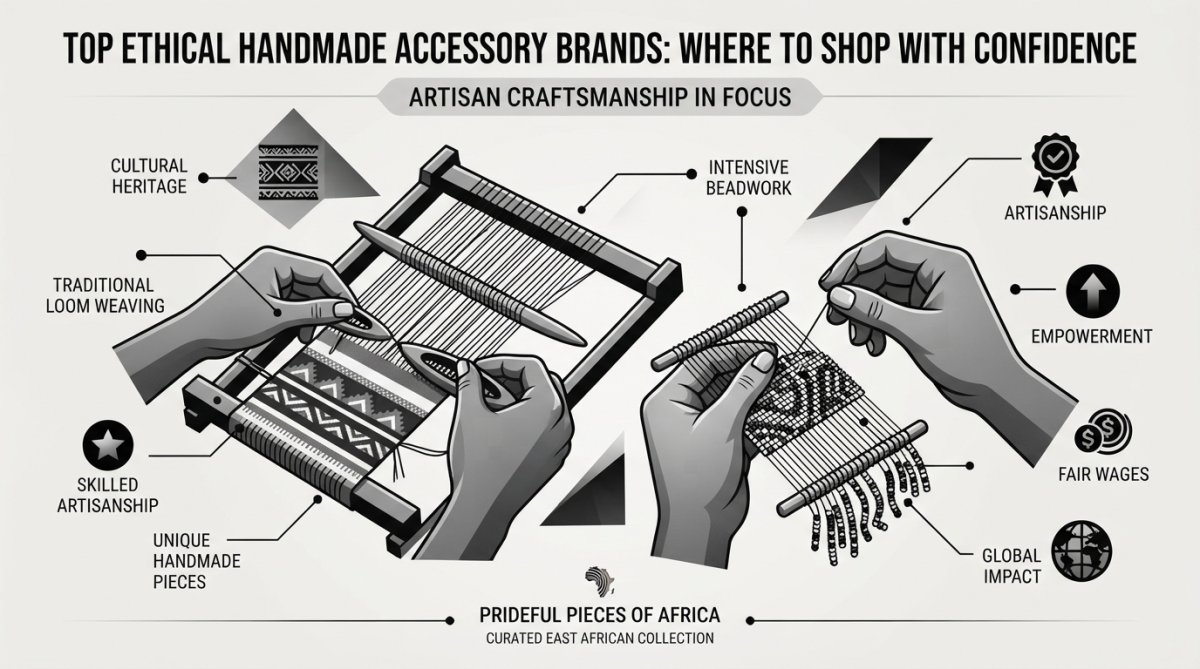
Prideful Pieces of Africa stands at the forefront of ethical handmade accessories for global citizens, offering a curated collection celebrating East African cultural identity and artisan mastery. Every piece is meticulously handcrafted by skilled artisans, with no two items identical. The brand's commitment to regenerative practices means your purchase directly supports families in Kenya through fair wages, education funding, and clean water initiatives.
What distinguishes Prideful Pieces of Africa is complete transparency about impact. When you purchase a piece, you're investing in specific community outcomes. Real customers testify to the meaning embedded in these pieces. Zanele K. from Cape Town noted, "I've never owned anything that carries this much meaning. It's become an heirloom for my daughter." Amara K. from Lagos emphasized, "More than jewelry, a wearable piece of culture. I feel the love in every bead."
The artisan-crafted approach means each piece is shaped by a single artisan's hands, never a machine. This preserves generations of tradition while ensuring economic benefits flow directly to makers.
2. Ten Thousand Villages: Global Fair Trade Leadership
Ten Thousand Villages operates as a non-profit fair trade organization with four decades of experience connecting artisans worldwide with conscious consumers. Their accessory collection spans handmade jewelry, scarves, bags, and home decor sourced from artisan communities across Africa, Asia, Latin America, and beyond. Every product meets rigorous standards for worker treatment, wage fairness, and environmental responsibility.
Each product comes with information about the artisan community that created it. This educational component transforms shopping into cultural exchange. Their non-profit status ensures maximum impact, they reinvest profits into expanded artisan programs and community development initiatives.
3. Terra Thread: Organic Cotton Sustainability and Social Impact
Terra Thread creates sustainable bags and accessories from GOTS-certified organic cotton canvas, with an explicit mission to tackle hunger in the United States. Every purchase contributes to meal programs for food-insecure communities. The product line includes backpacks, duffel bags, tote bags, and makeup pouches designed for durability and everyday use. The organic cotton canvas develops character with age, becoming more beautiful as it's used.
4. SLATE + SALT: Recycled Materials and Bohemian Artistry
SLATE + SALT specializes in fair trade jewelry and accessories crafted by artisans globally, with emphasis on pieces made from recycled materials. Their collection includes bohemian bracelets, silver cuffs, and statement necklaces combining artistic vision with environmental responsibility. Each piece is one-of-a-kind, reflecting the unique artistic choices of its maker.
5. SERRV International: Hand-Woven Scarves and Sustainable Textiles
SERRV International operates as a non-profit fair trade organization offering handmade scarves and accessories from artisans worldwide. Their collection emphasizes traditional crafting techniques including hand-weaving, block printing, and screen printing using natural dyes. The organization publishes detailed information about their artisan partners and the techniques they employ, enabling conscious consumers to understand the cultural and technical significance of what they're purchasing.
6. Unshattered: Upcycled Handbags with Purpose
Unshattered creates premium handbags and accessories from upcycled and reclaimed fabrics while employing women in recovery from addiction. This dual social mission, environmental sustainability through upcycling combined with employment and purpose for vulnerable populations, makes Unshattered distinctive. Their product line includes small bags, errand bags, and zip pouches handcrafted to an 18-point quality checklist. Because designs depend on available upcycled materials, each piece is unique while contributing to waste reduction.
7. ETHICGOODS: Dignified Employment Through Handmade Jewelry
ETHICGOODS offers ethically handmade jewelry and accessories crafted by artisans globally, with explicit focus on creating dignified employment opportunities. Their collection includes bracelets, necklaces, earrings, and rings designed and produced by artisans who receive fair compensation and maintain creative autonomy. ETHICGOODS' transparency about pricing and production ensures conscious consumers understand how their purchases create impact.
Making Your Ethical Accessory Choices Count
Selecting ethical handmade accessories requires intentionality. Prioritize brands that provide specific information about artisan compensation, community impact, and material sourcing. Ask questions before purchasing. Legitimate ethical brands welcome transparency requests and can provide detailed answers about where your money goes and what outcomes it creates.
Consider building a relationship with a brand rather than making one-off purchases. Remember that price reflects value in ethical accessory purchasing. Higher costs compared to mass-market alternatives compensate artisans fairly, support sustainable practices, and fund community development. Your ethical handmade accessories become heirlooms, pieces you pass to the next generation while knowing the story of their creation and the positive impact they generated.
Ethical handmade accessories for global citizens represent a direct path toward aligning your consumption with your values. By choosing pieces from Prideful Pieces of Africa and similar transparent brands, you support artisans directly, preserve cultural traditions, and contribute to community development initiatives. Each handcrafted piece carries the story of its maker and the impact your purchase creates, supporting families in Kenya, funding children's education, and providing villages with clean water. When you wear ethical accessories, you wear your commitment to a more just and sustainable world. Explore Prideful Pieces of Africa's collection and discover how your next accessory purchase can create meaningful, measurable impact across continents.
Frequently Asked Questions
What makes ethical handmade accessories different from mass-produced jewelry?
Ethical handmade accessories are crafted by skilled artisans using fair trade practices, transparent sourcing, and sustainable materials. Unlike mass production, each piece is unique, created with intention, and directly supports artisan communities. You're investing in quality that lasts, cultural preservation, and measurable social impact, not just a product.
How can I verify that sustainable accessories brands actually pay fair wages?
Look for brands with supply chain transparency metrics, published reports, artisan stories, and third-party fair trade certifications (Fair Trade USA, World Fair Trade Organization). Legitimate brands disclose where products are made, artisan names, and how profits are distributed. Prideful Pieces of Africa, for example, shows how purchases support families, education, and clean water initiatives. Ask brands directly for proof before purchasing.
Are ethical handmade accessories really worth the higher price?
Yes. The price-to-impact ratio reflects fair wages, sustainable materials, artisan skill, and durability. A handwoven bag lasts years; mass-produced alternatives wear out quickly. You're paying for quality, ethics, and community empowerment. Each purchase directly supports a family's education and essential needs. While higher upfront, ethical pieces become heirlooms with lasting meaning and environmental benefit.
Is wearing East African artisan accessories cultural appropriation if I'm not from that culture?
Wearing ethical handmade accessories from other cultures is appreciation when done respectfully. Support authentic artisans, learn the story behind pieces, and honor their cultural significance. Avoid stereotypical styling or treating cultural items as costumes. By purchasing from brands like Prideful Pieces of Africa, you're directly empowering creators and preserving traditions, that's genuine cultural exchange, not appropriation.
What should I look for in conscious consumerism accessories to ensure real sustainability?
Prioritize artisan-made items with transparent sourcing, fair trade certification, and sustainable materials (organic cotton, recycled fabrics, vegetable-tanned leather). Check for supply chain transparency metrics, end-of-life product management practices, and verified social impact. Brands should clearly explain how purchases support communities. Avoid greenwashing, authentic ethical brands provide detailed stories, artisan names, and measurable outcomes.
This article was written using GrandRanker