

Ethical Shopping Guide for Cultural Accessories
Table of Contents
- What Defines Ethical Shopping for Cultural Accessories
- Fair Trade Cultural Jewelry: Understanding Labor Rights and Transparency
- Sustainable Artisan Accessories: Materials That Matter
- Certifications and Standards: What to Look For
- Cultural Heritage Preservation Through Shopping: Authenticity vs. Appropriation
- Conscious Consumerism Accessories: Building Your Sustainable Wardrobe
- How to Identify Ethical Brands: A Practical Framework
- Budget-Friendly Ethical Shopping for Cultural Accessories
Ethical Shopping Guide for Cultural Accessories
Last Updated: July 26, 2026
Every purchase tells a story, and that story should honor both the artisans who create and the traditions they preserve. This guide explores how to make purchasing decisions that genuinely support communities, preserve cultural heritage, and reject greenwashing. You'll learn how to identify authentic ethical brands, understand fair trade certifications, and build a meaningful wardrobe that reflects your values.
What Defines Ethical Shopping for Cultural Accessories
Many accessories marketed as "ethical" rely on vague language about "artisans" and "communities" without revealing supply chain details, labor conditions, or environmental impact. True ethical shopping distinguishes between companies that genuinely support artisans and those that simply use cultural aesthetics as a marketing tool.
Ethical sourcing means fair compensation reflecting skill and time invested, transparent supply chains traceable from maker to wearer, environmental practices that don't harm artisan communities, and respect for cultural ownership. When a company sources from East African artisans, ethical practice means those artisans control their designs, receive a percentage of retail profit, and have their stories told authentically.
The difference between ethical sourcing and greenwashing
Greenwashing exploits consumer guilt without changing actual practices. A company might claim "sustainable materials" while using conventionally-grown cotton treated with pesticides, or highlight one artisan's story while hiding that 90% of inventory comes from factories. True ethical sourcing requires transparency: where materials come from, how much artisans are paid, what percentage of your purchase reaches them, and how environmental impact is measured.
Research from the Fair Trade Federation's ethical standards guide shows that certified fair trade products ensure minimum price floors and direct relationships between producers and buyers, preventing the price-cutting that forces artisans to choose between quality and survival.
Why cultural accessories demand different standards
Cultural accessories carry meaning, history, and identity. A beaded necklace from Kenya represents generations of technique and cultural significance. Ethical standards must go beyond labor and environmental concerns to include cultural respect and authenticity. When you buy a cultural accessory, you're entering into a relationship with a specific tradition. Ethical shopping means understanding whether you're supporting the continuation of that tradition or participating in its commodification.
Fair Trade Cultural Jewelry: Understanding Labor Rights and Transparency
Fair trade cultural jewelry operates on a principle that artisans should earn enough to live with dignity, compensation reflecting skill level, allowing investment in tools and materials, and providing family stability.
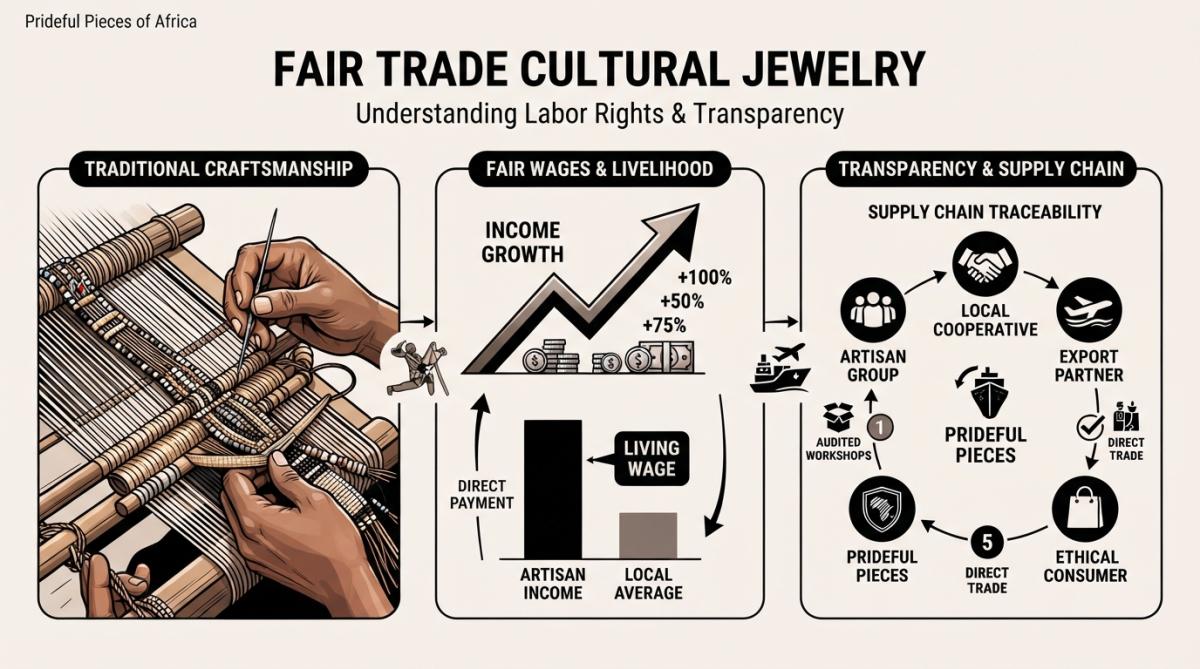
How fair wages translate to artisan communities
Fair wages create cascading benefits extending beyond individual makers. When an artisan earns genuinely fair compensation, that income supports education, healthcare, and community investment. Conventional jewelry supply chains involve multiple middlemen, each taking a cut. An artisan might receive 10-15% of retail price. Fair trade models eliminate middlemen through direct relationships. Prideful Pieces of Africa ensures artisans receive fair wages while maintaining transparency about where money goes.
Supply chain transparency and traceability standards
Transparency means you can follow your purchase from maker to wearer. You should identify the artisan or cooperative that made your piece, understand what materials were used, and know what environmental practices were followed. Some brands use blockchain technology to create immutable records. Others use simpler approaches: unique identifiers linking to maker profiles and impact reports. Prideful Pieces of Africa emphasizes artisan stories, each handcrafted piece is shaped by a single artisan, never a machine, and you can learn who created your specific item.
Sustainable Artisan Accessories: Materials That Matter
The materials in cultural accessories carry environmental weight. A sustainably-made beaded necklace uses materials grown or harvested responsibly, processed with minimal chemical pollution, and will biodegrade or be recyclable at end-of-life.
Eco-friendly materials in traditional craftsmanship
Traditional artisan techniques often work naturally with sustainable materials: beads made from bone, wood, or seeds are biodegradable; leather from ethical tanneries uses vegetable tanning instead of heavy metals; plant-based dyes replace synthetic chemicals. Many artisans face pressure to switch to cheaper synthetic materials. Ethical brands resist this pressure by paying enough that artisans can afford quality materials. When you buy from Prideful Pieces of Africa, you're supporting artisans who choose traditional materials and techniques because they have economic stability to do so.
Upcycled and regenerative practices in artisan production
Upcycling transforms materials destined for waste into wearable art. An artisan might collect discarded leather scraps from shoe factories or use reclaimed beads from old jewelry. Regenerative practices aim to leave environments better than they started, growing plants used in dyes in ways that build soil and sequester carbon. These methods cost more upfront but create environmental and health benefits that justify the price.
Certifications and Standards: What to Look For
Third-party certifications create accountability by establishing standards, conducting audits, and revoking certification if standards aren't met.
B-Corp certification, GOTS, and sweatshop-free verification
B-Corp certification means a company has met rigorous standards for social and environmental performance, accountability, and transparency. GOTS (Global Organic Textile Standard) certifies that textile materials were grown without synthetic pesticides, processed without heavy metal dyes, and produced under fair labor conditions. Sweatshop-free verification from organizations like the Fair Trade Federation audits supply chains and certifies that workers earn fair wages, work reasonable hours, and have safe conditions.
The limitation is that certifications are expensive; small artisan collectives might not afford certification even if they meet standards. Certifications should be one signal among many, not the only signal.
How to verify claims and avoid false certifications
False certifications are surprisingly common. A brand might display a logo that looks official but doesn't correspond to any real certification body. To verify certifications, go directly to the certifying organization's website and search their certified brand directory. B-Corp maintains a searchable database. Fair Trade Federation lists all certified members. If you can't find a brand in the official directory, the certification is fake.
Ask brands for specific documentation: audit reports, certification numbers, or direct links to verifications. Legitimate brands provide this willingly.
Cultural Heritage Preservation Through Shopping: Authenticity vs. Appropriation
The line between appreciation and appropriation in cultural accessories matters. Appreciation means learning about a tradition, respecting its significance, and supporting the people who created it. Appropriation means taking cultural elements out of context and profiting from them while erasing the people they came from.
Distinguishing cultural appreciation from appropriation
Cultural appreciation starts with understanding what you're wearing. A Maasai beaded necklace carries meaning about identity, status, and community within Maasai culture. Appreciation means learning that meaning and buying from actual Maasai artisans, not from a Western company using Maasai aesthetics while profiting from them. When you buy from Prideful Pieces of Africa, you're supporting East African artisans directly, ensuring that cultural traditions remain economically viable for the people who created them.
Supporting genuine artisans and preserving traditions
Genuine support requires economic incentive for younger generations to learn traditional skills. When traditional jewelry-making can't compete with factory wages, young people leave and skills die. Fair-wage artisan work makes traditional skills economically viable. Ethical brands don't impose designs or demand mass production. They work with artisans as creative partners, allowing innovation while maintaining cultural connection. Prideful Pieces of Africa emphasizes that each piece is shaped by a single artisan, never a machine, preserving individual creativity.
Conscious Consumerism Accessories: Building Your Sustainable Wardrobe
Building a sustainable accessory wardrobe means shifting from quantity to quality, from trends to timelessness, and from consumption to curation.
Quality over quantity: capsule wardrobes and minimalism
A capsule accessory collection includes a few versatile necklaces, scarves, belts, and bracelets that coordinate with your clothing and last for years. One $80 handcrafted necklace worn 200 times costs $0.40 per wear. A $15 mass-produced necklace worn 5 times costs $3 per wear. Over time, quality is cheaper. Building a capsule collection means choosing timeless pieces over trends.
End-of-life disposal and circular economy principles
Most accessories end up in landfills when they break or go out of style. Ethical accessories address this through design and materials supporting circular economy principles, products designed to be reused, repaired, or safely biodegraded rather than discarded. Biodegradable materials like bone, wood, natural fibers, and vegetable-tanned leather break down safely in landfills. High-quality pieces are designed to be repaired rather than replaced. Some ethical brands offer take-back programs where you can return worn pieces for repair, refurbishment, or recycling.
How to Identify Ethical Brands: A Practical Framework
A practical framework helps you evaluate claims, spot red flags, and identify genuine ethical brands worth supporting.
| Red Flag | What It Means | Better Alternative |
|---|---|---|
| Vague sourcing language | "Handmade by artisans" without location or names | Brands that name specific artisans, communities, or cooperatives |
| No pricing breakdown | You don't know what percentage reaches artisans | Brands that publish what artisans earn per piece |
| Unverifiable certifications | Claims that don't appear in official certification databases | Certified brands you can verify on official websites |
| Stock photography | Generic images instead of actual artisans and workshops | Brands that feature real photos of actual makers |
| Trend-focused marketing | Emphasizing "this season's colors" and "limited editions" | Brands focused on timeless design and long-term value |
| Cheap pricing | Handcrafted pieces priced below production cost | Brands with pricing that reflects actual material and labor costs |
Red flags: pricing, vague sourcing, and marketing language
Suspiciously cheap pricing is the most obvious red flag. If a handcrafted beaded necklace costs $12, someone is being exploited. Vague sourcing language hides exploitation. Phrases like "ethically sourced," "fair trade," and "artisan-made" sound good but mean nothing without specifics. Marketing language focused on trends and "limited editions" suggests the brand prioritizes sales over sustainability.
Green flags: transparency reports, artisan stories, and verifiable impact
Brands that publish transparency reports, detailed information about material sourcing, artisan earnings, and environmental practices, demonstrate accountability. Artisan stories that go beyond generic inspiration are a good sign. Real stories include names, photos, and specific details. Verifiable impact means the brand can prove the outcomes they claim.
Brands like Prideful Pieces of Africa demonstrate these green flags: handcrafted pieces shaped by individual artisans, transparent sourcing from East African communities, and specific impact claims tied to education and clean water access.
Budget-Friendly Ethical Shopping for Cultural Accessories
Ethical doesn't have to mean expensive. Strategic shopping approaches make ethical accessories accessible across price points.
Investing in fewer, higher-quality pieces
The most budget-friendly approach is buying fewer pieces and choosing quality. One $60 necklace worn 100 times costs $0.60 per wear. Over time, quality is cheaper. This approach requires patience and intentionality. Instead of buying several accessories per season, you buy one or two pieces per year. This naturally leads to better ethical outcomes because you're less likely to make impulse purchases from unethical brands.
Second-hand and slow fashion alternatives
Second-hand accessories reduce environmental impact and cost less than new pieces. Vintage beaded necklaces, antique scarves, and pre-owned jewelry carry history while keeping items out of landfills. Thrift stores, vintage boutiques, and online resale platforms offer affordable options. Slow fashion alternatives include renting accessories for special occasions, swapping pieces with friends, or joining accessory-sharing communities.
Building an ethical shopping guide for cultural accessories means understanding that your purchases shape markets. When you buy from Prideful Pieces of Africa, you're supporting a family in Kenya, contributing to a child's education, and preserving generations of tradition and cultural identity. Each unique, artisan-made item carries the skill and intention of the person who created it, ensuring that no two pieces are exactly alike. Start with one piece that resonates with you, learn its story, and let that connection guide your future purchases.
Frequently Asked Questions
What makes a cultural accessory truly ethical in the ethical shopping guide for cultural accessories?
An ethical cultural accessory is handcrafted by skilled artisans paid fair wages, produced with supply chain transparency, made from sustainable or eco-friendly materials, and created with genuine respect for cultural traditions. Look for brands that provide traceability information, document artisan communities, and avoid greenwashing. Ethical pieces support labor rights, preserve cultural heritage, and demonstrate verifiable social responsibility throughout production.
How can I identify greenwashing when shopping for sustainable artisan accessories?
Greenwashing occurs when brands use vague terms like 'eco-friendly' or 'ethical' without substantiation. Red flags include: no supply chain information, unclear artisan details, generic 'fair trade' claims without certification, and pricing inconsistent with actual production costs. Verify claims by checking for B-Corp certification, GOTS standards, or third-party audits. Genuine brands provide specific artisan names, community impact reports, and transparent pricing breakdowns.
What certifications should I look for when buying ethical cultural jewelry?
Key certifications include B-Corp (verified social and environmental performance), GOTS (Global Organic Textile Standard for natural fibers), Fair Trade certification, and sweatshop-free verification. However, certifications alone don't guarantee ethics, research the certifying body and verify it's legitimate. The strongest brands combine certifications with transparent supply chain documentation, artisan stories, and independently verifiable impact metrics like education funding or clean water access.
Is the higher price of ethical cultural accessories worth the cost?
Yes, when you understand where money goes. Ethical pricing reflects fair wages for artisans, sustainable material sourcing, small-batch production, and transparent operations. Unlike fast fashion, each handcrafted piece is unique and durable, creating long-term value. The price also directly supports artisan families, education, and community infrastructure. Conscious consumerism means buying fewer, higher-quality pieces that last, reducing your overall spending and environmental footprint compared to frequent fast-fashion purchases.
How do I avoid cultural appropriation when wearing ethical cultural accessories?
Purchase from authentic artisans within the culture, not Western companies using African or other cultural aesthetics. Learn the piece's history and meaning before wearing it. Respect the context, don't wear sacred or ceremonial items casually. Support brands that prioritize cultural heritage preservation and employ artisans from that community. When you buy directly from ethical brands led by or employing cultural artisans, you're engaging in cultural appreciation, not appropriation.
What happens to cultural accessories at the end of their life?
Ethical brands encourage circular economy practices: repair services, take-back programs, or upcycling options. Natural materials like beads, leather, or textiles can biodegrade or be repurposed. Ask brands about end-of-life disposal before purchasing. Quality handcrafted pieces often become heirlooms, extending their lifespan significantly. Conscious consumerism means choosing pieces you'll treasure long-term, reducing waste. Some ethical brands accept returns for responsible recycling or donate damaged pieces to artisan communities for material reuse.
How can I verify that fair trade cultural jewelry actually supports artisan communities?
Request impact reports or transparency documentation from brands, legitimate companies provide specifics like number of artisans employed, average wages, and community projects funded. Look for third-party audits or certifications confirming fair wages. Some brands share artisan names, photos, and stories on their website. Ask direct questions: Where do artisans live? What percentage of your purchase supports education or water access? Brands with nothing to hide provide detailed, verifiable answers and encourage customer inquiries.
This article was written using GrandRanker