

Fair Trade Artisan Jewelry Benefits: Impact & Empowerment
Table of Contents
- What Fair Trade Artisan Jewelry Actually Means
- Economic Empowerment: Real Wages and Financial Stability
- How to Identify Fair Trade Jewelry and Verify Authenticity
- Benefits of Supporting Women Artisans in Global Communities
- Environmental Sustainability and Responsible Materials
- Preserving Cultural Heritage and Handcrafted Traditions
- Why Fair Trade Jewelry Matters: Long-Term Community Impact
- Conclusion
Last Updated: August 14, 2026
What Fair Trade Artisan Jewelry Actually Means
Fair trade artisan jewelry is handcrafted by individual artisans who receive fair compensation for their work, with transparent sourcing that ensures workers earn livable wages and operate in safe conditions. Unlike mass-produced factory pieces, each item is shaped by a single person, never a machine.
At Prideful Pieces of Africa, this commitment goes beyond marketing. Each piece tells a story of economic empowerment, cultural preservation, and genuine human connection.
Fair trade certification means verifiable supply chain transparency, documented wages that meet or exceed local living standards, safe working conditions, and environmental responsibility through recycled metals or responsibly sourced materials. Certification bodies like the Fair Trade Federation set rigorous standards that separate genuine fair trade from greenwashing.
What distinguishes fair trade artisan jewelry is accountability. You're supporting a system where artisans have documented protections, consistent income, and direct relationships with buyers, not just trusting marketing language.
Economic Empowerment: Real Wages and Financial Stability
Fair trade artisan jewelry directly funds economic empowerment for the artisans who create it. A livable wage means artisans can afford rent, food, healthcare, and education without multiple jobs, allowing them to perfect their skills and build sustainable businesses rather than chase quick sales.
This economic impact extends beyond individual artisans. Fair wages create local purchasing power as artisans spend earnings in their communities on food, education, healthcare, and housing. This spending circulates money through local economies, supporting other small businesses and creating multiplier effects across entire regions.
Many East African artisans historically faced barriers to economic independence: limited market access, exploitative middlemen taking most profits, and pressure to sell at artificially low prices. Fair trade models eliminate these barriers by connecting artisans directly to buyers who value their work at its true worth.
Financial stability also enables artisans to make meaningful choices: raise children rather than send them to work, invest in tools and materials that improve their craft, and participate as full economic participants in their communities.
How to Identify Fair Trade Jewelry and Verify Authenticity
Not all jewelry claiming to be "ethical" or "fair trade" meets rigorous standards. Third-party certification from organizations like the Fair Trade Federation, Fair Trade USA, or Fairmined is the most reliable indicator. These certifications require documented audits, verified wages, and ongoing compliance monitoring.
Examine transparency about sourcing: Which artisans or cooperatives created the piece? What region are they from? How are wages determined? Companies that can't answer these questions clearly are hiding something.
Ask about supply chain visibility. Can the company trace the journey from artisan to your hands? Fair trade companies often include artisan names, photos, and stories with purchases, proof of direct relationships and accountability.
Fair trade artisan jewelry costs more than mass-produced pieces because artisans are paid fairly and materials are responsibly sourced. If a piece claiming fair trade is suspiciously cheap, it likely isn't.
Research the company itself. Fair trade businesses are transparent about their mission, publish impact reports, and engage openly about practices. Companies secretive about sourcing, wages, or working conditions are not practicing genuine fair trade.
When evaluating fair trade artisan jewelry, look for: third-party certification, named artisans or cooperatives, documented wage information, material sourcing details, impact reports, and direct relationships between the company and makers. Prideful Pieces of Africa exemplifies this transparency by connecting each piece to the artisans who created it.
| Verification Method | What to Look For | Why It Matters |
|---|---|---|
| Third-party certification | Fair Trade Federation, Fair Trade USA, or Fairmined labels | Independent audits verify wages and conditions |
| Artisan transparency | Named makers, photos, stories, location details | Proves direct relationships and accountability |
| Supply chain documentation | Traceable sourcing from artisan to buyer | Shows no exploitative middlemen involved |
| Wage information | Documented wages that meet local living standards | Confirms artisans earn fair compensation |
| Impact reporting | Published reports on community benefits | Demonstrates measurable social impact |
| Material sourcing | Recycled metals or responsibly sourced gemstones | Ensures environmental responsibility |
Benefits of Supporting Women Artisans in Global Communities
Women artisans in global communities face distinct barriers that fair trade jewelry directly addresses. Supporting women artisans through fair trade purchases recognizes their exceptional skill and invests in gender equality and economic independence.
When women earn fair wages through jewelry craft, they gain economic power within their families and communities. In many cultures, women's economic independence shifts family dynamics fundamentally. Women who control their income make decisions about their children's education, healthcare, and futures. They can leave exploitative situations and invest in their own skills and businesses.
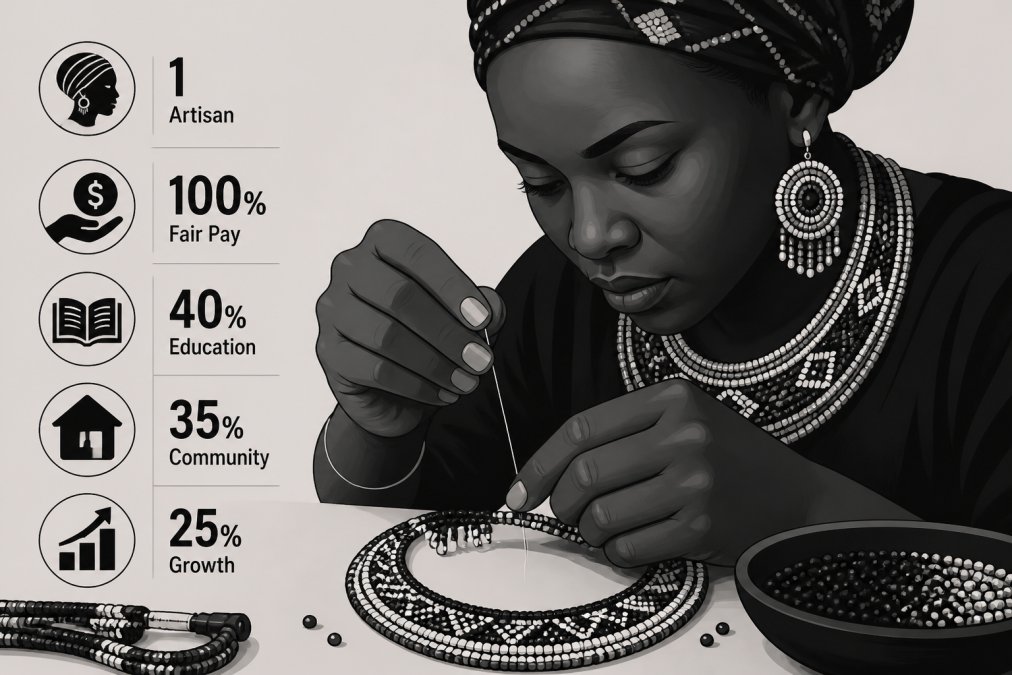
Fair trade artisan jewelry creates pathways for women to enter skilled trades traditionally dominated by men. When jewelry-making becomes a viable income source, women choose it as a career, building female representation in craft industries. Young women see other women earning respect and income through their skills, opening possibilities that didn't exist before.
Research on gender and development shows that women prioritize children's education, family health, and community infrastructure. Fair trade wages for women artisans therefore create multiplier effects across entire communities.
Gender equality in fair trade jewelry also means safe working conditions specifically designed for women, including harassment-free workplaces, maternity protections, childcare support, and flexibility that acknowledges caregiving responsibilities.
Environmental Sustainability and Responsible Materials
Fair trade artisan jewelry addresses environmental impact through material choices and production methods that conventional jewelry ignores. Recycled metals eliminate mining's environmental footprint, a process that devastates ecosystems, consumes enormous water resources, and often displaces communities.
Lab-grown diamonds and ethically sourced gemstones replace conflict diamonds and stones mined under exploitative conditions. Lab-grown diamonds are chemically identical to mined diamonds but require no mining operations, ecosystem disruption, or human rights violations.
Handcrafted jewelry by definition uses no industrial machinery, factory pollution, or mass-production waste. Each piece is made by hand with minimal waste, using only materials needed for that specific creation.
Fair trade standards often include environmental requirements beyond material sourcing: water conservation in metalworking, safe disposal of production materials, and restrictions on harmful chemicals. Some companies implement regenerative practices that actually improve environmental conditions rather than simply minimizing harm.
When you purchase fair trade artisan jewelry, environmental sustainability is central to how the business operates, not an afterthought or marketing angle.
Preserving Cultural Heritage and Handcrafted Traditions
Handcrafted jewelry represents centuries of cultural knowledge, artistic tradition, and community identity. Traditional techniques carry cultural meaning far beyond aesthetics, specific beading patterns, metal techniques, color combinations, and design elements encode cultural identity, spiritual significance, and community history.
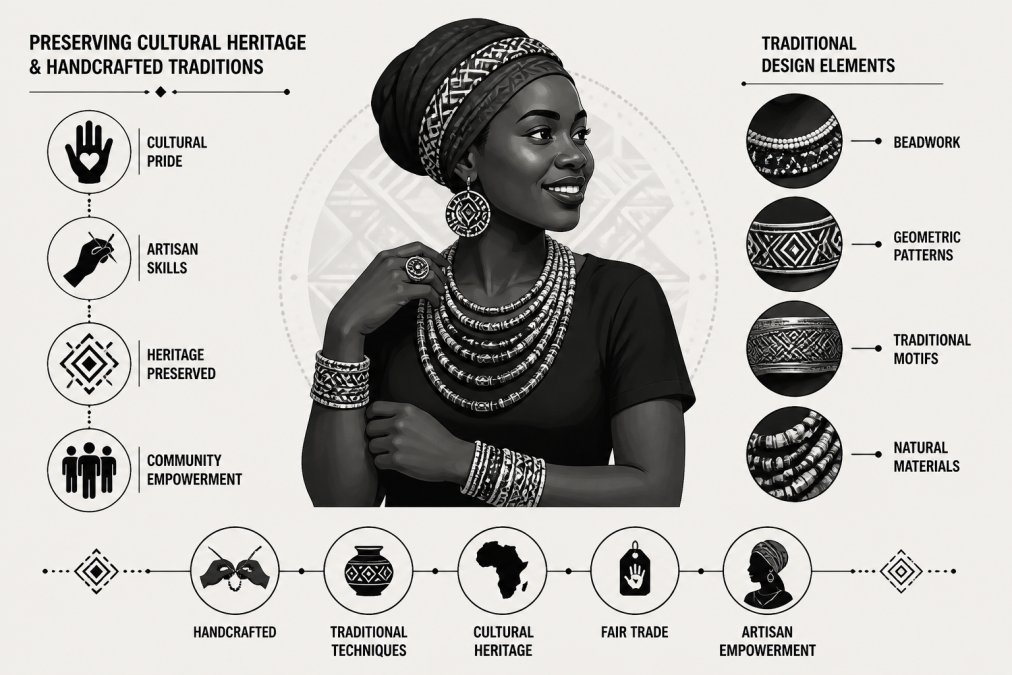
Fair trade models create economic incentive to maintain traditional techniques. When artisans earn sustainable income through handcrafted work, they choose to practice and teach these skills. Young people see jewelry-making as a viable career path rather than an outdated practice, ensuring knowledge passes from generation to generation.
Each piece of fair trade artisan jewelry is literally shaped by cultural knowledge. The beading patterns reflect specific ethnic traditions, metal techniques represent generations of refinement, and design choices express cultural values and aesthetic principles.
Fair trade also protects against cultural dilution. When Western companies manufacture "African-inspired" jewelry in factories, they extract aesthetic elements while disconnecting them from their origins and meaning. Fair trade artisan jewelry keeps cultural expression in the hands of the communities that created it, ensuring authenticity and respect.
Why Fair Trade Jewelry Matters: Long-Term Community Impact
The benefits of fair trade artisan jewelry extend far beyond individual purchases. When fair trade becomes a consistent market force, it creates systemic change in communities and industries.
Fair trade wages accumulate into long-term community development. As artisans earn fair income year after year, they invest in their families' education. Children attend school rather than working. Families afford healthcare and nutrition. Communities improve infrastructure, roads, water systems, and electricity, creating compounding benefits across generations.
Fair trade also shifts power dynamics in communities. When artisans control their income and build sustainable businesses, they gain voice in community decisions and can negotiate better conditions and support each other.
The market for fair trade artisan jewelry demonstrates that consumers value ethics and authenticity. As this market grows, it pressures conventional jewelry industries to improve practices, creating industry-wide improvements that benefit artisans even outside formal fair trade systems.
Fair trade creates business models that are inherently more stable and sustainable than exploitative systems. When artisans are treated fairly and earn living wages, they stay in their communities and continue their work, creating reliable supply chains and long-term relationships.
When you purchase fair trade artisan jewelry, you're participating in long-term change that funds not just individual artisans, but systemic shifts toward equity, sustainability, and cultural preservation.
Fair trade artisan jewelry represents more than a purchase, it's a statement about what you value. When you choose pieces from Prideful Pieces of Africa or other genuine fair trade sources, you're supporting artisans who earn fair wages, preserving cultural heritage, and participating in environmental sustainability. You're wearing jewelry that carries the story of its creation and the pride of the hands that shaped it.
Each purchase funds education for artisan children, provides villages with clean water, supports families in Kenya, and preserves generations of cultural tradition. This is the power of fair trade artisan jewelry: beauty with purpose, craft with conscience, and commerce that actually benefits the people who make it possible.
Frequently Asked Questions
What are the primary benefits of buying fair trade artisan jewelry?
Fair trade artisan jewelry delivers multiple benefits: artisans receive livable wages that support their families, communities gain investment in education and infrastructure, and your purchase directly funds sustainable development. Unlike mass-produced pieces, each handcrafted item preserves cultural traditions and ensures safe working conditions. You own a unique, meaningful piece while creating lasting economic independence for the makers.
How can I verify if jewelry is truly fair trade?
Look for third-party certifications from Fair Trade Federation, Fairtrade International, or Fairmined for gold and diamonds. Legitimate brands provide artisan stories, transparent sourcing information, and supply chain details. Ask retailers directly about their sourcing practices and request documentation. Brands that hide pricing breakdowns or lack certification details are red flags. Prideful Pieces of Africa emphasizes transparency about how your money supports families and community needs.
How does supporting women artisans specifically create change?
Women artisans often face limited economic opportunities and wage inequality. Fair trade provides direct income that gives them financial independence, decision-making power in their households, and ability to invest in their children's education. Many women-led artisan groups use fair trade earnings to establish community programs, healthcare access, and leadership training. This creates a multiplier effect where one woman's economic stability strengthens entire families and communities.
Does fair trade jewelry cost more than conventional jewelry?
Fair trade pieces typically cost more than mass-produced alternatives because artisans receive fair wages, materials are ethically sourced, and production is handcrafted rather than automated. However, the higher cost reflects the true value: quality craftsmanship, cultural authenticity, and measurable social impact. You're investing in a unique, durable piece that supports real people, not just purchasing an accessory. Many customers find this meaningful investment worth the difference.
This article was written using GrandRanker