

Fair Trade Jewelry Benefits: Why Handcrafted Matters
Table of Contents
- What Makes Fair Trade Jewelry Different
- Direct Impact: How Fair Trade Benefits Buying Communities
- The Impact of Fair Trade on Artisans and Their Families
- Ethical Jewelry Brands: Transparency and Accountability
- Fair Trade Gold and Sustainable Jewelry Practices
- Cultural Preservation and Authenticity
- Addressing Common Misconceptions About Fair Trade Jewelry
- Conclusion: The Lasting Value of Fair Trade Jewelry
Fair Trade Jewelry Benefits: Why Handcrafted Matters
Last Updated: July 17, 2026
Understanding the benefits of buying fair trade jewelry goes beyond aesthetic preference, it directly impacts artisan communities, environmental sustainability, and cultural preservation. At Prideful Pieces of Africa, we've witnessed firsthand how each purchase creates meaningful change in East African communities. This guide explores the tangible benefits of fair trade jewelry and why handcrafted pieces carry value that mass-produced alternatives cannot match.
What Makes Fair Trade Jewelry Different
Fair trade jewelry operates on a fundamentally different business model than conventional retail. Rather than extracting value through middlemen and mass production, fair trade systems establish direct relationships between makers and buyers, eliminating exploitative supply chains.
The core difference lies in transparency and accountability. Fair trade pricing is negotiated fairly, working conditions are verified, and artisans maintain creative control. Fair Trade USA's certification standards outline rigorous requirements including fair wages, safe working conditions, and environmental responsibility, enforced through independent audits.
Handcrafted fair trade jewelry is unique: each piece reflects the individual artisan's skill, cultural heritage, and vision. This stands in stark contrast to factory-produced jewelry, where consistency is prioritized over character.
Direct Impact: How Fair Trade Benefits Buying Communities
The benefits of buying fair trade jewelry reshape entire communities economically and socially, explaining why fair trade jewelry costs more and why that premium genuinely matters.
Fair Wages and Economic Stability for Artisans
Fair wages form the foundation of ethical jewelry production. Unlike conventional supply chains where artisans earn minimal amounts per piece, fair trade models ensure craftspeople receive compensation reflecting the true value of their work and their region's cost of living.
When artisans earn living wages, they invest in their families' futures. Children attend school instead of working. Families access healthcare. Communities build infrastructure. International Labour Organization research on fair wages demonstrates that artisans earning sustainable incomes show measurably better health outcomes, educational achievement for their children, and long-term economic stability.
At Prideful Pieces of Africa, every artisan receives compensation reflecting their skill level and experience, rewarding expertise and encouraging the next generation to develop deep skills.
Education and Essential Services
The benefits of buying fair trade jewelry include funding education and essential services. When artisans earn fair wages, they allocate income toward their children's schooling, creating pathways out of poverty.
Many fair trade jewelry brands reinvest profits directly into community development, funding school construction, teacher salaries, clean water infrastructure, or healthcare access. These are structural investments reflecting genuine community partnership.
| Benefit | Community Impact | Long-term Outcome |
|---|---|---|
| Fair wages | Families afford school fees | Higher literacy rates across generations |
| Education funding | More schools and trained teachers | Economic mobility and reduced poverty |
| Clean water projects | Reduced waterborne illness | Improved health and productivity |
| Healthcare support | Preventable disease treatment | Lower child mortality, longer lifespans |
The Impact of Fair Trade on Artisans and Their Families
When you understand the personal impact of fair trade on individual artisans, the benefits become emotionally concrete rather than abstract.
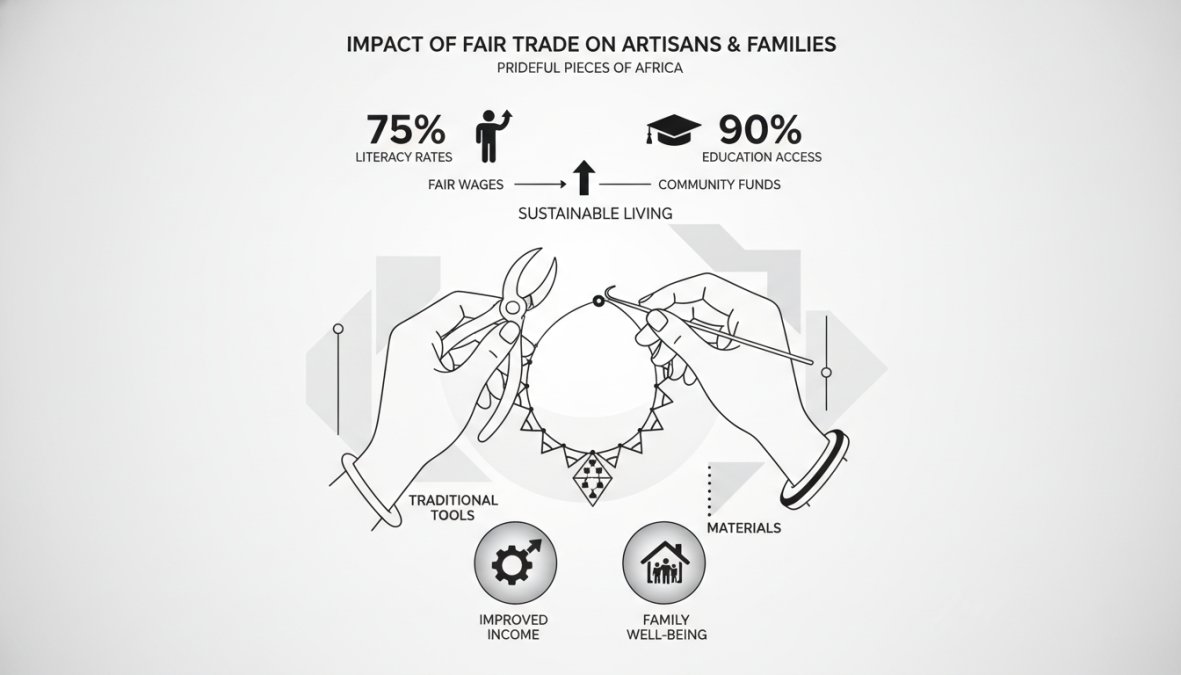
Fair trade transforms artisans from economically vulnerable workers into respected craftspeople whose expertise commands fair compensation. Parents who earn stable income can plan for their children's future. Spouses can pursue their own interests or education. Elders receive care and respect as knowledge-keepers.
The psychological impact matters as much as the financial one. Artisans working under fair trade conditions report greater pride in their work, stronger community bonds, and hope for the future. Master craftspeople can mentor younger artisans, passing down techniques refined across generations.
For families in East African communities, fair trade income often represents the difference between subsistence and genuine opportunity. A mother can afford both school fees and nutritious food. A father can invest in tools that increase productivity. Young people can choose to develop craft skills rather than migrate to cities seeking unstable work.
Ethical Jewelry Brands: Transparency and Accountability
Not all brands using "fair trade" maintain genuine commitments to transparency and accountability. Understanding how to verify authentic fair trade claims protects you from greenwashing and ensures your purchase truly supports artisans.
Legitimate ethical jewelry brands operate with radical transparency, publishing information about artisans, production locations, pricing structures, and community investments.
How to Verify Authentic Fair Trade Claims
Start by checking for third-party certification from organizations like Fair Trade USA, which conduct independent audits of production practices and wage structures.
Look for brands that name their artisans or provide detailed information about production communities. Vague references suggest the brand prioritizes marketing over genuine relationships. Request pricing transparency, ask where your money goes, what percentage reaches artisans, and what funds community development. Examine supply chain depth: do they source materials from fair trade suppliers as well?
Check for independent verification and audits. Legitimate fair trade brands undergo regular third-party audits confirming wage standards, working conditions, and community investments.
Fair Trade Gold and Sustainable Jewelry Practices
Fair trade jewelry encompasses environmental responsibility through sustainable sourcing of materials. Conventional gold mining causes severe environmental damage, toxic chemical use, water contamination, and habitat destruction. Fair trade gold sourcing prioritizes environmental protection alongside human rights.
Fair trade gold certification requires mining operations to minimize environmental impact, properly manage waste, and protect water sources. Artisans working with fair trade gold know their materials weren't extracted through practices that harmed other communities or destroyed ecosystems.
Environmental and Social Standards
Sustainable jewelry practices extend to all materials used in production. Fair trade standards address how gemstones are sourced, how leather is tanned, how metals are refined, and how packaging materials are selected.
Environmental standards include requirements for waste management, water conservation, chemical safety, and carbon footprint reduction. Social standards address worker safety, fair compensation for all supply chain participants, and community consultation on projects affecting their land.
The benefits of buying fair trade jewelry include knowing your purchase didn't contribute to environmental degradation in distant communities. You're not wearing someone else's contaminated water source or destroyed rainforest.
Cultural Preservation and Authenticity
Fair trade jewelry serves as a powerful vehicle for cultural preservation. When traditional crafts generate sustainable income, younger generations choose to learn and practice these skills rather than abandoning them for wage labor in cities.
Each handcrafted piece represents centuries of cultural knowledge, specific beading patterns, color combinations, symbolic meanings, and techniques refined across generations. Mass production cannot replicate this depth of meaning.
When you purchase fair trade jewelry from East African artisans, you're directly supporting the continuation of cultural traditions. You're ensuring that knowledge-keepers can pass their expertise to apprentices and creating economic conditions where cultural identity becomes an asset.
The authenticity of fair trade jewelry lies in who made it and the conditions under which it was made. Authentic pieces emerge from artisans working with creative freedom, adequate time, and fair compensation, not from rushed production under quota pressure. This authenticity is visible in the quality, uniqueness, and soul of each piece.
Addressing Common Misconceptions About Fair Trade Jewelry
Misconceptions about fair trade jewelry often prevent people from making purchases that align with their values.
Is the Higher Cost Really Worth It?
The price difference between fair trade and conventional jewelry reflects genuine cost differences, not marketing markup. Fair trade jewelry costs more because artisans are paid fairly, materials are sourced responsibly, and production practices meet rigorous standards.
When you buy conventional jewelry, you benefit from artificially low prices created by paying artisans minimal amounts and externalizing environmental costs onto communities. Fair trade pricing internalizes these costs, the true cost of ethical production is higher.
Consider cost per year of ownership. A fair trade piece worn for twenty years costs far less annually than a conventional piece replaced every few years. Fair trade jewelry lasts because artisans take pride in their work and use quality materials.
Beyond durability, you're paying for meaning and impact. Each purchase funds education, clean water, healthcare, and cultural preservation in real communities.
Can I Wear Fair Trade Jewelry Without Appropriating Culture?
Wearing fair trade jewelry created by East African artisans is actually a form of cultural support. You're choosing to wear pieces made by people from that culture, created using traditional techniques, and supporting their economic wellbeing. This is fundamentally different from wearing mass-produced imitations.
The key distinction is authenticity and benefit. When you purchase directly from artisans or from brands maintaining transparent relationships with makers, you ensure that cultural creators benefit economically from their own cultural expression.
Approach the pieces with respect and curiosity. Learn about the cultural significance of patterns, colors, and designs. This transforms the jewelry from mere decoration into a meaningful connection to a culture and community.
Conclusion: The Lasting Value of Fair Trade Jewelry
The benefits of buying fair trade jewelry extend far beyond personal aesthetics into genuine human impact and cultural preservation. Each piece you wear represents an artisan's skill, a community's investment in its future, and a commitment to ethical commerce that respects human dignity.
Fair trade jewelry proves that quality, uniqueness, and ethical production can coexist, and that this combination is worth the premium price.
Frequently Asked Questions
What are the main benefits of buying fair trade jewelry?
Fair trade jewelry benefits both you and artisan communities. You receive authentic, handcrafted pieces with genuine cultural significance, while your purchase directly supports fair wages, education, clean water access, and economic stability for artisans and their families. Each piece carries meaning beyond aesthetics, it represents a transparent exchange where producers are valued and compensated equitably for their skilled labor and cultural heritage.
How does fair trade impact artisans compared to conventional jewelry production?
Fair trade ensures artisans receive fair wages that reflect the true value of their craftsmanship, rather than exploitative rates common in conventional production. Beyond wages, fair trade creates economic stability, funds community education and infrastructure, and preserves traditional skills across generations. Artisans maintain creative control over their work, building sustainable livelihoods rather than depending on unstable, low-wage factory conditions. This model respects artisans as skilled professionals, not just labor.
What makes ethical jewelry brands different from regular jewelry stores?
Ethical jewelry brands prioritize transparency, traceability, and fair compensation throughout the supply chain. They disclose where pieces are made, who creates them, and how profits are distributed. Fair trade jewelry brands often provide documentation of artisan support, community impact, and sustainable practices. Regular jewelry stores typically obscure production origins and labor conditions. Ethical brands build relationships with artisans, ensure safe working conditions, and reinvest profits into communities, creating accountability that conventional retail cannot match.
Is fair trade jewelry more expensive, and does the cost justify the benefits?
Fair trade jewelry typically costs more than mass-produced alternatives because artisans receive fair wages, materials are ethically sourced, and each piece is handcrafted by a single artisan. The higher price reflects true production costs and supports community development. When you buy fair trade jewelry, you're investing in quality craftsmanship, cultural preservation, and measurable community impact, education, clean water, and economic stability. Many customers find this meaningful investment worth significantly more than cheaper alternatives without social or environmental accountability.
When you're ready to invest in jewelry that carries real meaning, Prideful Pieces of Africa offers a curated collection of handcrafted pieces that celebrate East African culture while ensuring artisans receive fair wages, transparent sourcing, and direct support for education and essential services. Each unique, artisan-made piece is meticulously crafted by hand, creating jewelry that tells a story and transforms lives. Shop Prideful Pieces of Africa and wear pieces that matter.
This article was written using GrandRanker