

How to Style East African Jewelry: Modern Looks & Tips
Table of Contents
- Understanding East African Jewelry: Materials, Craftsmanship, and Cultural Roots
- How to Style East African Jewelry with Modern Outfits
- Pairing African Jewelry with Western Clothing
- How to Wear African Beaded Necklaces: Styling Strategies
- Styling Ethiopian Gold Jewelry and Metalwork
- Types of East African Jewelry and How to Wear Each
- Care, Maintenance, and Ethical Sourcing of Your Pieces
- Cultural Etiquette: Wearing East African Jewelry Respectfully
Last Updated: August 4, 2026
Learning how to style east african jewelry opens up a world of creative possibilities for expressing cultural identity and personal aesthetic. Understanding how to wear these pieces authentically transforms them from accessories into meaningful statements. At Prideful Pieces of Africa, we believe that every handcrafted bead, beaten metal, and sculptural element tells a story, and styling them well honors that narrative.
Understanding East African Jewelry: Materials, Craftsmanship, and Cultural Roots
East African jewelry represents centuries of artisan tradition, with each piece reflecting cultural heritage and spiritual significance. Beadwork remains central, with glass beads, bone, and natural stones creating intricate patterns. Brass and beaten silver are shaped by hand into coins and sculptural forms. Cowrie shells, historically used as currency, symbolize wealth and protection. Mineral stones like lapis and carnelian add earthy tones, while ebony discs create bold visual contrast.
Traditional Materials and Their Significance
Each material carries meaning rooted in trade routes and ceremonial practices. Cowrie shells connect you to ancient trade and cultural identity. Mineral stones provide grounding energy. Ebony discs represent the region's natural resources. The craftsmanship is extraordinary: each bead is often hand-strung, each metal element beaten individually. No two pieces are identical, making every purchase a one-of-a-kind investment in artisan heritage.
Artisan Craftsmanship and One-of-a-Kind Pieces
Handcrafted pieces carry the energy and skill of their maker. Each irregularity signals authenticity and human artistry. One-of-a-kind jewelry deserves solo moments, a single handcrafted piece often commands more respect and visual impact than layered pieces. Knowing your piece was crafted by a specific artisan adds narrative depth to your styling choices.
How to Style East African Jewelry with Modern Outfits
The challenge is bridging traditional, culturally significant pieces with contemporary wardrobes. The solution is understanding how these pieces interact with modern clothing through principles of balance, color, and intentionality.
Balancing Statement Pieces with Minimalist Clothing
Statement East African jewelry thrives against a neutral backdrop. A chunky beaded necklace needs visual breathing room to shine. Pair it with a simple white linen shirt, neutral slip dress, or solid-colored basics that don't compete for attention. If your statement piece features warm earth tones, ochre, rust, terracotta, pair it with cream, ivory, or soft gray. If your jewelry leans toward cool tones with deep blues or silvers, complement it with cool neutrals. Skip busy patterns and bold prints when your jewelry is the main event.

Color Coordination and Textural Contrast
East African pieces often feature rich jewel tones, warm metallics, or earthy pigments. Pieces dominated by gold or brass pair beautifully with warm colors: camel, rust, gold, deep orange, or warm brown. Pieces featuring silver work with jewel tones like emerald, sapphire, or amethyst, as well as cool neutrals like gray, navy, or black. If your jewelry is heavily beaded with dimensional texture, balance it with smooth fabrics: silk, linen, cotton, or sleek synthetics.
Pairing African Jewelry with Western Clothing
The intersection of traditional African jewelry and contemporary Western fashion silhouettes creates striking modern looks. Understanding which clothing shapes complement which jewelry types ensures visual balance across your entire outfit.
Off-the-Shoulder and Maxi Dress Combinations
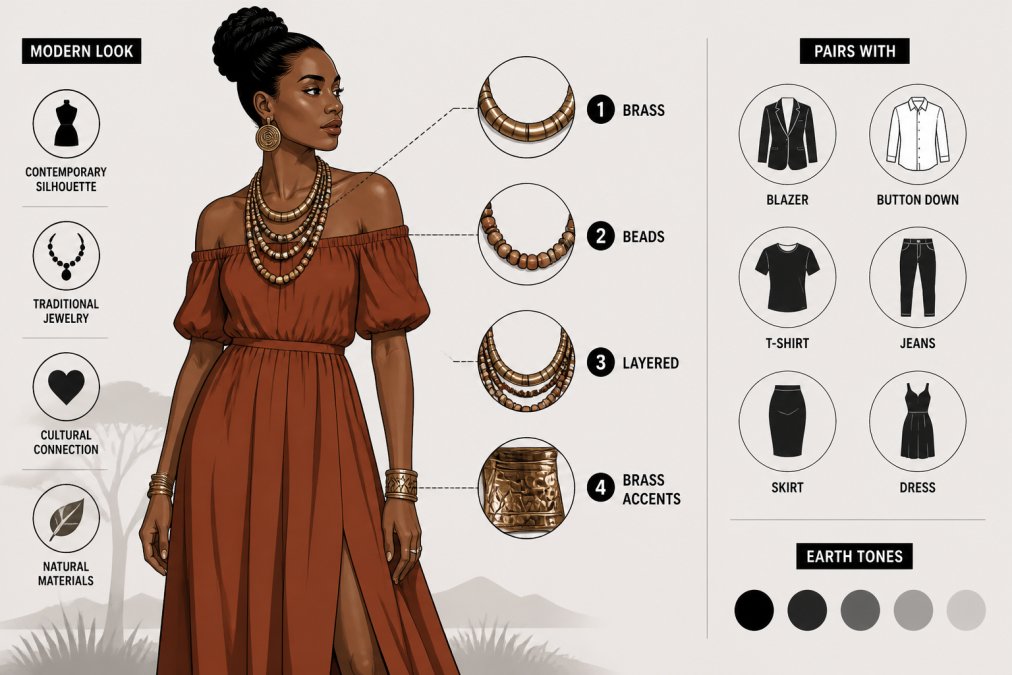
Off-the-shoulder silhouettes create a canvas for shoulder and collarbone jewelry. A bare shoulder naturally frames a statement necklace, drawing the eye upward and creating elegant proportion. Maxi dresses, especially in solid colors, provide the perfect foundation for featuring East African jewelry prominently. The length and flow ground an outfit, allowing bold jewelry to be the focal point.
Layering Techniques for Necklaces and Chains
Layering multiple pieces requires understanding proportion, weight distribution, and how different chain lengths interact. Vary your lengths and weights to create visual rhythm. A classic approach uses three pieces at different lengths: a choker at the base of the neck, a mid-length piece at the collarbone, and a longer pendant extending toward the chest. When layering beaded necklaces, pair a bold beaded necklace with a simpler chain or single-strand piece to create contrast. Mix metals intentionally, brass with silver, gold with copper, for sophistication.
How to Wear African Beaded Necklaces: Styling Strategies
Beaded necklaces represent perhaps the most iconic form of East African jewelry. Styling them effectively means understanding their visual weight and cultural context.
Statement Beaded Necklaces as Focal Points
A true statement beaded necklace demands to be the hero of your outfit. These pieces should be styled as your primary accessory. Everything else in your look should support and complement this centerpiece. When wearing a statement beaded necklace, keep your clothing simple and your neckline unadorned so the jewelry isn't fighting for space with fabric. Color coordination becomes crucial: if your necklace features multiple colors in a traditional geometric pattern, pull one of those colors into your clothing.
Layering Multiple Beaded Pieces
When layering multiple beaded necklaces, create visual rhythm without overwhelming your neck and chest. Start with a base piece, typically your shortest necklace worn as a choker. Build from there by adding progressively longer pieces, ensuring each new layer sits at a noticeably different length. Color harmony is essential. Bead density should also vary: if your shortest piece features densely packed beads, your longer pieces can be more spaced out or feature larger individual beads.
Styling Ethiopian Gold Jewelry and Metalwork
Ethiopian gold jewelry, particularly pieces featuring beaten gold, filigree work, and sculptural forms, represents a distinct tradition within East African metalwork. These pieces often feature intricate detail and warm, luminous tones that require specific styling approaches.
Beaten Silver and Brass Coin Accents
Beaten metal jewelry features a distinctive hammered texture that catches light beautifully. This textural quality means these pieces should be visible and unobstructed in your outfit. Beaten silver pieces work beautifully with cool-toned clothing: grays, blues, blacks, silvers, and cool neutrals. They also pair well with jewel tones like emerald, sapphire, or amethyst. Brass coin pieces, with their warm golden tones, pair better with warm colors: golds, rusts, oranges, warm browns, and earth tones. The sculptural quality of beaten metal means these pieces often work better as statement pieces rather than layered components.
Mixing Traditional Metals with Modern Accessories
Contemporary fashion allows for intentional mixing of traditional metalwork with modern accessories. If you're wearing a statement piece of beaten silver or brass, keep your other accessories minimal and cohesive. One modern accessory, perhaps a contemporary bracelet in a complementary metal or a simple watch, can work alongside traditional jewelry. When mixing metals, consider the undertones: warm metals work together; cool metals work together.
Types of East African Jewelry and How to Wear Each
East African jewelry encompasses many distinct forms, each with its own styling considerations.
Collars, Chokers, and Chunky Necklaces
Collars and chokers sit close to the neck and collarbone, creating a strong frame for your face and shoulders. These pieces work best with simple necklines, crew necks, v-necks, or off-the-shoulder styles, that don't compete with the jewelry's visual presence. Avoid turtlenecks or high necklines that would obscure the piece. Collars are often statement pieces on their own.
Waist Beads and Body Adornment
Waist beads represent a distinct category of East African jewelry, worn around the waist or hips, often under clothing as a personal adornment. If you wear waist beads visibly, style them intentionally. High-waisted, fitted clothing that shows your waistline works well. Crop tops paired with high-waisted pants or skirts allow waist beads to be seen and appreciated.
Bracelets and Sculptural Pieces
Bracelets and sculptural jewelry pieces extend the visual line of your arm and hand. These pieces work best when your arms are visible; long sleeves obscure them. When wearing statement bracelets or arm cuffs, keep your wrist and hand area relatively uncluttered. One statement piece typically works better than layered bracelets.
Care, Maintenance, and Ethical Sourcing of Your Pieces
Proper care ensures your East African jewelry remains beautiful and lasts for generations.
Preserving Beadwork and Traditional Materials
Beaded jewelry requires gentle handling. Store beaded pieces separately from other jewelry in a soft pouch or wrapped in cloth. Clean beaded pieces with a soft, dry cloth. Avoid water exposure unless absolutely necessary; water can weaken the stringing material and cause beads to loosen. Pieces featuring cowrie shells or other natural materials need particular care. Metal pieces develop patina over time. Brass develops a natural patina that protects the underlying metal. If you want to maintain shine, use a soft cloth to gently polish it, but avoid harsh chemical cleaners.
Supporting Artisans and Verifying Ethical Practices
When purchasing East African jewelry, understanding where your money goes matters. Ethical sourcing means fair wages, safe working conditions, and transparency about the supply chain. Prideful Pieces of Africa prioritizes this by working directly with artisans, ensuring that purchases directly support families and communities through fair wages and regenerative practices. When evaluating any jewelry source, ask specific questions: Where is the piece made? Who made it? What percentage of the purchase price goes to the artisan? Look for sources that provide transparency about their supply chain. Consider purchasing directly from artisan cooperatives or established fair-trade organizations when possible.
Cultural Etiquette: Wearing East African Jewelry Respectfully
Wearing East African jewelry as someone without East African heritage requires thoughtfulness and respect. These pieces carry cultural significance; wearing them authentically means understanding their context and approaching them with reverence. Educate yourself about the pieces you wear. Learn about their cultural origins, traditional significance, and the communities that created them. Avoid treating East African jewelry as a costume or trend.
Support authentic sources. Purchasing from artisans and ethical retailers ensures your money supports the communities whose traditions you're celebrating. Be prepared for conversations about your jewelry. Honest, respectful answers demonstrate respect. Consider context when wearing these pieces. Wearing them to cultural events, celebrations, or occasions where you're engaging with East African communities feels appropriate. Finally, recognize that wearing East African jewelry as someone outside the culture is a privilege, not a right. It's acceptable when done with respect, education, and genuine appreciation.
Styling East African jewelry authentically means honoring both the artistry of the pieces and the cultural traditions they represent. Whether you're connecting with your heritage or celebrating the craftsmanship of talented artisans, thoughtful styling transforms jewelry into meaningful expression. Prideful Pieces of Africa offers handcrafted pieces made directly by artisans, ensuring that each purchase supports families through fair wages, education, and access to clean water. When you wear jewelry from Prideful Pieces of Africa, you're wearing a piece of history created by a specific maker whose community benefits from your choice. Start building your collection with pieces that resonate with your personal style and cultural values, shop Prideful Pieces of Africa today.
| Styling Approach | Best For | Key Principle |
|---|---|---|
| Statement piece with neutral clothing | Bold beaded necklaces, sculptural metal | Give jewelry visual space to shine |
| Layered necklaces at varied lengths | Delicate pieces, multiple strands | Create rhythm through length variation |
| Off-the-shoulder with maxi dress | Collars, statement necklaces | Frame jewelry with simple silhouettes |
| Minimalist accessories with jewelry | Handcrafted pieces, one-of-a-kind items | Let artisan work be the focal point |
| Mixed metals and materials | Coordinated pieces in warm or cool tones | Ensure undertones harmonize |
This comprehensive guide draws on the principles of cultural respect, practical styling, and authentic craftsmanship. When you understand how to style east african jewelry with intention, you're not just creating attractive outfits, you're participating in the continuation and celebration of cultural traditions. By choosing to wear these pieces thoughtfully and supporting ethical sources like Prideful Pieces of Africa, you're making choices that ripple beyond fashion into community support and cultural preservation.
Frequently Asked Questions
What's the best way to style East African jewelry without appropriating the culture?
Wear East African jewelry with genuine respect for its origins and meaning. Learn the cultural significance of the pieces you choose, purchase from ethical artisans who benefit directly from sales, and wear the jewelry intentionally rather than as a trend. Many pieces carry deep heritage; understanding their role in ceremonies or daily life helps you honor that tradition. Support artisans who preserve these crafts, and you become part of protecting cultural heritage rather than exploiting it.
How do I know if I'm buying authentic, ethically sourced East African jewelry?
Look for sellers who transparently share where pieces are made and who creates them. Authentic artisan jewelry should include information about the specific craftspeople, their communities, and how fair wages are distributed. Ask questions about production practices, materials sourcing, and whether the company can verify its claims with documentation or reports. Handmade pieces will show natural variations, and each should be genuinely one-of-a-kind. Avoid sellers using vague language about 'African aesthetics' without specific regional or artisan connections.
Can I layer multiple statement pieces, or does that look too maximalist?
Layering multiple statement pieces works beautifully when you balance scale and color. Pair a chunky beaded necklace with smaller brass accents or waist beads rather than two equally bold pieces. Use the 2:1:1 jewelry rule: one statement piece, one medium accent, one delicate layer. Ensure your clothing is relatively simple so the jewelry becomes the focus. East African jewelry celebrates maximalist aesthetics through intentional ornamentation, so layering honors that tradition when done with purpose rather than appearing cluttered.
How do I care for vintage beadwork and traditional materials to preserve them?
Store beaded pieces flat or loosely coiled in a cool, dry place away from direct sunlight, which can fade natural dyes. Clean gently with a soft, dry cloth; avoid water unless absolutely necessary, as it can weaken thread and damage certain mineral stones. For brass or beaten silver, a slightly damp cloth removes dust without harsh chemicals. Keep pieces away from perfume, lotions, and moisture. Inspect beadwork periodically for loose threads and have repairs done by someone familiar with traditional techniques. Proper storage extends the life of handcrafted pieces and honors the artisan's work.
This article was written using GrandRanker