

How to Verify Artisan Jewelry Authenticity
Table of Contents
- What You'll Need Before You Start
- How to Verify Artisan Jewelry Authenticity Through Physical Inspection
- How to Identify Handmade Jewelry vs. Mass-Produced Pieces
- Verifying Documentation and Certificates of Authenticity
- Researching Seller Integrity and Artisan Reputation
- Benefits of Buying Fair Trade Jewelry
- Common Mistakes to Avoid When Verifying Authenticity
- Conclusion
Last Updated: August 17, 2026
What You'll Need Before You Start
Gather a magnifying glass (at least 10x magnification), a small scale accurate to 0.1 grams, a strong neodymium magnet, and a smartphone with macro photography capability. Request documentation including a Letter of Authenticity, certificates, and details about the maker's background and production methods. Ask for photos of the artisan at work and their studio.
Authentic artisan jewelry carries specific markers: visible tool marks from hand-fabrication, slight variations between pieces, hallmarks indicating metal purity, and evidence of traditional techniques. Mass-produced pieces show consistent perfection and uniform finishing, a red flag rather than a selling point.
How to Verify Artisan Jewelry Authenticity Through Physical Inspection
Start by examining the piece under bright, natural light. Artificial lighting can mask imperfections or create misleading shadows.
Examining Hallmarks and Maker's Marks
Hallmarks indicate metal purity, "925" means sterling silver at 92.5% purity, while "14K" denotes 14-karat gold. Maker's marks are the artisan's signature, often initials or a unique symbol stamped into the metal. Legitimate artisan jewelry displays these marks clearly, typically on the inside of rings or hidden edges.
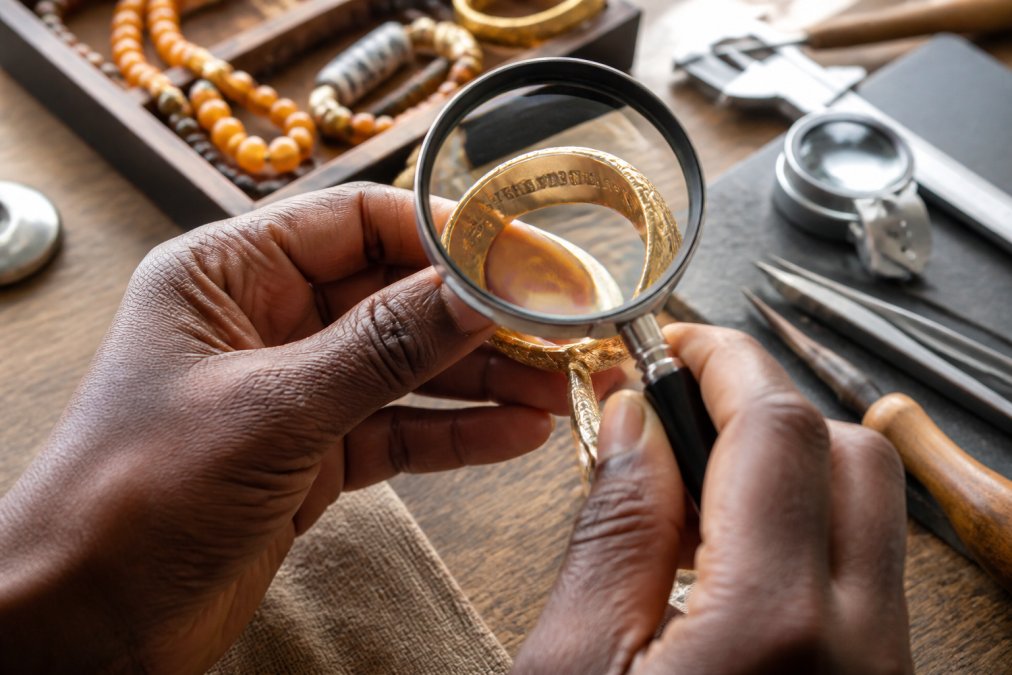
Use your magnifying glass to inspect these marks closely. Authentic hallmarks are crisp and evenly stamped. Blurry, shallow, or inconsistently applied marks suggest mass production or counterfeiting. Handcrafted pieces often have marks in slightly different locations because artisans work by hand, not machines. A maker's mark appearing in the exact same spot on every piece is a warning sign of industrial production.
Research the maker's mark before purchasing. Legitimate artisans maintain records and online portfolios. If you can't find information about a maker's mark after searching, ask the seller directly.
Checking Weight and Material Density
Weight reveals authenticity. Precious metals have specific densities, gold is denser than most metals, sterling silver is denser than plated alternatives. A piece that feels too light for its size may contain less precious metal than claimed or be plated rather than solid.
Use your scale to weigh the piece and compare it to known specifications for similar items. A sterling silver bracelet of similar size should weigh within a predictable range. If your piece weighs significantly less, it may be plated silver over a lighter base metal.
Density checks work particularly well for gemstones. A genuine one-carat diamond should weigh exactly one carat. Combined with other checks, this builds confidence in authenticity.
Testing Metal Purity with Simple Methods
The magnet test is your quickest screening tool. Genuine precious metals (gold, silver, platinum) are non-magnetic or only slightly magnetic. If the jewelry jumps toward the magnet or sticks strongly, it contains ferrous metals, which shouldn't be present in fine jewelry.
The acid test requires professional knowledge. If you're not trained, don't attempt it, incorrect application can damage the piece or harm you. Ask the seller if they've had the piece professionally tested, or offer to have it tested by a certified jeweler before finalizing your purchase.
Water displacement offers a less invasive density check. Fill a glass with water and note the level. Submerge the jewelry and measure how much the water level rises. The volume displaced, combined with the weight you measured earlier, gives you density to compare against known values for the claimed metal.
Assessing Craftsmanship and Tool Marks
Handcrafted jewelry bears marks of human creation. Look for slight irregularities in symmetry, variations in surface texture, and visible tool marks. These aren't flaws; they're proof of authenticity. A perfectly uniform, machine-finished surface suggests industrial production.
Examine solder joints where pieces of metal are fused together. Handcrafted joints show subtle variations in color or texture where the solder cooled. Machine-welded joints appear uniformly perfect. Hand-set stones show slight variations in how the metal grips each stone; machine-set stones appear identically positioned.
The back of the piece tells stories the front doesn't. Artisan work shows evidence of hand-filing, hand-polishing, and intentional finishing. Mass-produced pieces have uniform, featureless backs.
How to Identify Handmade Jewelry vs. Mass-Produced Pieces
Handmade pieces, particularly those from artisans like those featured at Prideful Pieces of Africa, show individuality. No two are exactly alike because each emerges from one artisan's hands.
Mass-produced jewelry is manufactured for consistency and speed. Every piece in a batch is identical. When evaluating whether jewelry is truly handmade, consistency is a red flag.
Ask the seller: "Will I receive this exact piece, or one very similar?" Legitimate artisans can't promise exact duplicates because they don't make them. If the seller guarantees you'll receive an identical piece to the photo, the jewelry was likely mass-produced.
Production time offers another clue. A complex artisan necklace might require 20-40 hours of work. If a seller claims to have "handmade" pieces available for immediate shipment in large quantities, production likely involved machines. Ethical artisans maintain waiting lists because genuine handwork can't be rushed.
Verifying Documentation and Certificates of Authenticity
A Letter of Authenticity is your most important document. This letter, signed by the artisan or seller, certifies that the piece is handmade, specifies materials used, describes the artisan's background, and often includes the date of creation. A legitimate letter includes the artisan's name, signature, and contact information.
The Importance of a Letter of Authenticity
A Letter of Authenticity documents the piece's provenance, confirms it came from the claimed artisan, specifies materials and techniques, and establishes a chain of custody that matters if you ever sell the piece or need insurance documentation.
When you receive a Letter of Authenticity, verify its details match the piece itself. The materials listed should correspond to the hallmarks you found. The artisan's name should match the maker's mark. Discrepancies between the letter and the piece suggest either a mislabeled item or fraudulent documentation.
Contact the artisan directly if possible. A legitimate maker welcomes questions about their work and can discuss their techniques, materials, and design philosophy. If the seller claims the artisan is unavailable or refuses to share contact information, that's a warning sign. Transparency is non-negotiable for ethical producers like those at Prideful Pieces of Africa.
Digital Verification and Blockchain Certificates
Some artisans now issue digital certificates recorded on blockchain networks, creating an immutable record of the piece's authenticity, ownership history, and provenance. These certificates can't be forged or altered because they're distributed across multiple computers and cryptographically secured.
To verify a blockchain certificate, you'll need the certificate's unique identifier and access to the blockchain network. The seller should provide clear instructions for verification. Visit the blockchain explorer and search for your certificate's ID.
Use your smartphone's macro mode to photograph hallmarks, maker's marks, and distinctive features. Create a high-resolution photo library of your jewelry. Store these photos securely alongside your Letter of Authenticity and any blockchain certificates. This documentation becomes invaluable if you ever need to prove authenticity or file an insurance claim.
Researching Seller Integrity and Artisan Reputation
The seller's reputation is as important as the piece itself. Research the seller thoroughly before purchasing.
Start with online reviews and testimonials. Check independent review platforms, social media, and the seller's website for customer feedback. Look for patterns in what customers say. Legitimate sellers receive praise for product quality, accurate descriptions, fair pricing, and responsive customer service. Complaints about misrepresented items, poor communication, or discrepancies between photos and received pieces are red flags.
Investigate the artisan's background and production methods. Ethical sellers like Prideful Pieces of Africa share detailed information about their artisans, their names, their regions, their techniques, and their stories. They provide photos of artisans at work and their studios.
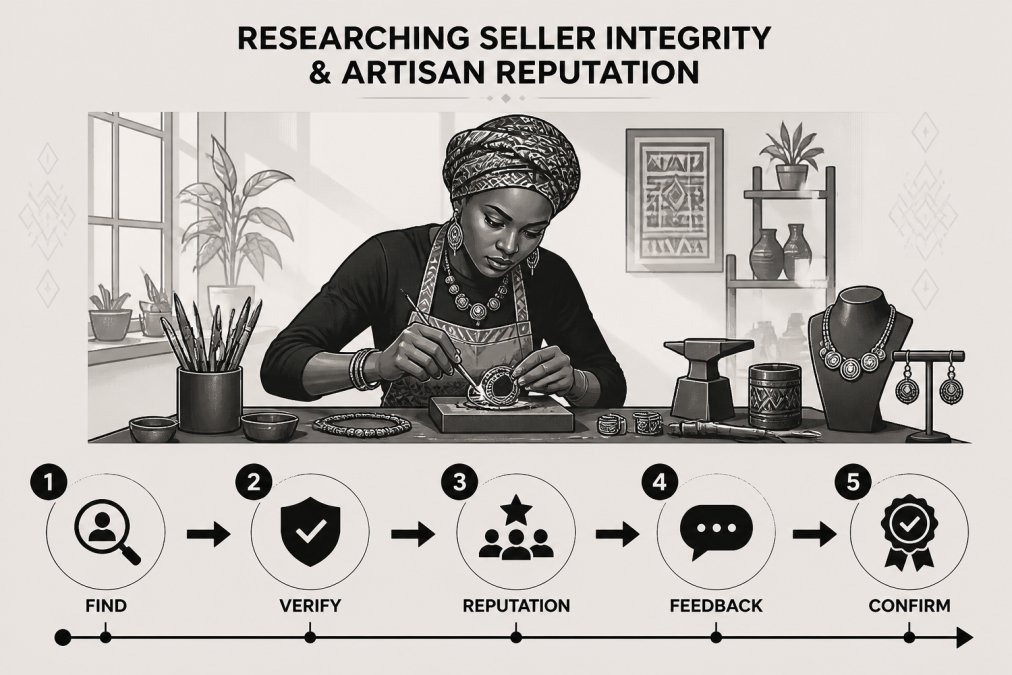
Ask the seller direct questions about sourcing practices. Where do artisans live and work? What are fair wages in that region, and how do the seller's wages compare? What percentage of your purchase price reaches the artisan? Legitimate sellers answer with specific numbers and documentation.
Check for certifications or partnerships with fair trade organizations. These partnerships indicate the seller has submitted to external accountability. Red flags include artisans who are never available, stories that change between conversations, inability to provide photos or videos of the creation process, and sellers who discourage you from contacting artisans directly.
Benefits of Buying Fair Trade Jewelry
Fair trade practices ensure artisans receive fair compensation for their work, wages that reflect the skill, time, and artistry involved in creating each piece.
Fair trade jewelry supports communities in meaningful ways. At Prideful Pieces of Africa, each purchase directly supports a family in Kenya, contributes to a child's school day, or provides a village with clean water. When you know your jewelry purchase sends a child to school or brings clean water to a community, wearing that piece becomes an act of purpose.
Artisan jewelry preserves cultural traditions that might otherwise disappear. Handcrafted pieces, particularly those created by artisans in East Africa, carry generations of tradition, culture, and identity. By purchasing these pieces, you're voting for the preservation of these traditions.
Fair trade jewelry tends to be higher quality and more durable than mass-produced alternatives. Artisans take pride in their work because they're named creators whose reputation depends on quality. A piece crafted by hand with intention lasts longer and ages more beautifully.
Knowing the story behind your piece, understanding the artisan's name and background, and recognizing the positive impact of your purchase transforms jewelry from a mere accessory into a meaningful connection. Many customers find that fair trade jewelry becomes an heirloom.
Common Mistakes to Avoid When Verifying Authenticity
Don't trust appearance alone. Beautiful jewelry isn't necessarily authentic, and authentic jewelry isn't always perfectly beautiful. Handcrafted pieces sometimes show imperfections that mass-produced pieces avoid.
Avoid skipping professional verification. If you're uncertain about a piece's authenticity after your own inspection, invest in professional appraisal. A certified jewelry appraiser can conduct tests you can't perform yourself and provide documentation that protects your investment.
Don't ignore red flags in seller communication. If a seller becomes defensive when you ask about materials, artisan background, or fair trade practices, that's a warning. Legitimate sellers welcome scrutiny.
Don't assume all "handmade" claims are true without verification. The term "handmade" lacks legal definition in many contexts. Demand specifics: Which parts were made by hand? What techniques were used? Can the seller provide evidence?
Fail to document your purchase and you'll regret it if you ever need to prove authenticity or file an insurance claim. Keep your Letter of Authenticity, photos, receipt, and any blockchain certificates in a safe place. Create digital backups.
Overlook the seller's return policy at your peril. Ethical sellers stand behind their products and offer reasonable return windows. If a seller refuses returns or has restrictive policies, that suggests they're not confident customers will be satisfied.
Verifying artisan jewelry authenticity requires patience, attention to detail, and a willingness to ask questions. The process protects your investment and ensures you're supporting genuine artisans and ethical practices. When you purchase from Prideful Pieces of Africa, you're buying jewelry that carries a story, the artisan's story, your story, and the story of the community that benefits from your purchase. Take time to verify authenticity, research the seller, and understand what you're buying. That piece of handcrafted jewelry will mean far more when you know exactly where it came from and who created it.
| Verification Method | What It Reveals | Time Required | Best For |
|---|---|---|---|
| Hallmark and maker's mark inspection | Metal purity and artisan identity | 5-10 minutes | Initial authenticity screening |
| Weight and density testing | Material composition and potential plating | 10-15 minutes | Confirming metal claims |
| Magnet test | Presence of ferrous metals | 2-3 minutes | Quick purity check |
| Craftsmanship assessment | Hand-fabrication evidence vs. mass production | 10-15 minutes | Distinguishing artisan from industrial |
| Seller and artisan research | Reputation, transparency, ethical practices | 30+ minutes | Building confidence in purchase |
| Letter of Authenticity verification | Provenance and material documentation | 5 minutes | Legal and insurance protection |
| Professional appraisal | Expert authentication and valuation | Varies | High-value pieces or final verification |
Frequently Asked Questions
How can I verify the authenticity of artisan jewelry I've already purchased?
Start with physical inspection: check for hallmarks, maker's marks, and metal stamps that indicate genuine precious metals. Use a magnet test on sterling silver (genuine silver should not attract a magnet). Request documentation from the seller, including a letter of authenticity and proof of the artisan's background. Research the seller's reputation through customer reviews and verify they source directly from artisans. For high-value pieces, consider professional jewelry appraisal to confirm purity and craftsmanship quality.
What are the benefits of buying fair trade jewelry?
Fair trade jewelry ensures artisans receive fair wages for their handcrafted work, directly supporting their families and communities. When you purchase fair trade pieces, your money funds education, clean water access, and sustainable practices in artisan communities. Each handcrafted item carries authentic cultural significance and preserves generations of tradition. Unlike mass-produced jewelry, fair trade artisan pieces are unique, one-of-a-kind creations that reflect true craftsmanship and cultural identity, making them meaningful heirlooms with genuine provenance.
How can I tell if jewelry is truly handcrafted versus mass-produced?
Handmade jewelry displays visible tool marks, slight variations in symmetry, and unique imperfections that mass-produced pieces lack. Examine the setting closely, genuine artisanal work shows individual craftsmanship details and irregular spacing that machines cannot replicate. Check the weight and density; handcrafted pieces often have consistent, authentic material distribution. Ask the seller for documentation about the specific artisan who created the piece, including their background and techniques. Mass-produced jewelry typically comes from factories with generic certifications, while handcrafted pieces include detailed provenance and maker information.
What documentation should I ask for when purchasing artisan jewelry?
Request a letter of authenticity that includes the artisan's name, creation date, materials used (karat weight for gold, sterling silver purity), and a description of the piece. Ask for proof of fair trade certification or verification of ethical sourcing practices. Legitimate sellers provide information about the artisan's background, techniques, and cultural significance of the design. For high-value pieces, request an appraisal report from a certified jewelry professional. Digital verification options, such as blockchain certificates, offer additional authenticity confirmation. Reputable artisan jewelry sellers willingly provide comprehensive documentation without hesitation.
This article was written using GrandRanker