

Is Artisan Jewelry Worth the Price? A Value Analysis
Table of Contents
- Is Artisan Jewelry Worth the Price? The Short Answer
- Handmade Jewelry vs Mass Produced: Understanding the Core Difference
- Quality of Artisan Jewelry: Material Value and Craftsmanship
- Why Artisan Jewelry Costs More: Technical Breakdown of Labor Costs
- Benefits of Artisan Jewelry: Beyond the Physical Product
- Custom Jewelry Cost Factors: What Influences the Final Price
- Resale Value and Long-Term Investment Potential
- Care and Maintenance: Protecting Your Investment
Last Updated: July 22, 2026
Is Artisan Jewelry Worth the Price? The Short Answer
When deciding whether to invest in handcrafted pieces, the answer is yes, but only if you understand what you're paying for. You're acquiring craftsmanship, durability, cultural heritage, and a story that mass-produced jewelry cannot replicate. At Prideful Pieces of Africa, customers discover that artisan jewelry becomes the pieces they wear for decades and pass down as heirlooms.
The cost difference reflects labor-intensive production, superior materials, ethical sourcing, and the skill of a single artisan who pours hours into each piece. A mass-produced ring costs $30 because machines stamp out hundreds per hour. An artisan-made ring costs $200 because one skilled jeweler spent five hours at the bench, selected ethically sourced materials, and created something that will outlast fashion cycles.
Whether artisan jewelry is worth the price depends on your priorities. If you value uniqueness, longevity, and supporting independent artists, the answer is unequivocally yes. If you treat jewelry as disposable fashion, you'll resent the cost.
Handmade Jewelry vs Mass Produced: Understanding the Core Difference
The distinction between handmade jewelry vs mass produced goes far deeper than aesthetics. These represent fundamentally different approaches to creation, quality control, and value delivery.
Production Methods and Labor
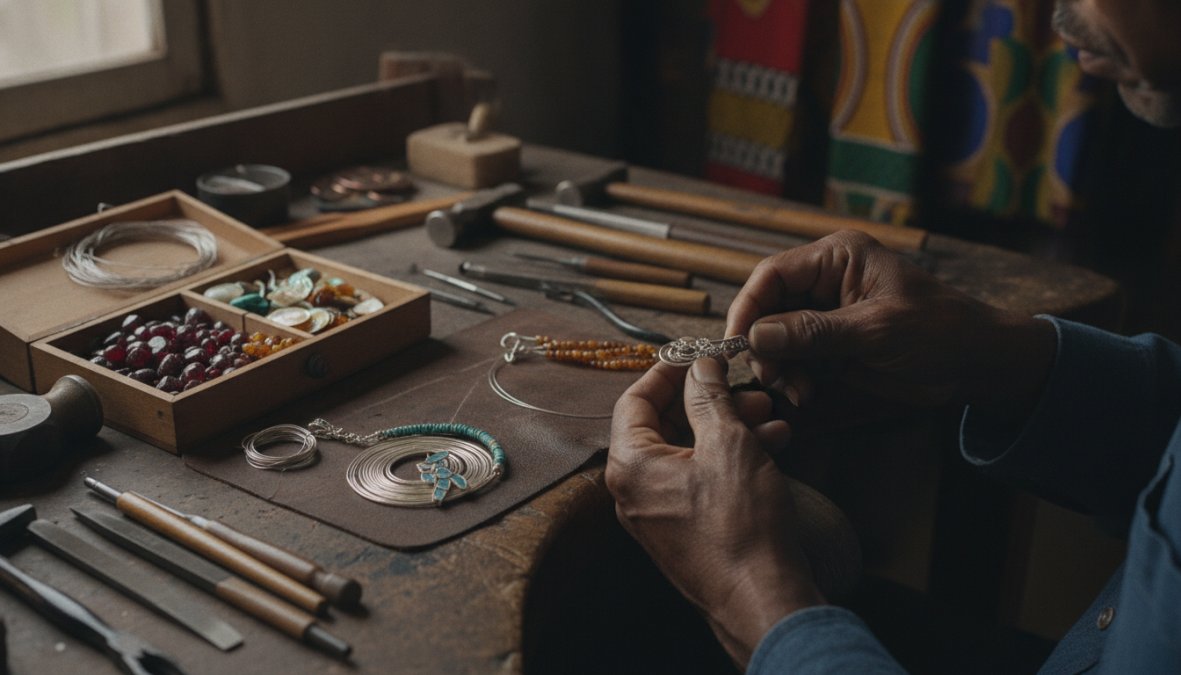
Handcrafted jewelry emerges from a bench jeweler's hands. Each piece begins with raw materials: precious metals, gemstones, or beads. The artisan measures, cuts, shapes, solders, polishes, and finishes the work themselves, often over multiple days or weeks. There's no assembly line, no machine stamping identical copies, just one person, their tools, their experience, and their commitment to quality.
Mass-produced jewelry uses molds, machines, and assembly lines. A design is created once, then replicated thousands of times through injection molding, stamping, or casting. Machines work 24/7 with minimized labor costs and maximized production speed. Artisans can adjust designs mid-creation and catch flaws before the piece leaves their hands. Machines cannot.
Consistency and Uniqueness
Mass production guarantees consistency, every piece is identical. Artisan production guarantees uniqueness. Even when a maker creates the same design multiple times, subtle variations emerge. No two pieces are exactly alike.
Research shows that people value unique possessions more highly and feel stronger emotional connections to them. For customers at Prideful Pieces of Africa, this uniqueness carries additional meaning. Each handcrafted piece celebrates East African traditions and identity. You're wearing preserved tradition, not a mass-market replica.
Quality of Artisan Jewelry: Material Value and Craftsmanship
Artisan jewelry worth the price begins with superior materials and genuine craftsmanship. These measurable differences determine how long your pieces last and how they age.
Superior Materials and Ethical Sourcing
Mass-produced jewelry often uses base metals plated with thin layers of gold or silver. The plating wears away within months or years. Artisans typically work with solid precious metals: sterling silver, 14K or 18K gold, platinum. These materials don't degrade; they age beautifully over decades.
Gemstones tell a similar story. Mass-produced pieces use synthetic stones, glass, or low-grade naturals. Artisans source genuine gemstones, often with documented origins and ethical sourcing commitments. This sourcing adds cost, but it means you can wear your jewelry knowing it didn't fuel environmental destruction or human suffering.
Durability and Longevity
A well-made handcrafted piece can last a lifetime or longer. Solid materials, careful construction, and attention to detail mean fewer weak points. Soldering is done properly. Stones are set securely. Clasps are engineered to function reliably.
Mass-produced pieces often fail within years. Clasps break. Plating flakes off. Glued stones pop loose. The cost to repair approaches the original purchase price, so most people discard the piece. An artisan-made ring from the 1950s can be restored to like-new condition by a modern bench jeweler. A mass-produced ring from 2020 is already headed to a landfill.
Buy a $50 mass-produced bracelet and replace it five times over ten years: $250 spent, five pieces in landfills. Buy a $250 artisan bracelet once: same upfront cost as the second replacement, but you own one beautiful piece that will outlast you.
Why Artisan Jewelry Costs More: Technical Breakdown of Labor Costs
Understanding why artisan jewelry carries such a higher price tag requires looking at the actual economics of handcrafted production.
Skill and Time Investment
A bench jeweler typically trains for 5-10 years before reaching mastery. A simple handcrafted ring might take 8-12 hours of focused work. A complex bespoke design might require 40-60 hours. At reasonable labor rates ($25-50 per hour depending on experience and location), labor alone adds $200-3,000 to the cost.
Mass production amortizes labor differently. A machine operator might spend 2 hours setting up equipment to produce 500 identical rings. The labor cost per piece drops to pennies. This efficiency only works at massive scale with zero customization.
Small-Batch Production vs Mass Manufacturing
Artisans typically work in small batches or one-off commissions. They cannot negotiate volume discounts on materials or spread overhead costs across thousands of units. Every piece carries a proportional share of studio rent, tool maintenance, insurance, and business costs.
Artisans often source ethically and sustainably, which costs more than exploitative alternatives. They pay fair wages to assistants and invest in proper safety equipment. These costs reflect the right way to do business.
Benefits of Artisan Jewelry: Beyond the Physical Product
The value of artisan jewelry extends far beyond the object itself.
Supporting Independent Artists and Communities
Every purchase of artisan jewelry directly supports a skilled maker. Unlike mass manufacturers, where profits flow to shareholders, artisan sales go directly to the person who created the piece. For pieces from Prideful Pieces of Africa, the impact extends deeper. Each handcrafted item directly supports families in East Africa, contributing to education, clean water access, and preservation of cultural traditions.
When you buy from independent artisans, you're supporting local economies and resisting wealth consolidation into massive corporations.
Emotional Connection and Heirloom Quality
Mass-produced jewelry is disposable. Artisan jewelry becomes part of your life story. You remember where you bought it, why you chose it, how it made you feel. This emotional connection deepens over time, especially when you know the story behind the piece.
Heirloom-quality jewelry almost always comes from artisans. It's made from materials that will last centuries and designed with timeless aesthetics rather than fleeting trends. When you give an artisan piece to your daughter or granddaughter, you're giving her a tangible connection to her heritage and your love.
Custom Jewelry Cost Factors: What Influences the Final Price
When you commission custom artisan jewelry, the final price depends on several specific factors.
Design Complexity and Materials
A simple custom band in sterling silver costs far less than an intricate multi-stone design in 18K gold. Material selection is the most straightforward cost driver. Silver costs less than gold. Gold costs less than platinum. Gemstone prices vary wildly based on type, quality, origin, and rarity. Ethical sourcing adds cost.
When commissioning custom jewelry, expect the artisan to provide a detailed breakdown: design fee, material costs, labor costs, finishing, and any markup.
Artisan Experience and Reputation
A newly trained bench jeweler might charge $20-30 per hour. A master artisan with 30 years of experience might charge $50-100 per hour or more. You're paying for skill that produces superior results with fewer errors and faster turnaround.
For Prideful Pieces of Africa, artisan reputation is grounded in cultural authenticity and skill. Each maker brings generations of tradition to their work. They're not just craftspeople, they're cultural custodians preserving East African artistic heritage.
Resale Value and Long-Term Investment Potential
Quality artisan jewelry holds value remarkably well. A well-made 14K gold ring from 20 years ago still contains its precious metal, which has actually appreciated in value. Resale value depends on material purity, design appeal, condition, and maker reputation.
Mass-produced jewelry has minimal resale value. A $50 fashion ring might resell for $5, if at all. A $300 artisan ring might resell for $250-300 a decade later, meaning you wore it for essentially free.
This resale potential transforms artisan jewelry from an expense into an investment. You're acquiring an asset that maintains value and can be passed down, sold, or repurposed.
Care and Maintenance: Protecting Your Investment
Artisan jewelry requires proper care to maintain its beauty and longevity. Maintenance is straightforward and inexpensive compared to replacing mass-produced pieces.
Regular cleaning: Use warm soapy water and a soft brush. Professional cleaning costs $20-50 annually for regularly worn pieces.
Storage: Keep jewelry in a cool, dry place away from direct sunlight. Use soft cloth pouches or padded boxes to prevent scratches.
Repairs: Unlike mass-produced jewelry, artisan pieces can be repaired and restored. A broken clasp can be replaced. A loose stone can be reset. These repairs cost $30-200 but extend the piece's life indefinitely.
Professional maintenance: Have precious metal jewelry professionally cleaned and inspected every 5-10 years. This preventive maintenance costs $50-150 but prevents costly emergency repairs.
Spending an hour per year on cleaning and storage, and $100-200 every few years on professional maintenance, keeps your pieces beautiful for decades. Compare that to replacing mass-produced jewelry every 2-3 years, and the economics become obvious.
The question "is artisan jewelry worth the price" ultimately depends on your values. If you prioritize longevity, uniqueness, ethical production, and supporting independent artists, artisan jewelry is not just worth the price, it's the only sensible choice.
For those ready to invest in pieces that will last, Prideful Pieces of Africa offers handcrafted jewelry that embodies these values. Each piece is meticulously crafted by skilled East African artisans, ensuring no two items are alike. Your purchase directly supports families through fair wages and transparent practices, contributing to education, clean water access, and cultural preservation. When you choose artisan-made jewelry worth the investment, you're choosing beauty, durability, and meaningful impact. Shop Prideful Pieces of Africa and discover jewelry that tells a story worth wearing.
Frequently Asked Questions
Is artisan jewelry worth the price compared to mass-produced alternatives?
Artisan jewelry's value depends on your priorities. Handcrafted pieces offer superior material quality, durability, and unique design that mass-produced items rarely match. You're also investing in craftsmanship and often supporting ethical practices. However, if budget is your only concern, mass-market jewelry costs less upfront. Consider resale value, longevity, and emotional significance, artisan pieces often justify higher costs over time.
What makes the quality of artisan jewelry superior to factory-made pieces?
Artisan jewelry typically features higher-grade materials, meticulous attention to detail, and superior construction techniques. Each piece is handcrafted by a skilled jewelry maker who inspects every element. Mass-produced jewelry often uses lower-quality metals and stones to minimize costs. Artisan work also means durability, bench jewelers reinforce weak points and use time-tested methods, resulting in pieces that last generations rather than seasons.
How do I know if artisan jewelry will hold its resale value?
Artisan jewelry with hallmarking, documented provenance, and quality materials typically retains value better than fashion jewelry. Heirloom-quality pieces often appreciate or maintain their worth. Research the artisan's reputation, verify material authenticity, and keep documentation. Unlike artificial or mass-market jewelry that loses value quickly, handcrafted pieces from reputable makers are sought after in secondary markets and by collectors.
What are the main benefits of artisan jewelry beyond aesthetics?
Beyond beauty, artisan jewelry offers emotional connection, cultural significance, and impact. When you purchase handcrafted pieces, you support independent artists and often contribute to fair wages for artisans and their communities. Many artisan makers practice ethical sourcing and sustainable methods. You're also acquiring a unique, one-of-a-kind item shaped by human skill, something mass-produced items cannot offer. This creates meaningful value that extends beyond the physical product.
What care and maintenance do artisan jewelry pieces require?
Most artisan jewelry requires minimal maintenance beyond regular cleaning with appropriate methods for its materials. Quality metals and stones are durable, but handcrafted pieces benefit from gentle care, avoid harsh chemicals and extreme temperature changes. Periodic professional cleaning and inspection help maintain durability. Unlike mass-produced costume jewelry that may tarnish or deteriorate quickly, well-maintained artisan pieces improve with age and patina, becoming more valuable and meaningful over time.
This article was written using GrandRanker