

Support Education Through Ethical Fashion Purchases
Table of Contents
- How Ethical Fashion Purchases Support Education
- Understanding the Impact of Fast Fashion on Communities
- Identifying Ethical Fashion Brands That Prioritize Education
- Conscious Consumerism Education: Building Your Sustainable Wardrobe
- Sustainable Fashion Impact Education: Certifications and Verification
- Making Your Ethical Fashion Purchases Count for Education
- Conclusion: Fashion as a Force for Educational Change
Last Updated: July 31, 2026
When you buy handcrafted jewelry or apparel, your purchase decision can directly support education for artisans and their families across East Africa. At Prideful Pieces of Africa, we understand that every transaction tells a story, one where fair wages translate into school fees, textbooks, and educational opportunities for children in communities that have historically lacked access to quality learning.
The connection between what you wear and who benefits from your purchase is rarely transparent in the fashion industry. But when you support education through ethical fashion purchases from brands committed to transparency and fair remuneration, you're participating in a system that prioritizes human dignity over profit margins.
How Ethical Fashion Purchases Support Education
When artisans earn living wages for their work, they can afford to send their children to school instead of pulling them into labor to supplement family income. Fair remuneration in the handcraft industry typically means paying artisans 3-5 times what fast fashion supply chains offer for comparable work. A weaver earning fair wages for a single piece can cover a month of school fees. A beadmaker working with transparent sourcing practices can invest in her daughter's secondary education.
When you choose to support education through ethical fashion purchases, you're funding more than individual families. Artisan cooperatives often pool portions of their earnings into collective education funds that benefit children across their villages. Some brands, like Prideful Pieces of Africa, explicitly direct a percentage of proceeds toward educational infrastructure in the regions where their artisans live.
The mechanism is simple but powerful: transparent pricing that shows exactly what portion of your purchase goes to the artisan, what covers materials and overhead, and what funds community development projects including education. This accountability is rare in fashion.
Understanding the Impact of Fast Fashion on Communities
Fast fashion operates on a model that actively undermines education access in artisan communities. The industry's reliance on speed, volume, and minimal costs creates a system where wages, working conditions, and community investment are all suppressed.
When garment workers and artisans in developing regions earn poverty wages, families face impossible choices. School fees compete with food, medicine, and shelter. Children work instead of attending classes. This isn't incidental to fast fashion's business model, it's essential to it.
Fast fashion's environmental impact directly harms educational access. Textile waste contaminates water sources, forcing communities to spend resources on water purification instead of schools. Chemical runoff from dyeing facilities creates health crises that drain educational budgets. When you support education through ethical fashion purchases instead, you're actively choosing a different outcome.
Research from United Nations Environment Programme on textile waste documents how the fashion industry's linear consumption model creates lasting damage to the communities most dependent on sustainable livelihoods.
Identifying Ethical Fashion Brands That Prioritize Education
Not every brand claiming ethical practices actually delivers educational impact. The difference between genuine commitment and greenwashing comes down to transparency, verification, and specificity.
Ethical brands name their artisans, show their faces, tell their stories. They explain exactly where materials come from, how much artisans earn, and what portion of your purchase funds community projects. They publish impact reports detailing educational outcomes: how many children are now in school, what schools received funding, what educational programs were launched.
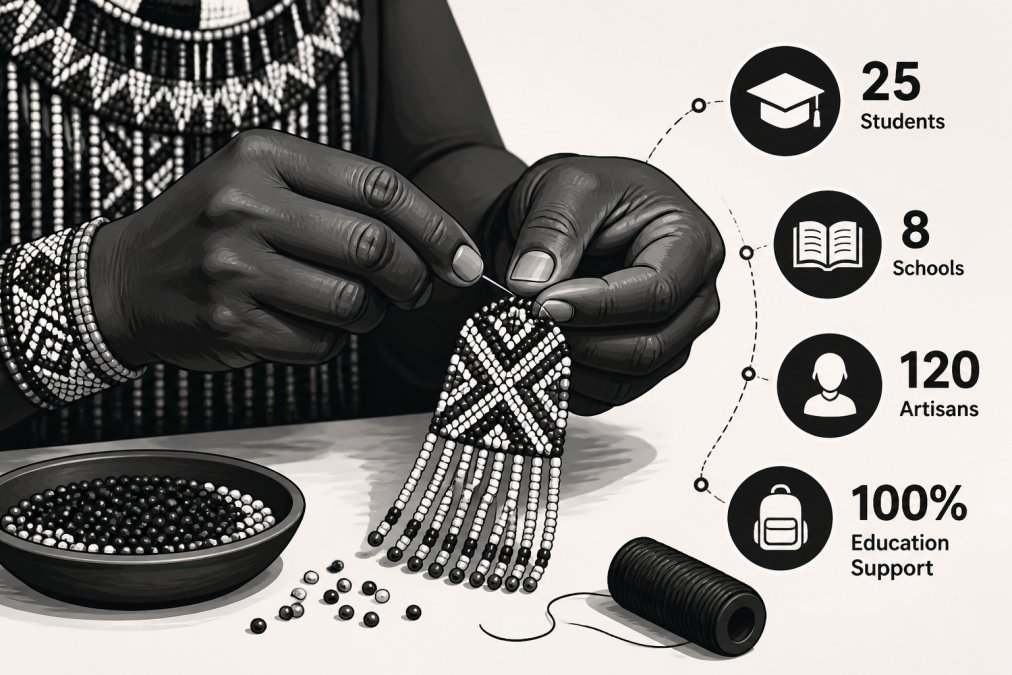
Prideful Pieces of Africa exemplifies this transparency. Each piece comes with information about the specific artisan who created it and how your purchase contributes to educational access in their community. The brand's regenerative practices ensure that environmental sustainability and education funding are both prioritized.
Verifying educational impact claims requires asking direct questions. Request impact reports. Ask for the names of schools or educational programs your purchase supports. Legitimate brands welcome this scrutiny because they have documentation to back their claims.
Look for brands that measure impact consistently and transparently. They track metrics like school enrollment rates, attendance, graduation rates, and resource availability in the communities they support.
Conscious Consumerism Education: Building Your Sustainable Wardrobe
Building a wardrobe that supports education through ethical fashion purchases requires shifting from a consumption mindset to an investment mindset. Instead of buying more, you're buying better, pieces designed to last, created by artisans earning fair wages, with proceeds funding educational access.
The cost-per-wear calculation is a practical tool that reframes how you evaluate fashion spending. A handcrafted item priced at $150 that you wear 100 times costs $1.50 per wear. A mass-produced item priced at $30 that you wear 5 times costs $6 per wear. When you factor in the educational impact of your purchase, the ethical piece becomes the more economical choice.
To calculate cost-per-wear: divide the price by your realistic estimate of how many times you'll wear the piece. This calculation encourages intentional purchasing and naturally guides you toward ethical brands.
Post-purchase garment care maximizes impact. The longer you wear a piece, the lower its cost-per-wear and the greater its educational impact. Basic care practices include hand-washing delicate pieces, air-drying rather than using heat, storing properly, repairing small damage immediately, and rotating pieces to distribute wear evenly. When a handcrafted garment lasts 5-10 years instead of one season, your purchase supports education far more effectively.
Sustainable Fashion Impact Education: Certifications and Verification
Understanding what certifications actually guarantee helps you identify brands that genuinely support education.
Fair Trade Certified labels indicate that products meet rigorous standards for fair wages, safe working conditions, and environmental sustainability. Fair Trade organizations verify that artisans earn minimum prices for their work and that a portion of proceeds funds community development, often including education.
B Corp Certification requires companies to meet high standards for social and environmental performance, accountability, and transparency. For fashion brands, this certification signals genuine commitment to supporting education and other community benefits.
Organic and sustainable material certifications ensure that environmental impact isn't harming the communities where artisans live. When water sources are protected and chemicals aren't contaminating soil, communities have more resources available for education.
Key certifications that guarantee educational support include Fair Trade International, Fair Trade USA, B Lab Certification, and industry-specific standards like the Textile Exchange Standard for organic materials. When a brand displays these certifications, you can verify their authenticity through the certifying organization's website.
Fair Trade International standards and verification process
Making Your Ethical Fashion Purchases Count for Education
Asking the right questions before you buy ensures that your money actually reaches educational initiatives.
Start by understanding the brand's supply chain. Where are the pieces made? Who are the artisans? What are their working conditions? How much do they earn? Ethical brands expect these questions and have detailed answers prepared.
Next, ask specifically about education: What educational initiatives does your purchase support? Can you name the schools or programs? How much of my purchase goes directly to education funding? What metrics do you track to measure educational impact?
Ask about material sourcing: Where do materials come from? Are suppliers paid fairly? Are environmental practices sustainable?
Request proof and impact reports. Ask for documentation and annual impact reports detailing exactly how much funding went to education, how many students benefited, and what specific educational outcomes were achieved.
When you request proof, you're signaling to the brand that transparency matters to you. You're creating market pressure for accountability.
Conclusion: Fashion as a Force for Educational Change
The fashion industry's current trajectory toward faster production, lower prices, and greater environmental damage directly undermines educational access in artisan communities worldwide. But your purchasing power offers a different path forward.
When you support education through ethical fashion purchases, you're funding school fees, textbooks, teacher salaries, and educational infrastructure. You're enabling children to attend school instead of working. You're choosing a system where human dignity and education are valued over profit margins.
Prideful Pieces of Africa demonstrates what's possible when fashion brands prioritize transparency, fair remuneration, and community investment. Every handcrafted piece carries the story of an artisan earning fair wages and contributing to their community's educational future.
Start by shifting your purchasing habits: buy fewer pieces, choose quality over quantity, and prioritize brands with transparent supply chains and documented educational impact. Calculate cost-per-wear to justify investing in pieces that last. Care for what you own so each purchase's impact extends across years, not seasons. Ask brands directly about their educational initiatives and verify their claims through impact reports and third-party certifications.
Your wardrobe can be a force for educational change. Choose brands like Prideful Pieces of Africa that prove fair wages, transparent sourcing, and regenerative practices aren't obstacles to beautiful design, they're the foundation of it. Shop with intention, support artisans directly, and watch as your fashion choices transform educational access in communities that deserve opportunity and dignity.
| Ethical Fashion Practice | Impact on Education | Implementation |
|---|---|---|
| Fair wage payment to artisans | Enables school fees and educational investment | Verify specific hourly rates or piece payments |
| Transparent supply chain | Ensures accountability and measurable impact | Request supply chain documentation and artisan names |
| Third-party certification | Validates educational support claims | Look for Fair Trade, B Corp, or industry certifications |
| Cost-per-wear calculation | Extends garment life and increases educational impact per purchase | Divide price by realistic wear frequency |
| Post-purchase care | Maximizes impact by extending garment lifespan | Hand-wash, air-dry, repair promptly |
| Impact reporting | Demonstrates specific educational outcomes | Request annual reports showing students supported |
Frequently Asked Questions
How can I verify that ethical fashion purchases actually support education?
Look for brands that provide transparent supply chain documentation, impact reports, and specific details about educational programs they fund. Request proof such as school enrollment numbers, scholarship amounts, or infrastructure projects. Legitimate brands welcome these questions and can show evidence of partnerships with schools or educational organizations in artisan communities. Ask for annual impact reports or third-party verification rather than relying solely on marketing claims.
What's the difference between ethical fashion brands education and greenwashing?
Genuine ethical fashion brands education involves documented partnerships with schools, transparent wage breakdowns, and verifiable impact metrics. Greenwashing uses vague language like 'supports communities' without specifics. Red flags include no supply chain transparency, inability to name artisans or locations, or educational claims without supporting evidence. Ethical brands can answer detailed questions about how funds reach educational programs and provide accountability through reports or certifications.
How does the cost-per-wear calculation help support education through ethical fashion purchases?
Cost-per-wear divides the purchase price by estimated wears over the garment's lifetime. A $100 ethical piece worn 100 times costs $1 per wear; a $20 fast-fashion item worn 10 times costs $2 per wear. This calculation justifies premium ethical pricing while encouraging longevity, extending garment life maximizes the educational impact of your purchase. When you wear handcrafted pieces longer, more of your investment reaches artisan communities and educational programs, making the higher upfront cost more efficient for sustainable impact.
What role does post-purchase garment care play in sustainable fashion impact education?
Proper garment care extends the life of handcrafted pieces, which amplifies educational impact over time. Following care instructions, hand-washing delicate items, air-drying, proper storage, preserves quality and reduces replacement frequency. This longevity means your initial ethical fashion purchase continues supporting artisan communities and education programs longer. Brands committed to sustainable fashion impact education often provide detailed care guides to help customers maximize garment lifespan and the lasting benefit of their purchase.
This article was written using GrandRanker