

Verify Authentic African Artisan Jewelry: 7 Key Steps
Table of Contents
- How to Verify Authentic African Artisan Jewelry: What You Need to Know
- Understanding Authentic African Jewelry Materials
- Step 1: Examine Handmade Craftsmanship and Irregularities
- Step 2: Identifying Genuine African Beads and Components
- Step 3: How to Spot Fake African Jewelry and Mass Production
- Step 4: Verify Fair Trade African Jewelry Certification and Provenance
- Step 5: Assess Regional Origin and Cultural Authenticity
- Step 6: Work with African Art Specialists and Appraisers
Verify Authentic African Artisan Jewelry: 7 Key Steps
Last Updated: July 18, 2026
Learning how to verify authentic african artisan jewelry is essential for anyone serious about building a meaningful collection. Counterfeit African jewelry floods the market every year, deceiving buyers who think they're supporting artisans when their money goes to factories overseas. Understanding how to verify authentic pieces protects both your investment and your integrity as a conscious consumer. Below are seven concrete verification methods that separate genuine pieces from clever replicas.
Understanding Authentic African Jewelry Materials
Authentic African artisan jewelry relies on specific materials that have been used for centuries across the continent. Natural materials dominate genuine pieces: brass, gold, silver, bone, wood, and natural beads. Many artisans in East Africa work with hand-poured brass, which creates unique surface characteristics impossible to replicate through industrial casting.
Natural vs. Synthetic Components
Natural materials age gracefully, develop patina, and show wear patterns that reflect real use. Synthetic alternatives fade, crack, and deteriorate in predictable, artificial ways.
Authentic African beads are typically made from bone, glass, ceramic, or semi-precious stones. When you hold a genuine bone bead, it has weight and warmth. Plastic beads feel hollow and cold by comparison. Glass beads made by hand show subtle color variations and slight irregularities in shape.
Regional Material Signatures
Different regions of Africa developed distinct material preferences based on local resources and cultural traditions. Kenyan and Tanzanian artisans favor brass and hand-poured components. South African makers often incorporate bone, wood, and semi-precious stones like jasper and agate. West African jewelry frequently features gold-plated brass and elaborate beadwork.
Understanding these regional signatures helps you verify authenticity. If a seller claims a piece is Maasai beadwork but it's made entirely from plastic beads and synthetic materials, that's an immediate red flag.
Step 1: Examine Handmade Craftsmanship and Irregularities
The most telling sign of authenticity is imperfection. Handmade pieces have irregularities, slight variations in bead spacing, asymmetrical patterns, and unique quirks that prove human hands shaped them.
Mass-produced jewelry aims for uniformity. Every bead is spaced exactly the same distance, every edge is perfectly smooth, and every color is identical. Genuine handcrafted pieces show variations that machines cannot replicate.
Look at the beadwork pattern. Authentic Maasai beadwork shows intentional design, but the execution varies slightly from bead to bead. The spacing between beads might be 2mm in one section and 2.5mm in another. Examine the clasp or closure mechanism. Hand-soldered connections show solder drips, slight asymmetry, and evidence of the artisan's technique. Machine-welded closures are perfectly uniform.
Step 2: Identifying Genuine African Beads and Components
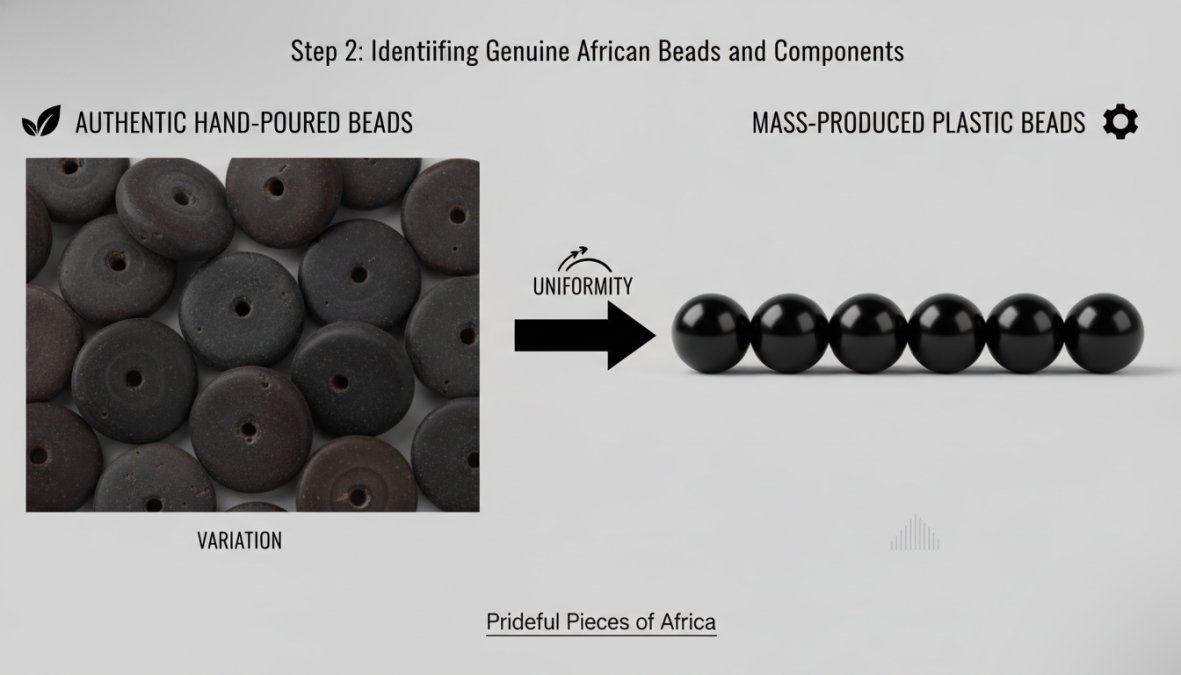
Bead identification is a critical skill for verifying authentic african jewelry. Genuine African beads have specific characteristics that separate them from mass-produced alternatives.
Bead Weight, Texture, and Surface Markings
Hold the piece in your hand. Authentic beads have real weight. Glass and bone beads feel substantial. Plastic beads feel light and hollow.
Run your fingers across the bead surface. Genuine hand-poured beads show tiny surface irregularities, small pits, and slight texture variations. Look for hand-poured indicators like subtle seams where mold halves met, or tiny variations in color intensity from uneven cooling.
Examine the bead holes. Authentic hand-drilled holes show slight irregularities; the hole might be slightly off-center or the diameter might vary slightly from top to bottom. Machine-drilled holes are perfectly centered and uniform.
Maasai Beadwork Characteristics
Maasai beadwork is among the most recognized and imitated African jewelry traditions. Authentic Maasai pieces use small glass beads, typically 2-4mm in diameter, arranged in intricate geometric patterns with bold color combinations that carry cultural meaning.
The beadwork structure shows consistent tension. When you look at an authentic piece, the beads sit snugly against each other. Mass-produced imitations often have loose beads that shift when you move the piece.
Inspect the backing material. Authentic Maasai beadwork is typically sewn onto leather or fabric backing with visible, regular, and secure stitching. Fake pieces often use cheap synthetic backing or glued beads that deteriorate quickly.
Step 3: How to Spot Fake African Jewelry and Mass Production
Counterfeit African jewelry has become increasingly sophisticated, but telltale signs still exist.
Machine-Made vs. Hand-Poured Indicators
Machine-made jewelry has a sterile quality. Every component is identical, spacing is uniform, and finishes are flawless. Examine solder joints and connection points. Hand-soldered connections show variations in solder application. Machine-welded connections are perfectly uniform.
Check for mold seams. Mass-produced beads made through injection molding show a thin seam line where the two mold halves met. Hand-poured beads don't have this seam, or if they do, it's irregular and slightly different from piece to piece.
Counterfeit Market Red Flags
Extremely low prices, significantly below market rates for handmade pieces, are a major warning sign. Sellers who can't provide information about the artisan or origin are suspicious. Genuine sellers know who made their pieces and can tell you the artisan's name, region, and story.
Watch for sellers who claim every piece is identical. Handmade jewelry varies piece to piece. Be skeptical of pieces labeled "African-inspired" rather than "authentic African," which often signals that the piece was designed and manufactured outside Africa.
Step 4: Verify Fair Trade African Jewelry Certification and Provenance
Provenance, the documented history of a piece, is crucial for verification. Fair trade certification and transparent sourcing prove that your purchase supports real artisans and communities.
Documentation and Artisan Traceability
Legitimate sellers provide documentation including certificates of authenticity, artisan information, material details, and fair trade practices. Ask for artisan information. Reputable sellers can tell you about the specific artisan who created your piece, their community, and their story.
Look for fair trade certifications from organizations like Fair Trade USA. Certified pieces come with official documentation proving compliance with standards for artisan compensation, working conditions, and environmental impact.
Research the seller's supply chain. Do they work directly with artisans or through middlemen? Direct relationships reduce the risk of counterfeits and ensure more money reaches the artisans.
Step 5: Assess Regional Origin and Cultural Authenticity
Understanding the cultural context of African jewelry helps you verify authenticity. Pieces created within their cultural tradition carry specific design elements, material choices, and construction methods that distinguish them from imitations.
Regional origin matters significantly. Maasai beadwork has distinct characteristics different from Zulu beadwork or Ethiopian jewelry. Examine design symbolism. Authentic African jewelry often incorporates symbols with cultural meaning. Specific color combinations, geometric patterns, and design elements carry significance within their culture of origin.
Verify the geographic claim. If a seller says a piece is Kenyan, research what authentic Kenyan jewelry looks like and compare the piece to documented examples from that region.
Step 6: Work with African Art Specialists and Appraisers
Professional appraisers provide authoritative verification when you're uncertain. An African art specialist can examine your piece and provide documentation of its authenticity, age, materials, and cultural origin.
Finding a qualified appraiser requires research. Look for professionals who specialize specifically in African jewelry and art. Specialists understand regional traditions, material signatures, and construction methods that generalists miss.
Professional appraisals provide detailed documentation describing the piece, its materials, its origin, and its estimated value. This documentation becomes part of your piece's provenance and significantly increases its credibility. Ask sellers if they've had pieces professionally appraised. Sellers confident in their authenticity often provide appraisal documentation.
| Verification Method | What It Shows | Time Required | Best For |
|---|---|---|---|
| Material examination | Genuine vs. synthetic components | 5-10 minutes | Quick initial assessment |
| Handcraft analysis | Machine-made vs. hand-crafted indicators | 10-15 minutes | Confirming authenticity |
| Bead inspection | Quality and origin of beads | 5 minutes | Identifying fakes |
| Provenance research | Artisan and origin documentation | 15-30 minutes | Building confidence |
| Professional appraisal | Authoritative verification | 1-2 weeks | High-value pieces |
The Real Cost of Authenticity
Authentic African artisan jewelry costs more than mass-produced imitations because artisans deserve fair compensation. When you buy authentic pieces, you're supporting families, funding education, and providing access to clean water in East African communities. Each handcrafted piece is shaped by a single artisan, never a machine, ensuring that no two items are exactly alike.
The verification process protects both your investment and your values. Taking time to examine materials, assess craftsmanship, research provenance, and understand cultural context ensures you're buying authentic pieces that carry real meaning.
Verifying authentic African artisan jewelry requires attention to detail, but the effort ensures you're supporting real artisans and acquiring pieces with genuine cultural significance. Every piece comes with transparent sourcing information, fair trade practices, and direct artisan support. Start your collection with pieces you can verify, pieces with stories, and pieces that make a real difference in the communities that created them.
Frequently Asked Questions
What materials are typically used in authentic African artisan jewelry?
Authentic African artisan jewelry commonly features natural materials including brass, hand-poured metals, genuine beads made from bone or stone, and natural fibers. Maasai beadwork, for example, uses glass beads paired with leather and metal accents. East African artisans often source materials locally or through ethical suppliers. Handmade pieces may show variations in material quality, which is a sign of authenticity rather than a flaw. Verify that materials are natural or ethically sourced metals, mass-produced replicas often use cheap synthetic components or uniform machine-finished materials.
How can I tell if African beads are genuine and not mass-produced imitations?
Genuine African beads display natural irregularities: uneven surfaces, slight color variations, and visible hand-finishing marks. Examine the bead holes, authentic beads often have slightly misaligned or rough-edged holes from hand-drilling, while mass-produced replicas show perfectly uniform, machine-drilled holes. Weight and texture matter too; authentic beads feel substantial and have varied textures, not smooth uniformity. Research the specific region: Maasai beads have distinctive characteristics, including layered glass and specific color patterns tied to cultural meaning. Ask the seller for provenance documentation and information about the artisan or cooperative that created the piece.
What certifications or documentation should I look for to verify fair trade African jewelry?
Look for transparent sourcing information, artisan names or cooperative details, and documentation of fair wages and working conditions. Ethical sellers provide provenance details including the region of origin (Kenya, Tanzania, South Africa, etc.), the artisan's name or cooperative, and often photos of the maker. Fair trade certifications vary, but reputable sellers offer clear breakdowns of how profits support communities, education, clean water, or direct artisan compensation. Request this documentation before purchasing. Be cautious of vague claims about 'supporting communities' without specific details. Prideful Pieces of Africa, for example, transparently shares how each purchase supports families and essential community needs.
What are the telltale signs that African jewelry is counterfeit or mass-produced?
Counterfeit jewelry shows perfect uniformity, machine-finished edges, and identical beads with no variation. Mass-produced replicas lack the irregularities that define handmade craftsmanship, each bead is identical, spacing is uniform, and materials feel cheap or plastic-like. Check for inconsistent cultural symbolism; counterfeit pieces may mix design elements from different regions incorrectly. Extremely low prices compared to market standards often signal fakes. Examine stitching or metal work for signs of machines: perfectly straight lines, no visible hand-tool marks, and uniform patina. Ask the seller detailed questions about the artisan, legitimate sellers know their makers and can share stories, photos, and specific cultural context behind each design.
This article was written using GrandRanker