

Where Your Money Goes in Ethical Fashion: A Cost Breakdown
Table of Contents
- Where Does Your Money Go in Ethical Fashion?
- Breaking Down the Cost: What You're Actually Paying For
- Understanding Ethical Fashion Supply Chain Transparency
- How to Verify Ethical Fashion Brands: What to Look For
- Sustainable Materials in Fashion: The Hidden Cost Factor
- Cost-Per-Wear: Making Ethical Fashion Affordable Long-Term
- Building an Ethical Wardrobe on a Budget: Practical Strategies
- The Real Impact: Where Your Money Creates Change
Where Your Money Goes in Ethical Fashion: A Cost Breakdown
Last Updated: July 28, 2026
When you ask "where does my money go in ethical fashion," you're asking one of the most important questions in conscious consumerism. The answer reveals why handcrafted, ethically-made pieces cost significantly more than fast fashion alternatives, and why that price difference creates real impact. At Prideful Pieces of Africa, we believe transparency about pricing is essential to building trust. Every dollar spent on ethical fashion supports fair wages, sustainable materials, and supply chain accountability that mass-market retailers simply don't offer. Below, we'll break down exactly where your money goes when you invest in ethical fashion, and show you how to verify that your purchase actually creates the change you intend.
Where Does Your Money Go in Ethical Fashion?
The price gap between ethical and fast fashion isn't arbitrary. A typical fast fashion garment allocates roughly 2-3% of its retail price to labor, while an ethically-made piece allocates 12-18%, ensuring artisans receive living wages rather than subsistence pay. Material costs follow a similar pattern: organic cotton, linen, and regeneratively-sourced materials cost 40-60% more but eliminate toxic dyes and pesticide residue.
The remaining costs, approximately 20-25% of the final price, go toward supply chain verification, certifications, quality control, and smaller production runs. Fast fashion manufactures millions of identical items; ethical brands often produce in limited quantities, which eliminates bulk discounts but ensures each piece receives individual attention.
Breaking Down the Cost: What You're Actually Paying For
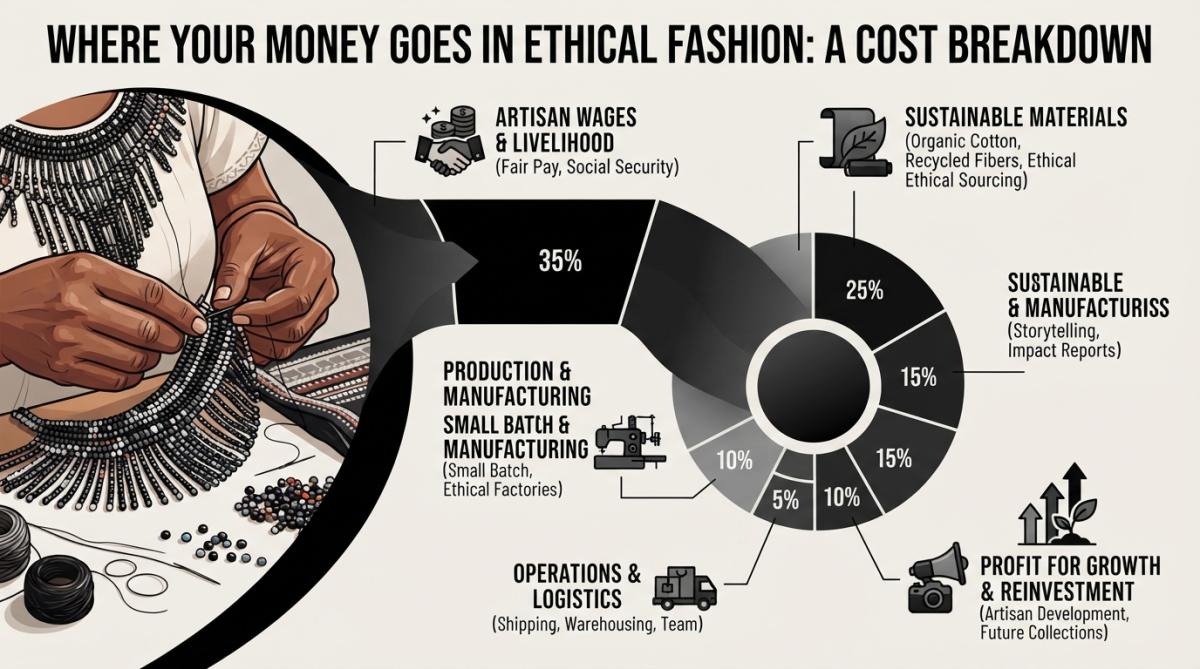
Fair Wages and Living Standards for Artisans
The most significant cost difference between ethical and fast fashion is labor. When you buy from Prideful Pieces of Africa, a substantial portion of your purchase directly supports artisans in East Africa. Rather than the $2-5 daily wage typical in fast fashion factories, ethical brands ensure hourly rates that meet or exceed local living wage standards, often $8-15 per hour depending on region and skill level. A master beadworker or textile artisan possesses skills developed over years, and paying fairly for that expertise is the baseline of ethical production.
Materials, Production, and Quality Control
Ethical fashion typically uses materials sourced with environmental and social responsibility in mind. Organic cotton costs 1.5-2x more than conventional cotton because it eliminates synthetic pesticides and fertilizers. Handcrafted production is inherently slower and more labor-intensive than machine production, but it produces superior durability and uniqueness. Quality control in ethical supply chains is rigorous, with each piece inspected multiple times before shipping, which increases cost but dramatically increases longevity.
Transparency, Certification, and Supply Chain Costs
Proving that your fashion is actually ethical costs money. Third-party certifications like Fair Trade, B Corp, and GOTS require audits, documentation, and ongoing compliance monitoring, typically adding 3-5% to production costs. Supply chain transparency requires traceability systems to track materials from source through production to shipment. Additionally, smaller production runs mean higher per-unit overhead, as a fast fashion factory producing 100,000 identical items spreads costs across massive volume while an ethical brand producing 500 unique pieces absorbs the same facility and administrative costs across far fewer units.
Understanding Ethical Fashion Supply Chain Transparency
Transparency isn't just a marketing buzzword, it's the mechanism that ensures your money actually creates the impact you intend. According to research from the Ethical Fashion Forum, 73% of consumers want to know where their clothes come from, yet fewer than 10% of brands provide detailed sourcing information.
From Artisan to Your Hands: The Journey of Accountability
A transparent ethical fashion supply chain documents every step: material sourcing, artisan identification, production location, quality inspections, and shipping. Prideful Pieces of Africa traces each handcrafted piece back to the specific artisan who created it. This requires record-keeping systems, photography, and staff dedicated to documentation. When you purchase an ethically-made piece, you're paying for the ability to know who made it, what materials they used, and how they were compensated.
Why Transparency Adds to the Price Tag
Transparency requires investment in systems, people, and verification. Systems include inventory management and traceability platforms. People include supply chain managers and community liaisons who maintain relationships with artisans. Verification includes regular site visits and third-party audits. For small ethical brands, these costs represent a much larger percentage of revenue than for massive corporations, which is one reason why small, independent ethical brands often cost more than large corporations claiming sustainability.
How to Verify Ethical Fashion Brands: What to Look For
Before spending money on ethical fashion, develop a verification habit. This protects your wallet and ensures your purchase actually supports the communities you intend to help.
Red Flags: Identifying Greenwashing and False Claims
Greenwashing in fashion is rampant. Brands use language like "eco-friendly," "sustainable," and "ethical" without substantiation. Red flags include vague sourcing claims without naming suppliers or locations, absence of third-party certification, missing pricing transparency, inconsistent messaging, and no worker testimonials or stories.
Questions to Ask Before You Buy
Develop a pre-purchase checklist and reach out to brands directly:
- Who made this piece? Can they name the artisan, workshop, or region?
- What materials are used? Are they organic, regeneratively-sourced, or recycled?
- What certifications do you hold? Fair Trade, B Corp, GOTS, and similar certifications prove third-party verification.
- What is your labor standard? Do workers earn a living wage?
- How is this price determined? Ask them to break down material, labor, overhead, and profit.
- What is your return and resale policy? Ethical brands often support resale and circular fashion.
Brands that answer these questions thoroughly are investing in transparency.
Sustainable Materials in Fashion: The Hidden Cost Factor
Sustainable materials represent one of the largest cost drivers in ethical fashion. Organic cotton costs roughly 1.5-2x more than conventional cotton, reflecting the absence of synthetic pesticides and improved soil health. Regeneratively-sourced materials, those that actively improve ecosystems, cost 25-40% more than conventional farming.
Recycled and upcycled materials present a different cost dynamic. Collecting, sorting, and processing recycled materials requires specialized infrastructure. Natural, non-toxic dyes are expensive compared to synthetic dyes, requiring longer processing times and reducing usable yield.
Cost-Per-Wear: Making Ethical Fashion Affordable Long-Term
The true cost of any garment is the price divided by the number of times you wear it. A $100 ethical piece you wear 200 times costs $0.50 per wear. A $30 fast fashion piece you wear 15 times costs $2.00 per wear. The ethical piece is four times cheaper when measured this way.
Ethical fashion is designed for longevity: durable materials, quality construction, and timeless design all extend wearable life. Additionally, ethical pieces hold value in the resale market, typically retaining 40-60% of their original value on secondhand platforms, while fast fashion pieces resell for 5-10% of original price. When you factor in resale value, the net cost of ethical fashion drops significantly.
Building an Ethical Wardrobe on a Budget: Practical Strategies
Ethical fashion doesn't require unlimited spending. Start by identifying your wardrobe foundation: the 5-10 pieces you wear repeatedly. Invest in ethical versions of basics, as these will be worn hundreds of times. Buy fewer high-quality pieces rather than many mediocre ones. Research brands aligned with your budget and commit to them rather than constantly searching for deals.
Secondhand shopping is the most sustainable and affordable way to access ethical fashion. Resale platforms like Depop, Vestiaire Collective, and Poshmark connect buyers with gently-worn pieces from ethical brands at reduced prices. Circular fashion models, rental, swaps, and resale, reduce the cost of ethical fashion while maximizing environmental benefit. Research from the Ellen MacArthur Foundation's circular economy research indicates that extending garment life by just 9 months reduces environmental impact by 20-30%.
The Real Impact: Where Your Money Creates Change
Understanding where your money goes in ethical fashion is about recognizing the tangible impact of your choices. When you purchase from Prideful Pieces of Africa, your money supports specific outcomes: a family in Kenya receives fair wages, a child attends school, a village gains access to clean water. Each handcrafted piece is shaped by a single artisan's hands, never a machine.
This is fundamentally different from fast fashion, where your money primarily benefits shareholders and executives. Ethical fashion also creates environmental impact through sustainable materials that reduce pesticide use and water contamination. Fair labor practices keep communities stable and preserve cultural traditions. Transparent supply chains create accountability and incentivize continuous improvement.
The price premium you pay for ethical fashion isn't a markup, it's the true cost of fashion made responsibly. Fast fashion's low prices are only possible because costs are externalized: environmental degradation, worker exploitation, and cultural erosion are borne by communities and ecosystems rather than reflected in the price tag.
Ethical fashion pricing reflects real, measurable commitments to fair labor, sustainable materials, and supply chain transparency. When you understand where your money goes, you recognize that ethical pieces aren't expensive, they're fairly priced. Prideful Pieces of Africa embodies this commitment: each handcrafted piece supports East African artisans through fair wages, regenerative practices, and transparent sourcing. By choosing pieces that tell a story and support communities, you're building a wardrobe with meaning. Shop Prideful Pieces of Africa and wear pieces that create real change.
Frequently Asked Questions
How do I know where my money actually goes when I buy ethical fashion?
Reputable ethical fashion brands provide supply chain transparency by sharing information about artisan wages, production costs, and community impact. Look for brands that publish detailed breakdowns of pricing, certifications from third-party organizations, and direct communication about where funds are allocated. Prideful Pieces of Africa, for example, clearly outlines how purchases support artisan families, education, and clean water initiatives. Request this information directly from brands, legitimate companies are transparent about their practices.
Why is ethical fashion more expensive than fast fashion, and is the cost breakdown justified?
The cost breakdown ethical fashion vs fast fashion reveals significant differences: ethical brands pay living wages to artisans, use sustainable materials, maintain transparent supply chains, and invest in quality control. Fast fashion prioritizes speed and volume, cutting corners on labor standards and material sourcing. When you buy ethical, you're paying for fair labor practices, environmental responsibility, and accountability. Each handcrafted piece from ethical producers represents genuine artisan skill, often created by a single maker, versus mass-produced items made in exploitative conditions.
What certifications and standards should I look for to verify ethical fashion brands?
When learning how to verify ethical fashion brands, look for certifications like Fair Trade Certified, B Corp certification, and supply chain audits from recognized organizations. Ask brands to share their ethical fashion supply chain transparency reports, artisan payment documentation, and community impact metrics. Legitimate brands welcome these questions and provide evidence. Compare their claims against competitor practices, if one brand is transparent while others are vague, that's a strong verification signal. Request references or testimonials from artisans themselves.
Can I afford ethical fashion on a budget, and how do I maximize value?
Yes, through cost-per-wear analysis and strategic choices. Calculate how many times you'll wear a piece, a higher-priced ethical item worn 100 times costs less per wear than a cheap fast-fashion piece worn five times. Build a capsule wardrobe with versatile, quality basics. Explore secondhand and consignment options for ethical brands, which reduces cost while supporting the circular economy. Prioritize one or two investment pieces from ethical makers rather than many cheap items. This approach aligns with conscious consumerism while respecting your budget.
This article was written using GrandRanker