

How to Clean African Beaded Jewelry at Home
Table of Contents
- Why Proper Cleaning Matters for African Beaded Jewelry
- What You'll Need Before You Start
- Step-by-Step: How to Clean African Beaded Jewelry
- Best Practices for Beaded Jewelry Maintenance
- How to Store Handmade Beaded Necklaces and Protect Them
- Common Mistakes to Avoid When Cleaning Beaded Jewelry
- Restoring Luster to Aged Beads and Troubleshooting Stains
- Frequently Asked Questions
Last Updated: September 3, 2026
Why Proper Cleaning Matters for African Beaded Jewelry
Handcrafted African beaded jewelry deserves care that honors its artistry and longevity. When you invest in pieces from Prideful Pieces of Africa, you're acquiring wearable history created by skilled artisans. Over time, dust, body oils, lotion residue, and environmental exposure accumulate on beads, dulling their luster and potentially weakening delicate stringing materials.
Many cleaning methods designed for modern mass-produced jewelry damage traditional African beaded pieces. Harsh chemicals, ultrasonic cleaners, and abrasive techniques risk breaking fragile raffia, degrading natural fibers, or loosening beads. Each handmade piece is one-of-a-kind; once damaged, it cannot be replicated exactly as originally crafted.
Proper cleaning extends jewelry life while preserving the patina that makes antique trade beads distinctive. A gentle approach respects both materials and craftsmanship. This guide walks you through cleaning African beaded jewelry at home using methods that protect your investment while restoring shine.
What You'll Need Before You Start
Gathering the right supplies prevents the temptation to improvise with harsh alternatives. Most items are already in your home.
Safe Cleaning Solutions for Glass Beads and Other Materials
The foundation of safe cleaning is mild liquid soap and water. Regular dish soap cuts through oils without damaging porous materials like bone, wood, or glass beads.
Mix one teaspoon of mild liquid soap into one cup of lukewarm water. This concentration lifts dirt and lotion buildup without harshness. Avoid hot water, which weakens natural fibers and causes beads to expand unpredictably (peer-reviewed research). Never use bleach, vinegar-based solutions, or commercial jewelry cleaners formulated for modern metals.
For stubborn tarnish on metal components, apply equal parts water and white vinegar only to metal portions using a cotton swab, keeping it away from beads and fibers. However, this is rarely necessary for traditional African beaded pieces, which typically feature minimal metal.
For crystal beads or pieces with delicate patina you want to preserve, use only the mild soap and water solution. Aged beads develop character over decades; that weathered appearance is part of their value.
Essential Tools for Gentle Cleaning
A soft-bristle toothbrush is your primary cleaning tool. Look for one labeled "soft" or "extra-soft"; bristles should bend easily under light pressure. This removes dirt from crevices without scratching surfaces. Avoid medium or hard-bristle brushes.
Microfiber cloths or lint-free cotton cloths are essential for drying. Microfiber absorbs moisture quickly without leaving lint. Have at least two cloths on hand.
A shallow glass or ceramic bowl holds your cleaning solution. The container should be deep enough to submerge beaded sections without forcing the piece unnaturally.
Cotton swabs (Q-tips) are useful for targeted cleaning of metal findings, clasps, or small crevices.
| Tool | Purpose | Why It Matters |
|---|---|---|
| Soft-bristle toothbrush | Remove dirt from bead crevices | Won't scratch or damage surfaces |
| Microfiber cloth | Absorb moisture without lint | Prevents water spots and fiber residue |
| Shallow bowl | Hold cleaning solution | Allows safe submersion of jewelry |
| Cotton swabs | Clean metal findings precisely | Targets specific areas without over-wetting |
| Lukewarm water + mild soap | Gentle cleaning base | Safe for all natural materials |
Step-by-Step: How to Clean African Beaded Jewelry
Step 1: Prepare Your Workspace
Clear a flat, dry surface where you can work without rushing. Lay down a clean microfiber cloth to catch any beads that might slip and provide a soft landing surface.
Ensure the area is well-lit. Natural daylight or a desk lamp helps you see dirt and the condition of stringing materials clearly. Keep your cleaning solution, tools, and drying cloths within arm's reach.
Step 2: Create Your Cleaning Solution
Pour one cup of lukewarm water into your shallow bowl. The temperature should feel neutral to your inner wrist. Add one teaspoon of mild liquid soap and stir gently. The solution should smell faintly soapy.
Test the solution on an inconspicuous area of the jewelry first if uncertain about how it will react. This is especially important for pieces with dyed beads or unusual materials.
Step 3: Soak and Gently Clean
Place your jewelry in the soapy water solution. For necklaces, allow the entire piece to submerge if the stringing material can handle it. For bracelets or fragile pieces, clean one section at a time, keeping stringing material as dry as possible.
Let the jewelry soak for 5-10 minutes. This allows soapy water to penetrate crevices and loosen dirt without aggressive scrubbing.
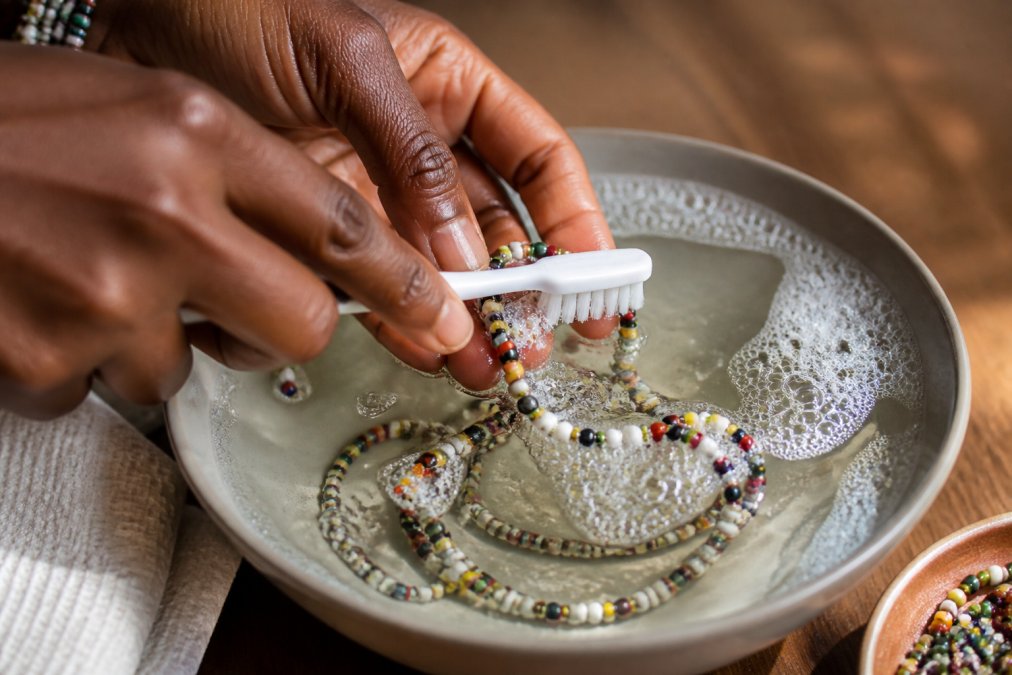
After soaking, use your soft-bristle toothbrush to gently clean each bead. Work in small sections, brushing in one direction rather than scrubbing back and forth. Pay particular attention to crevices and areas where skin oils accumulate.
For metal findings or clasps with tarnish, use a cotton swab dipped in the soapy solution. Gently rub the metal, then immediately dry it with a clean cloth to prevent water spots.
Never use the toothbrush on fragile stringing materials (peer-reviewed research). If raffia or traditional fibers appear dirty, allow them to soak while you clean the beads, then gently wipe the fibers with a damp cloth.
Step 4: Rinse Thoroughly
Drain the soapy water and refill your bowl with fresh lukewarm water. Submerge the jewelry and gently agitate it to remove soap residue.
Repeat this rinsing process 2-3 times until the water runs clear and you no longer smell soap. Soap residue left on beads will dry to a dull film. For the final rinse, consider using distilled water if available to prevent mineral deposits.
Step 5: Dry Your Beads Properly
Remove the jewelry from the rinse water and immediately lay it flat on a clean microfiber cloth. Do not hang it while wet; water and gravity can stress fragile stringing materials.
Gently press another microfiber cloth on top to absorb excess moisture. Pat gently rather than wringing or squeezing.
Once no longer dripping, leave it laid flat on a dry microfiber cloth in a well-ventilated area. Allow it to air dry completely, typically 2-4 hours. Avoid direct sunlight, which can fade dyed beads.
Never use a hair dryer or heat source. Heat can warp wooden beads and damage natural fibers.
Once fully dry, gently buff the beads with a clean, dry microfiber cloth to restore shine and remove water spots.
Best Practices for Beaded Jewelry Maintenance
After wearing your pieces, gently wipe them with a dry microfiber cloth to remove surface dust and oils before they accumulate.
Store jewelry in a cool, dry place away from direct sunlight. UV exposure fades dyed beads and can make wood brittle. A cloth pouch or soft box prevents dust accumulation and protects pieces from pressure or friction.
Avoid wearing beaded jewelry while exercising, swimming, or showering. Chlorine, salt water, and excessive sweat accelerate deterioration of both beads and stringing materials.
Don't apply lotions, perfumes, or sunscreen while wearing beaded jewelry. These products leave residue and can damage stringing materials. Apply personal care products first, then put on your jewelry.
Periodically inspect pieces for signs of wear. Check that beads are secure, fibers aren't fraying, and metal findings show no corrosion. For pieces worn frequently, consider professional restringing every 2-3 years.
How to Store Handmade Beaded Necklaces and Protect Them
Store necklaces flat rather than hanging them. Hanging puts constant stress on stringing materials, causing gradual stretching and weakening. A flat storage box with a soft cloth lining is ideal.
Bracelets can be stored flat or coiled gently inside a soft pouch. Never fold them sharply or bend at extreme angles.
Keep jewelry away from humidity and temperature fluctuations. A bedroom closet or dresser drawer is typically better than a bathroom. Avoid attics or basements where temperature and humidity vary dramatically.
Use acid-free tissue paper or soft cotton cloth to separate pieces if storing multiple items together. This prevents beads from scratching each other and keeps fibers from tangling.
Avoid plastic bags or airtight containers. While these seem protective, they trap moisture and prevent air circulation, promoting mold growth. Breathable cloth storage is superior.
Common Mistakes to Avoid When Cleaning Beaded Jewelry
Using hot water is one of the most common errors. Heat causes materials to expand at different rates, stressing connections and causing beads to loosen or crack. Lukewarm water is always correct.
Soaking wooden or bone beads for extended periods causes them to absorb water, leading to swelling, warping, and internal mold growth. Limit submersion to 5-10 minutes maximum.
Using ultrasonic cleaners designed for modern jewelry is a serious mistake. These devices can shake beads loose, crack delicate materials, and damage traditional fibers.
Scrubbing aggressively with medium or hard-bristle brushes scratches surfaces and stresses fibers. The soft-bristle approach takes slightly longer but prevents irreversible damage.
Leaving jewelry wet for extended periods allows moisture to penetrate porous materials and promotes mold growth. Always dry pieces promptly and completely.
Ignoring signs of fiber weakness is another mistake. If you notice fraying, loosening, or discoloration of stringing materials, restringing is needed soon.
Restoring Luster to Aged Beads and Troubleshooting Stains
After cleaning thoroughly, buff beads with a microfiber cloth using gentle circular motions. This mechanical polishing often restores considerable luster without chemicals.
For beads with stubborn dullness, a second round of gentle cleaning followed by thorough drying and buffing often achieves better results than any chemical approach.
White mineral deposits indicate hard water residue. Switch to distilled water for your final rinse and buff thoroughly. If deposits persist, soak the affected area briefly in distilled water, then dry immediately.
Discoloration or dark spots can result from mold, water damage, or oxidation of metal components. If on the bead surface only, gentle cleaning with mild soap solution often removes it. If discoloration appears inside the bead or has a fuzzy texture, that indicates internal mold, which cannot be reversed and signals that the piece needs professional attention or restringing.
Tarnish on metal findings responds to the vinegar and water solution. Apply only to metal using a cotton swab, avoid contact with beads and fibers, and dry immediately.
Yellowing of natural fibers like raffia is typically permanent and reflects age and UV exposure. This yellowing is part of the patina of aged pieces and is generally considered desirable by collectors.
If beads have become loose within their holes or stringing material shows significant wear, restringing is the appropriate solution.
Cleaning your African beaded jewelry at home is straightforward when you prioritize gentleness over intensity. The mild soap and water approach, combined with soft tools and patient technique, protects the integrity of handcrafted pieces while restoring their beauty. Each time you wear jewelry from Prideful Pieces of Africa, you're honoring the artisan's skill and the cultural traditions embedded in every bead. Proper care ensures these meaningful pieces remain vibrant and wearable for decades, becoming true heirlooms.
When your pieces need professional attention or restringing, seek artisans who understand traditional construction methods. When you're ready to expand your collection, explore Prideful Pieces of Africa's curated selection of handcrafted jewelry, each piece supports fair wages, community education, and the preservation of generations of tradition. Shop our collection of authentic, artisan-made accessories that celebrate East African culture and identity.
Frequently Asked Questions
Can I use Dawn dish soap to clean delicate African beads?
Yes, mild liquid soap like Dawn is safe for most African beaded jewelry when diluted with water. Mix a few drops with lukewarm water to create a gentle cleaning solution. Avoid submerging pieces with fragile stringing materials for extended periods. Always test the solution on a small, inconspicuous area first. This mild approach works well for glass beads, crystal beads, and bone beads without causing chemical damage or affecting the patina of antique trade beads.
How do you clean beaded jewelry without damaging the thread?
Use the soak-and-dab method rather than scrubbing. Soak your piece for 2-3 minutes in a gentle cleaning solution, then use a soft-bristle toothbrush to gently clean individual beads. Never twist, wring, or aggressively brush the stringing material. Pat dry with a paper towel rather than rubbing. For handmade beaded necklaces with delicate raffia or traditional stringing, minimize water exposure and air dry completely in a well-ventilated area to prevent mold or fiber degradation.
What should I avoid when cleaning artisan-made jewelry?
Avoid ultrasonic cleaners, abrasive scrubbing, harsh chemicals, and prolonged soaking. Don't use peroxide, alcohol, or commercial jewelry cleaners on wood beads or pieces with traditional stringing materials. Never apply lotion or perfume directly to beads, residue buildup attracts dust and dirt. Skip the dishwasher and avoid high heat or direct sunlight during drying. Store away from high humidity to prevent tarnish and preserve the integrity of handmade components.
How often should I clean my African beaded jewelry?
Clean your pieces every 2-4 weeks with regular wear, or when you notice visible dust, lotion buildup, or residue. Light maintenance, wiping with a damp cloth, can happen weekly. Antique trade beads need less frequent deep cleaning; handle them gently and store in dry conditions. The frequency depends on your climate (humid environments may require more care) and how often you wear the piece. Proper storage between wears reduces the need for frequent cleaning.
This article was written using GrandRanker