

Is Fair Trade Jewelry More Expensive? A 2026 Guide
Table of Contents
- The Real Cost of Fair Trade Jewelry: A Price Breakdown
- The Benefits of Fair Trade Jewelry Beyond the Price Tag
- Ethical Jewelry Pricing Breakdown: Where Your Money Goes
- Fairtrade vs. Fairmined: What's the Difference?
- Hidden Costs of Non-Ethical Jewelry
- Budget-Friendly Ethical Alternatives
- Resale Value: Does Ethical Jewelry Hold Its Worth?
- Conclusion: Making an Informed Choice
- Frequently Asked Questions
Last Updated: September 16, 2026
The Real Cost of Fair Trade Jewelry: A Price Breakdown
Ask most shoppers whether fair trade jewelry is more expensive and you'll get a quick nod. The honest answer is more layered: raw materials and labor behind ethical pieces cost more to source, but the gap at the register is often smaller than the gap in how that money gets spent. This guide from Prideful Pieces of Africa breaks down where your dollars land, from mine to finished piece.
Fair trade jewelry is jewelry made under certified fair trade standards, which guarantee miners and artisans a minimum price, a development premium, and safe working conditions. That structure adds cost at the source. What it does not do is inflate the final price the way a traditional retail markup does.
Most price comparisons get this wrong: they compare a fair trade piece to a mass-produced one as if both used the same inputs.
Below, we'll walk through raw material costs, artisan wages, the Fairtrade premium, resale value, and budget-friendly ways to shop ethically.
Raw Material Costs: Fairtrade Gold vs. Recycled Gold
Fairtrade gold carries a minimum price plus a separate premium on top of the market rate. Recycled gold sidesteps new mining entirely.
The trade-off is real. Fairtrade gold funds mining communities directly. Recycled gold reduces environmental impact but doesn't improve conditions for small-scale miners. Neither is automatically "better", they solve different problems.
Labor and Artisan Wages
Handmade jewelry costs more to produce because a person, not a machine, makes it, the core reason a handcrafted piece costs more than a factory-stamped one.
When a single artisan shapes, strings, or finishes a piece, the labor hours show in the price. Fair wages mean those hours support a household, not just a shift.
The Benefits of Fair Trade Jewelry Beyond the Price Tag
The benefits of fair trade jewelry extend past the object itself. Certified fair trade systems route a development premium back to mining and artisan communities, funding projects the community chooses: education, clean water, healthcare, and equipment.
That premium is separate from wages, an additional payment on top of the fair price, and one of the clearest differences between "ethically sourced" as a label and ethical sourcing as a verified practice.
Traceability matters too. When a supply chain is audited, you can follow a piece from mine or workshop to shelf. When it isn't, you're trusting a claim with nothing behind it.
At Prideful Pieces of Africa, every piece is shaped by a single artisan, never a machine, and the purchase supports families, education, and clean water in the communities where those artisans live. That's the benefit that doesn't show up on a price tag.
Ethical Jewelry Pricing Breakdown: Where Your Money Goes
An ethical jewelry pricing breakdown splits into four buckets: raw materials, artisan labor, certification and auditing, and retail margin. Understanding the split shows why an ethical piece costs what it does, and why the premium at the source isn't the same as the premium at the register.
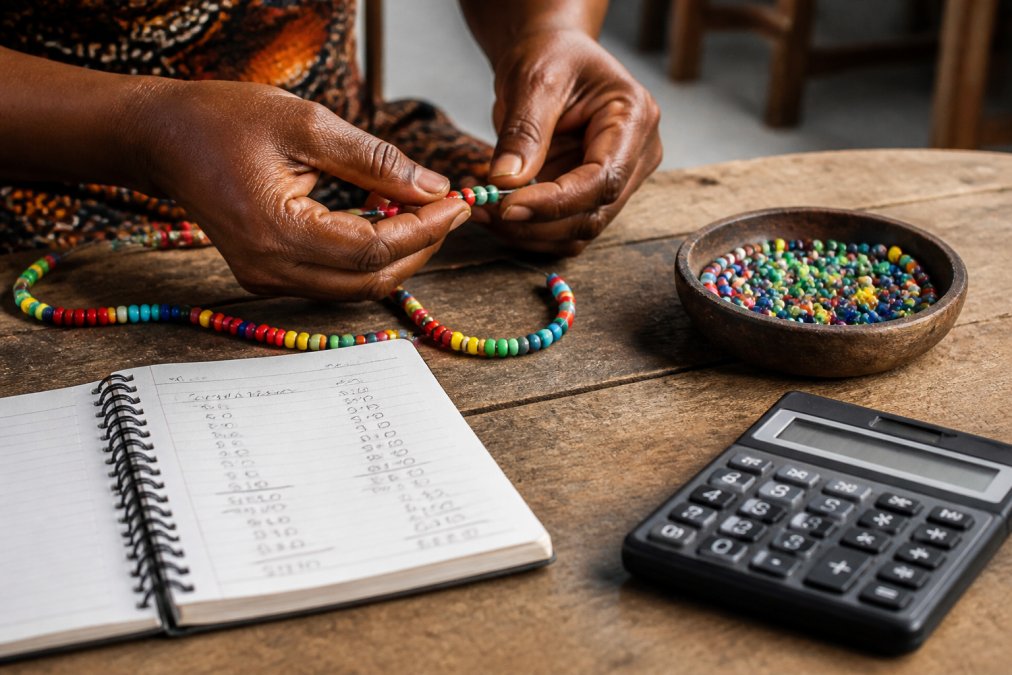
The first two buckets are where fair trade pieces spend more. Certification and auditing add a smaller amount. The retail margin is where traditional jewelry often spends the most.
Price-Per-Gram vs. Retail Markup
Price-per-gram tells you what the metal or material actually costs; retail markup tells you what the store adds on top. Most shoppers only see the second number.
Traditional jewelry markups are famously steep, often several times the material cost, covering branding, storefronts, and advertising.
Here's the mechanism most price comparisons skip. A fair trade premium is a fixed add-on at the source, a minimum price plus a development premium on top of the market rate, and a small slice of the finished retail price. A steep retail markup, by contrast, is a multiplier applied to everything underneath it, including the premium.
| Cost Bucket | Fair Trade / Artisan Piece | Mass-Produced Piece |
|---|---|---|
| Raw material | Higher (minimum price + premium) | Lower (spot market) |
| Labor | Fair wage, visible hours | Often lowest biddable wage |
| Certification / auditing | Included | Rarely present |
| Retail markup | Leaner | Often steep |
| Community premium | Yes | No |
| Share of retail price reaching the maker | Higher | Lower |
Certification and Auditing Costs
Certification is the bucket shoppers underestimate. Independent auditing, chain-of-custody documentation, and periodic re-certification carry administrative costs spread across the pieces a brand sells. On a high-volume line the per-piece share is small; on a small-batch artisan line it's larger.
AUEAR, Colorful Beaded Necklace Maasai →
What the Buckets Mean for You
To maximize the share of your dollar reaching a maker, look at markup behavior, not just the certification logo. To minimize total spend, recycled materials and non-metal pieces are options. For both, artisan brands with lower-cost materials, beadwork, wood, fabric, are a practical path.
Fairtrade vs. Fairmined: What's the Difference?
Fairtrade and Fairmined are separate certification systems for responsible gold, and they are not interchangeable. Fairtrade focuses on a minimum price plus a development premium paid to mining cooperatives. Fairmined certifies small-scale and artisanal mines against environmental and labor standards, with its own premium structure.
Both aim to improve conditions for small-scale mining.
For a shopper, the practical takeaway is simple: check which certification a brand actually holds, not which word appears in its marketing.
Hidden Costs of Non-Ethical Jewelry
The lower sticker price on non-ethical jewelry hides costs that don't appear at checkout. They can land on miners, communities, and the environment.
Budget-Friendly Ethical Alternatives
- Buy one meaningful piece instead of several disposable ones. A single handcrafted necklace can be a lasting piece.
- Choose artisan beadwork and fabric pieces over precious metals. Beaded and Ankara-based designs carry cultural weight without a metal premium.
- Look for smaller, everyday pieces. A pair of wooden earrings or a beaded necklace delivers the same story at a lower entry price.
- Buy directly from artisan-focused brands. Fewer middlemen means more of your dollar reaches the maker.
- Treat it as a gift purchase. Ethical pieces work as heirlooms and gifts, spreading the value over years.
A few Prideful Pieces of Africa options that fit a range of budgets:
- The AUEAR Colorful Beaded Necklace at $13.39, handcrafted beadwork with an adjustable lobster clasp.
- The African Ankara Multi-Strand Shawl Necklace at $42.99, a ready-to-wear two-piece set in lightweight cotton.
- The African Tribal Jewelry Set at $16.09, a coordinated bib choker and earrings.
- The MALOYANVE 6-Piece Pan-African Set at $15.99, with a necklace, cuff, and two pairs of earrings.
- The Bohemia Wooden African Map Earrings at $5.99, lightweight dangle earrings in natural wood.
Resale Value: Does Ethical Jewelry Hold Its Worth?
Resale value depends far more on material than on ethics. Solid gold and precious metals hold value because the metal itself has a market. Beaded, wooden, and fabric pieces are valued for craftsmanship and cultural meaning, not scrap weight.
What Determines Resale Value
Resale value is set by three things, in order of weight:
- Metal content. Solid gold, platinum, and sterling silver have a melt value tied to the spot market. That floor exists regardless of who made the piece or how.
- Brand and provenance. A recognized name can carry a resale premium. A certification mark alone usually does not.
- Craft and rarity. One-of-a-kind handcrafted work can command more to the right buyer, but the market is thinner and slower.
Ethical vs. Conventional: The Resale Comparison
For solid-metal pieces, resale value can be similar. A certified gold ring and a conventional one of the same weight and purity melt for the same amount. The ethical premium you paid isn't recovered at resale, because the secondary market prices metal, not sourcing. Handcrafted beadwork or Ankara pieces made by a named artisan in limited quantity have scarcity mass-produced jewelry lacks, which can lead to a slower, higher-priced sale to a buyer who wants that maker's work.
The Value Resale Price Can't Capture
Artisan pieces often appreciate differently: they can become heirlooms. A mass-produced necklace may be replaced; a handcrafted one can be handed down.
A Practical Rule
Match the purchase to the goal. Investment: metal and brand. Heirloom: craft and story. Everyday: whatever you'll wear most. Fair trade sourcing changes where your money goes, not what the piece is worth on the secondary market.
Conclusion: Making an Informed Choice
Fair trade jewelry does cost more at the source. The real question isn't whether ethical pieces cost more. It's where the difference goes.
Shop the collection and wear something that gives back.
Frequently Asked Questions
Why does fair trade jewelry cost more than mass-produced alternatives?
Fair trade jewelry costs more because it includes the true cost of production. Artisans receive fair wages, work in safe conditions, and use responsibly sourced materials. The price difference reflects ethical sourcing and traceability, not just a premium label.
Does fair trade certification guarantee better wages for artisans?
Certification programs like Fairtrade and Fairmined set minimum price floors and social premiums that support community development.
What factors contribute to the price of ethically sourced jewelry?
Key factors include raw material costs (fairtrade gold or recycled metals), fair labor wages, certification fees, auditing expenses, and supply chain transparency. These elements add to the base cost but also support mining communities, safer working conditions, and environmental protections.
How does supporting fair trade jewelry impact local artisan communities?
Purchases from fair trade jewelry brands directly fund fair wages, education, clean water, and healthcare in artisan communities. By choosing brands like Prideful Pieces of Africa, your money supports families in regions where mining and crafting are primary livelihoods, helping preserve cultural traditions while improving daily life.