

What Is the Meaning of African Tribal Jewelry?
Table of Contents
- More Than Adornment: What African Tribal Jewelry Communicates
- The Language of African Beaded Jewelry Symbolism
- Materials and Their Meanings: From Trade Beads to Gold
- Jewelry as a Marker of Social Status, Marital Status, and Rites of Passage
- Regional Styles: A Geographic Look at Tribal Jewelry Traditions
- The Benefits of Buying Fair Trade Jewelry for Modern Collectors
- How to Style African Artisan Jewelry With Respect and Intention
- Caring for Your Pieces and Honoring Their Heritage
- Frequently Asked Questions
Last Updated: September 5, 2026
More Than Adornment: What African Tribal Jewelry Communicates
African tribal jewelry is a complex visual language where beads, metals, and stones convey messages about identity, belief, and belonging that words cannot capture. Across the continent, these ornaments have served for centuries as markers of social rank, marital status, and spiritual protection, transforming the human body into a canvas of ancestral heritage. For anyone asking what is the meaning of african tribal jewelry, the answer begins with understanding that these pieces are never purely decorative; they are wearable records of a person's lineage and life story.
At Prideful Pieces of Africa, we see this cultural depth reflected in every handcrafted piece we curate. When you wear a beaded necklace or a carved wooden earring, you are not just accessorizing; you are participating in a tradition where craftsmanship and symbolism are inseparable. The materials themselves carry messages: what looks like a simple choice of color or metal often encodes a specific tribal association or spiritual intent.
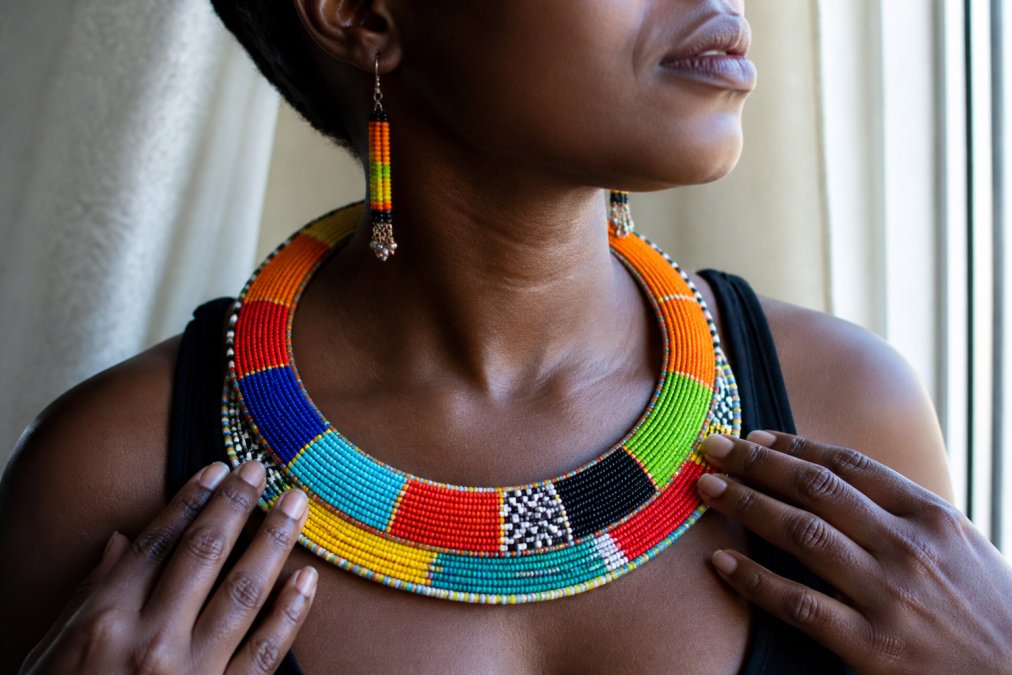
The Language of African Beaded Jewelry Symbolism
African beaded jewelry symbolism operates like a coded system where color, pattern, and placement each carry distinct meanings. Specific hues often communicate emotional states or social announcements: white frequently represents purity and the spirit world, red symbolizes blood and life force, while green connects to fertility and the earth. The arrangement of these colors is not random, and reading them requires knowledge of the specific community that created the piece.
Many groups use beadwork to tell stories or record historical events, with each pattern acting as a visual text passed down through generations. This is why a single necklace can serve as both a personal ornament and a piece of community history. The craftsmanship involved is meticulous, and the time invested in creating these patterns reflects the value placed on the message being conveyed.
Materials and Their Meanings: From Trade Beads to Gold
The material used in african tribal jewelry dramatically shifts its meaning, with each substance carrying its own weight of symbolism and history. Gold and copper are traditionally associated with prestige, wealth, and a connection to divine energy, often reserved for royalty or those of high socio-economic status (britishmuseum.org). Conversely, materials like bone, wood, and seeds connect the wearer to the natural world and to agrarian roots, symbolizing fertility and a grounded spirituality.
The introduction of glass trade beads added a new chapter to this history, creating vibrant pieces that blend indigenous techniques with global trade influences. These beads became status symbols in their own right, with certain colors and styles becoming highly prized. For the modern collector, understanding whether a piece uses antique trade beads or contemporary glass helps place it within a historical timeline.
Jewelry as a Marker of Social Status, Marital Status, and Rites of Passage
One of the most powerful roles of tribal jewelry is its function as a public declaration of a person's position within their community. Jewelry frequently signals marital status, where specific rings, necklaces, or headpieces worn by women indicate whether they are single, married, or widowed. This visual clarity helps maintain social order and ensures that interpersonal interactions follow culturally appropriate rules.
These ornaments are also central to rites of passage, marking transitions from childhood to adulthood, or from one life phase to another. During initiation ceremonies, young people may receive specific pieces of jewelry that symbolize their new responsibilities and status. This practice connects the individual to their ancestors and to the collective identity of their tribe, reinforcing the idea that jewelry is a vessel for tradition.
Regional Styles: A Geographic Look at Tribal Jewelry Traditions
A geographic look at tribal jewelry traditions reveals a stunning diversity of styles tied to specific regions and ethnic groups. However, the common shorthand of 'Maasai for beads, Fulani for gold' only scratches the surface. To truly understand the meaning of a piece, you must map it to its specific community of origin. Here is a closer look at the distinct visual languages of three major groups.
Maasai (Kenya and Tanzania): The Language of the Collar
The Maasai are renowned for their intricate beadwork, but the meaning is in the details. A woman's flat beaded collar, or nborro, is not a single item but a layered status report. The size, color palette, and even the pattern sequence indicate her age set and marital status. For instance, a wide, predominantly blue and white collar is often worn by new mothers, while younger, unmarried women might wear brighter reds and oranges. The beadwork itself is a communal activity, with patterns passed down through generations, making each collar a unique piece of family history.
Zulu (South Africa): The Evolution of the Love Letter
In Zulu culture, beadwork was historically a sophisticated form of non-verbal communication, particularly between young men and women. The famous 'love letter' (uthando) is a beaded panel whose colors and orientation convey specific messages. A triangle pointing up can signify an unmarried man, while one pointing down indicates an unmarried woman (sahistory.org.za). The color of the beads carries the emotional weight: a string of white beads signifies purity and love, while red can indicate intense passion or, in some contexts, anger. This practice is not static; modern Zulu beadwork has evolved to incorporate new colors and patterns, reflecting contemporary social commentary while retaining its core function as a visual language.
Yoruba (Nigeria): The Weight of Beaded Royalty
Yoruba beadwork is intrinsically linked to royalty and spiritual authority. The ileke (beaded necklaces) and elaborate beaded crowns (ade) worn by chiefs and kings are not mere decoration; they are objects of power. The beads themselves are often made of coral, glass, or imported stone, and the colors are deeply symbolic: blue represents the goddess Yemoja, associated with motherhood and the sea, while yellow and green are linked to wealth and prosperity. The beaded veil on a king's crown is designed to shield his powerful gaze, protecting his subjects. Unlike the Maasai and Zulu, where beadwork is often a female craft, Yoruba beadwork is frequently a specialized male craft, passed down within specific guild families.
This geographic mapping is essential for collectors who want to verify authenticity and understand the specific heritage behind a piece. When shopping, asking about the specific origin of the design is a good first step toward ensuring you are honoring the correct cultural source.
For a deeper dive, consider researching the work of anthropologists who specialize in African material culture or visiting museum collections with documented provenance. This level of detail transforms a beautiful object into a verifiable piece of history.
The Benefits of Buying Fair Trade Jewelry for Modern Collectors
Understanding the cultural weight of these items makes the benefits of buying fair trade jewelry all the more significant. Fair trade practices ensure that the artisans who create these pieces receive fair wages for their labor, which directly supports families and communities (fairtradecertified.org). This economic empowerment helps preserve generations of tradition, as artisans can afford to continue their craft rather than abandoning it for more stable income elsewhere.
Choosing fair trade jewelry also guarantees a higher level of authenticity. When you buy directly from a platform that partners with artisans, like the collections at Prideful Pieces of Africa, you are supporting transparent sourcing and regenerative practices. The knowledge that your purchase contributes to a child's school day or provides a village with clean water adds a layer of meaning that mass-produced accessories can never replicate.
How to Style African Artisan Jewelry With Respect and Intention
Styling African artisan jewelry with respect begins with letting the piece be the focal point of your outfit. A bold, chunky beaded necklace pairs beautifully with a simple, solid-colored top that allows the intricate beadwork to stand out without visual competition. For a modern look, consider mixing a single statement piece with minimalist clothing to create a balanced aesthetic that honors the craftsmanship.
How to style African artisan jewelry also involves understanding the context of the piece. Wearing a colorful festival necklace to a casual brunch can be a wonderful conversation starter, while a more subtle wooden piece can be worn daily as a nod to your heritage. The key is intention: wear these pieces because you appreciate their artistry and meaning, not as a costume. This approach ensures you are celebrating the culture rather than appropriating it.
Caring for Your Pieces and Honoring Their Heritage
Proper care is essential to preserving both the beauty and the integrity of your handmade jewelry. Store beaded necklaces flat or hung loosely to prevent the string from stretching, and keep wooden pieces away from prolonged direct sunlight to prevent fading. When cleaning, use a soft, dry cloth and avoid harsh chemicals that could damage natural materials like wood, bone, or glass beads.
Caring for your pieces is an act of respect for the artisan who made them. Each piece is shaped by a single artisan, never a machine, making it a unique work of art that deserves careful handling. By maintaining these items, you ensure they can be passed down as heirlooms, continuing the story of African craftsmanship for future generations to wear and cherish.
Understanding the meaning behind African tribal jewelry transforms how you wear it. The challenge lies in finding pieces that are authentic, ethically made, and respectful of their cultural origins. Prideful Pieces of Africa connects you directly with handcrafted jewelry from East African artisans, ensuring fair wages and transparent sourcing with every purchase. Explore our collection to find a unique piece that supports a family in Kenya and preserves a rich cultural legacy. Get started with Prideful Pieces of Africa and wear a story that matters.
Frequently Asked Questions
What does African jewelry symbolize?
African tribal jewelry symbolizes far more than decoration. It communicates cultural identity, social rank, marital status, and spiritual beliefs. Specific colors, materials, and patterns carry distinct meanings that vary between tribes and regions. For example, red beads may signify vitality or warrior status, while certain shells are linked to fertility and wealth. Wearing these pieces connects the individual to their ancestral heritage and community.
What spiritual meanings do African beads hold?
African beads often hold deep spiritual significance. Glass trade beads, seeds, and stones are used in amulets and talismans believed to offer protection, bring good fortune, or connect the wearer to ancestors and divine energy. Specific colors are thought to channel different energies: blue for protection, green for growth, and yellow for prosperity. The craftsmanship itself is seen as a spiritual act.
Is it culturally appropriate to wear African tribal jewelry?
Yes, wearing African tribal jewelry can be culturally appropriate when done with respect, education, and intention. The key is to support authentic African artisans and brands that practice fair trade, ensuring the community benefits directly. Avoid mass-produced imitations that copy sacred designs without cultural connection. Choose pieces from sources that honor the tradition and support the artisans who create them.
What is the meaning of tribal jewellery?
Tribal jewelry meaning is rooted in identity and communication. Across Africa, specific pieces indicate a person's age, social rank, marital status, and tribe. Jewelry is also central to rites of passage, ceremonies, and spiritual practices. Unlike purely decorative Western jewelry, tribal pieces function as a form of non-verbal language, telling a story about the wearer's lineage, beliefs, and role within their community.
This article was written using GrandRanker