

Traditional vs Modern East African Clothing Styles
Table of Contents
- Quick Comparison: Traditional vs Modern East African Clothing
- What Defines Traditional East African Clothing Styles?
- How Modern East African Clothing Styles Have Evolved
- Handmade East African Apparel for Women: What to Look For
- Styling Traditional African Jewelry with Modern Outfits
- Styling Guide: Traditional Elements in Modern Professional Settings
- Economic Impact of Modernizing Traditional Wear
- Conclusion
- Frequently Asked Questions
Last Updated: September 11, 2026
Quick Comparison: Traditional vs Modern East African Clothing
Traditional East African clothing styles are defined by handwoven or hand-printed fabric, ceremonial purpose, and regional specificity; modern versions borrow those motifs for daily wear, office settings, and global trends.
| Element | Traditional | Modern |
|---|---|---|
| Fabric source | Handwoven bark cloth, raffia, locally printed cotton | Kitenge, Kanga, Ankara, blended textiles |
| Silhouette | Wraps, loose drapes, layered garments | Tailored cuts, fusion silhouettes |
| Primary use | Ceremony, daily attire, cultural identity | Office, travel, casual and formal wear |
| Production | Artisanal, single-maker | Mixed, often machine-assisted |
| Color meaning | Specific to region, clan, occasion | Stylistic choice, fashion trends |
What Defines Traditional East African Clothing Styles?
Traditional East African clothing is defined by three things: locally sourced or hand-processed fabric, construction that follows regional custom rather than global sizing standards, and a direct link to ceremony, status, or life stage. What separates a genuinely East African traditional garment from a pan-African one is the textile itself, regional down to the district.
Most guides flatten this into "African fabric." A kikoi woven on the Kenyan coast, a bark cloth beaten in Uganda's Buganda region, and a kanga printed in Tanzania are three different objects with three production histories, each carrying different rules about who wears it, when, and how.
The Textiles That Actually Define the Region
- Bark cloth (Uganda): Made by beating, stretching, and curing the inner bark of the mutuba fig tree. The Buganda kingdom has produced it for centuries, and UNESCO recognizes it as intangible cultural heritage (ich.unesco.org). It is felted and beaten rather than woven, so it drapes differently from any woven cloth. Traditionally worn as a wrapped toga (kanzu for men, suuka for women) at coronations, funerals, and clan ceremonies.
- Kikoi (Kenya, coastal): A woven cotton wrap with a fringed edge and striped or checked pattern, historically worn by Swahili men along the coast. The name comes from the Swahili verb kukoa, to wrap. Heavier and more structured than a kanga, it holds a knot better.
- Kanga (Tanzania, Zanzibar): A rectangular printed cotton cloth, roughly 1.5 by 1 meter, sold in pairs (one to wrap, one to cover the head or carry a child) (africa.si.edu). Its defining feature is the jina, a Swahili proverb or riddle printed along the border. A kanga is a wearable message, and choosing one is a form of speech.
- Kitenge (widespread, DRC-linked): A wax-printed cotton, heavier and more saturated than kanga, typically sold by the 6-yard piece. In East Africa it is most often cut and sewn into tailored garments rather than wrapped.
- Raffia (lake regions and Uganda): Palm-fiber cloth and trim used for skirts, bags, and ceremonial regalia. Coarser than cotton, so it appears in structured pieces rather than drapes.
What Traditional Construction Actually Means
The silhouette is loose and draped rather than fitted. Tailoring exists, the kanzu is a tailored tunic, but it serves the cloth instead of reshaping it. A traditional garment is cut to the width of the loom or the print repeat, not a standard size chart, which is why pieces are described by how they are wrapped, tied, or layered rather than by S/M/L.
Cultural identity is stitched into every seam, but specifics vary by community. Among the Maasai, beadwork color and pattern signal age set and clan. Along the Swahili coast, kanga proverbs signal mood, marital status, or a message to a specific person. In Buganda, bark cloth signals clan and occasion. Treating these as interchangeable is the most common mistake in Western coverage.
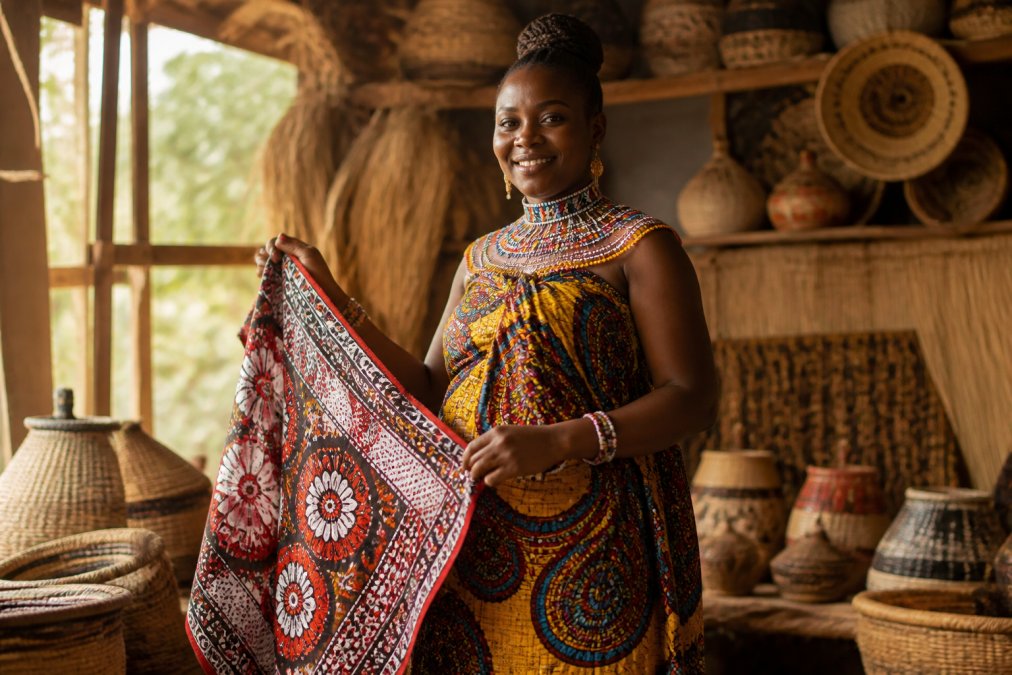
Key Garments: Dashiki, Kaftan, Agbada, and Kanga
Each of these four garments carries a distinct history and modern use case, and only two are actually East African in origin.
- Dashiki: A pullover tunic with embroidered neckline and chest detailing. Originally West African in origin, it moved into East African wardrobes through trade and pan-African cultural exchange. Our Smithsonian overview of African textile traditions traces how embroidered tunics became a shared continental symbol.
- Kaftan: A long, flowing robe with deep cultural roots across Muslim East Africa, particularly along the Swahili coast. Modern kaftans often use rayon bodies with cotton print accents.
- Agbada: A wide-sleeved, layered robe of West African (Yoruba) origin, traditionally reserved for formal and ceremonial occasions, now adapted into statement outerwear across the continent.
- Kanga: A rectangular printed cloth wrapped around the body, often carrying a Swahili proverb along the border. It remains one of the region's most versatile pieces, a wrap, head covering, or carry cloth, and the proverb makes it a form of communication, not just clothing.
The thread connecting all four is function first, ornament second. But regional origin matters: a kanga and a kikoi are East African in a way a dashiki and an agbada are not, and a guide that blurs that line is not actually a guide to East African clothing.
How Modern East African Clothing Styles Have Evolved
Modern East African clothing evolved through three forces: urbanization, textile availability, and diaspora demand. The mechanism behind them explains why the category looks the way it does today.
As cities grew, garments that once required a ceremonial context became everyday wear. Tailors cut traditional prints into Western silhouettes, and designers treated Kitenge as a canvas rather than a constraint. The result is a category that sits between "traditional" and "Western."
The Economic Shift Behind the Aesthetic Shift
The real story of modernization is a production story. Traditional East African garments were made by a single artisan or small workshop, cut to the wearer, and sold locally. Modern versions follow three production models, each changing who gets paid:
- Artisan-direct: One maker, one garment, sold through a brand or market stall. Labor-intensive, higher cost per unit, wage stays in the community. This is the model most traditional pieces still follow.
- Small-batch tailoring: A workshop of 5-20 tailors cutting Kitenge and Ankara into repeatable sizes. This is where most "modern African fashion" actually gets made, not in factories, but in mid-size tailoring houses in Nairobi, Dar es Salaam, and Kampala.
- Factory and import: Mass-produced prints (often printed in China, India, or the Netherlands) cut into fast-fashion silhouettes. Cheapest per unit, lowest wage per garment, and the print is usually a generic imitation rather than a registered design.
The shift from model 1 to model 3 is the economic core of modernization. When a garment moves from artisan-direct to factory-import, the wage per garment drops, employment per garment drops, and the design knowledge required drops. What rises is volume and margin, for the brand, not the maker.
Why the Print Itself Changed Hands
A second mechanism is the print supply chain. Historically, kanga and kitenge designs were commissioned locally, with the proverb or pattern chosen by the buyer. Today much printed cotton sold in East African markets is manufactured abroad, so the design is chosen by a foreign print house optimizing for broad sales, not for what a specific community reads as meaningful.
That is why a kanga bought in a tourist market and one bought in a Tanzanian market can look similar but function differently. The imported version may carry a proverb that does not parse or a pattern mimicking a regional motif without belonging to it. The local version is legible to the people who see it.
Western Influence and the Rise of Fusion Fashion
Westernization did not erase local design language, it layered on top of it. A tailored blazer in Kente trim, a maxi skirt in Ankara print, a smocked dress with a Kente accent: these fusion pieces sell because they solve a real problem. People want to wear their heritage to work without looking like they stepped out of a ceremony.
Fusion fashion is not new. East African tailors have reworked imported fabrics into local silhouettes for generations, the kanzu itself is a tailored adaptation, and coastal tailors cut imported cotton into Swahili forms long before "fusion" was a marketing term. The direction has simply reversed: imported fabric into local shape has become local fabric into global shape.
Handmade East African Apparel for Women: What to Look For
Handmade East African apparel for women should be judged on four criteria: fabric origin, construction method, fit flexibility, and maker transparency. A garment that scores well on all four outlasts anything mass-produced.
Here is the checklist we use when evaluating artisan pieces:
- Fabric is named specifically (100% cotton, 100% rayon, bark cloth, raffia) rather than listed as "mixed blend"
- Print or embroidery is described as hand-applied or artisan-made, not "inspired by"
- Sizing accounts for one-size and plus-size fits with actual measurements
- The maker or region of production is named
- Care instructions match the fabric (hand wash cold for cotton prints)
- Matching accessories such as a headwrap are included or available
Fit flexibility matters more than exact sizing here. A well-constructed wrap skirt with an elasticated waistband and attached belts, for example, fits many body types because the garment adjusts rather than the wearer.
Styling Traditional African Jewelry with Modern Outfits
Styling traditional African jewelry with modern outfits comes down to one rule: let the jewelry carry the cultural weight while the clothing stays neutral. Beaded collars, layered necklaces, and brass cuffs work best against solid colors and clean lines.
Three pairings that consistently work:
- Beaded collar necklace + plain white button-down. The contrast does the work. No pattern competition.
- Layered brass cuffs + tailored blazer. The cuff peeks at the wrist, which reads as intentional rather than loud.
- Statement earrings + monochrome dress. Keeps attention at the face and neckline.
The reverse also works. If the outfit is a full Ankara print, keep the jewelry minimal: one piece, maximum.
Styling Guide: Traditional Elements in Modern Professional Settings
Traditional elements belong in professional settings when scaled deliberately. A full ceremonial robe in a standard office meeting reads as costume; a single traditional element, executed well, reads as confidence.
| Setting | Traditional Element | Modern Anchor |
|---|---|---|
| Standard office | Kente-trimmed dress | Neutral shoes, structured bag |
| Client presentation | Beaded collar necklace | Tailored blazer, plain blouse |
| Conference or keynote | Ankara print maxi skirt | Solid knit top, minimal jewelry |
| Casual Friday | Dashiki shirt | Dark denim or tailored trousers |
| Evening event | Kaftan dress with headwrap | Simple metallic accessories |
The pattern is consistent: one traditional element, everything else quiet. That balance is what makes the look read as professional rather than performative.
Economic Impact of Modernizing Traditional Wear
Modernizing traditional wear creates economic value at three levels: the artisan, the local textile supply chain, and the diaspora market. When a single artisan produces a garment rather than a factory line, the wage stays in the community that made it.
Let us be specific about what fair production looks like. A transparent supply chain names the artisan, states the wage relationship, and shows where the proceeds go. At Prideful Pieces of Africa, each piece is shaped by a single artisan rather than a machine, and purchases support families, education, and clean water access in the regions where those artisans live.
The broader economic case is straightforward. Artisanal production is labor-intensive, employing more people per garment than mass production, and it preserves skills that would otherwise disappear within a generation. Cultural preservation and economic development are the same project here, not competing goals.
Conclusion
The choice between traditional and modern East African clothing is not really a choice. The strongest wardrobes pull from both: traditional fabric and construction for authenticity, modern tailoring for daily wear. What matters is knowing which element carries the cultural weight in each outfit.
If you want pieces that hold both sides of that balance, Prideful Pieces of Africa offers handcrafted apparel and accessories made by individual artisans, with fair wages and transparent sourcing behind every item. Browse the collection to find a dashiki set, a Kaftan dress, or an Ankara maxi skirt that works in your own rotation. Shop with Prideful Pieces of Africa and wear something that carries meaning beyond the season.
Frequently Asked Questions
What are the key differences between traditional and modern East African clothing?
Traditional East African clothing uses handwoven or locally printed fabrics like Kitenge, Kanga, and bark cloth, with silhouettes such as the Dashiki, Kaftan, and Agbada that carry specific cultural meanings. Modern styles blend these elements with Western cuts, synthetic blends, and global fashion trends. For example, a contemporary Kaftan dress might use rayon for the body and cotton patchwork for accents, offering the same cultural identity with easier care and broader wearability.
What fabrics are commonly used in East African fashion?
Traditional garments rely on cotton, bark cloth, raffia, and handwoven silk. Kitenge and Kanga are printed cotton fabrics with proverbial messages. Kente is a handwoven cloth with geometric patterns. Modern East African fashion often uses these same fabrics in new ways, plus rayon, polyester blends, and lace for comfort and durability. Many contemporary designers prioritize locally sourced cotton and artisanal dyeing to preserve craftsmanship while meeting modern expectations.
How can I style traditional African jewelry with modern outfits?
Start with one statement piece, like a beaded collar or brass cuff, and keep the rest of your outfit simple. A bold necklace pairs well with a plain jumpsuit or a button-down shirt. Layer smaller beaded bracelets with a watch for a subtle fusion look. For professional settings, choose earrings or a pendant that echoes traditional motifs without overwhelming a blazer or dress. The goal is to let the craftsmanship stand out while keeping the overall look balanced.
What should I look for in handmade East African apparel for women?
Check for natural fibers like cotton or rayon, consistent stitching, and details that show hand-finished work such as patchwork or embroidery. Ask about the artisan and sourcing: fair wages and transparent production matter. One-size pieces with adjustable elements, like elastic waistbands or wrap ties, offer versatility. Also consider how the piece fits your daily life, whether it's a maxi skirt for work or a kaftan for weekends. Authentic handmade apparel carries slight variations that signal genuine craftsmanship.
How has East African fashion changed over the last century?
In the early 1900s, clothing was largely handwoven and region-specific, with bark cloth and raffia used for ceremonial wear. Colonial influence introduced Western tailoring and new fabrics. After independence, leaders encouraged traditional dress as a symbol of identity. Today, designers blend heritage textiles with global silhouettes, and e-commerce connects artisans directly to international buyers. The result is a dynamic scene where a Dashiki can be worn to a wedding or a Kaftan dress to the office, all while supporting local economies.