

Benefits of Supporting Artisan Jewelry Makers
Table of Contents
- Why Buy Handmade Jewelry: The Case for Artisan-Made Pieces
- One-of-a-Kind Designs You Won't See on Everyone Else
- Heirloom Quality That Outlasts Fast Fashion
- How Ethical Jewelry Brands Build Transparent Supply Chains
- The Impact of Fair Trade Jewelry on Artisan Communities
- Cultural Preservation Through Traditional Techniques
- How to Identify Authentic Artisan Jewelry vs. Mass-Produced Pieces
- Caring for Your Artisan Jewelry: Maintenance and Longevity
- The Lifecycle of an Artisan Piece: From Maker to Heirloom
- Conclusion
- Frequently Asked Questions
Last Updated: September 15, 2026
Why Buy Handmade Jewelry: The Case for Artisan-Made Pieces
Every piece of artisan jewelry carries a story that mass-produced accessories simply cannot tell. When you buy handmade jewelry, you're not just purchasing an accessory; you're investing in craftsmanship, heritage, and human connection. This guide from Prideful Pieces of Africa explores the real benefits of supporting artisan jewelry makers, from ethical supply chains to the lasting value of heirloom-quality pieces.
The case for artisan-made pieces rests on three pillars: individuality, longevity, and impact. Unlike factory-stamped items that flood the market by the thousands, each handcrafted piece reflects the skill and intention of a single maker. That difference shows in the details, and it shows in the communities your purchase supports.
One-of-a-Kind Designs You Won't See on Everyone Else
The most immediate benefit of artisan jewelry is individuality. Because each piece is shaped by hand, no two items are exactly alike. A beaded Maasai necklace or a Kente print dangle earring carries subtle variations that make it uniquely yours.
Mass-produced jewelry is designed for uniformity. Artisan work is designed for expression. When you wear a handcrafted piece, you're wearing wearable art that reflects a specific tradition, a specific maker, and a specific moment in time. That uniqueness is the point, not a flaw.
Heirloom Quality That Outlasts Fast Fashion
Artisan jewelry is built to last. Where fast fashion prioritizes speed and low cost, artisan makers prioritize durable materials and time-tested techniques. A well-cared-for handcrafted piece can be passed down through generations.
This is the difference between jewelry you replace and jewelry you inherit. Many families treat artisan pieces as heirlooms, preserving both the object and the story behind it. One customer described her piece as something that "has become an heirloom for my daughter." That longevity is a core reason why buy handmade jewelry is a decision with long-term value.
How Ethical Jewelry Brands Build Transparent Supply Chains
Transparency is what separates genuine ethical jewelry brands from those using ethics as a marketing label. A transparent supply chain means you can trace where materials come from, who made the piece, and how the money moves through the process.
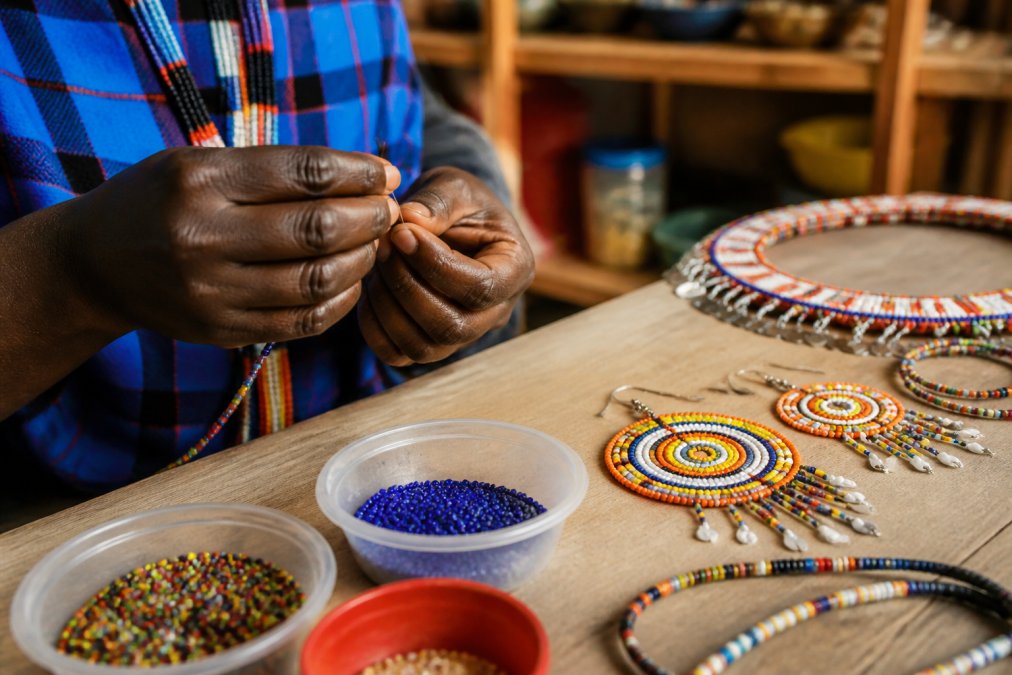
Authentic ethical sourcing starts with relationships. Artisans are paid fairly, materials are sourced responsibly, and production stays small-batch rather than industrial. The Federal Trade Commission's guidance on environmental marketing claims sets standards for how brands can describe their sourcing and sustainability practices, which is why vague "eco-friendly" labels deserve scrutiny.
When a brand can explain exactly where your money goes, that's transparency. When it can't, that's a warning sign.
The Impact of Fair Trade Jewelry on Artisan Communities
The impact of fair trade jewelry extends far beyond the individual purchase. Fair wages mean artisans can support their families, invest in their children's education, and contribute to their local economy.
Fair Wages, Education, and Clean Water: Where Your Money Goes
For many artisan communities, a single fair-wage purchase contributes to essentials that ripple outward. At Prideful Pieces of Africa, each purchase is designed to support a family, contribute to a child's school day, and help provide a village with clean water. That's the economic impact of choosing artisan-made over mass-produced.
The U.S. Department of Labor's resources on fair labor standards outline the basic protections workers deserve. Fair trade takes those principles further, ensuring makers in global supply chains receive compensation that reflects the true value of their craft.
| Where Your Money Goes | What It Supports | Why It Matters |
|---|---|---|
| Fair artisan wages | Family income | Stability for maker households |
| Community funds | Education access | A child's school day |
| Infrastructure support | Clean water | Health for entire villages |
| Material sourcing | Local suppliers | Stronger regional economies |
Cultural Preservation Through Traditional Techniques
Traditional techniques survive only when people keep practicing them. Beadwork, weaving, and metalwork passed down through generations depend on demand. When you support independent makers, you help keep these skills alive.
This is cultural preservation in action. Each handcrafted piece carries forward a technique that might otherwise fade. The Smithsonian Center for Folklife and Cultural Heritage documents how traditional craft practices sustain cultural identity across generations, and artisan jewelry plays a direct role in that continuity.
How to Identify Authentic Artisan Jewelry vs. Mass-Produced Pieces
Most ranking articles tell you to "look for handmade quality" and stop there. That advice is useless at the point of sale. What actually separates artisan work from a factory lookalike is a set of verifiable signals you can check in under five minutes, and a few trade-offs you should expect to see.
Start With the Maker, Not the Object
The single strongest signal is traceability. A genuine artisan piece can be tied to a person, a workshop, or a region. Ask three questions:
- Who made this? A name, a studio, or a cooperative, not "our artisans."
- Where? A specific town, region, or country.
- How? The technique used (hand-beading, lost-wax casting, loom weaving, hand-forging).
If a seller can answer all three without hesitation, you are dealing with a traceable supply chain. If the answers are vague or shift between pages of the site, treat the "handmade" label as marketing.
Physical Markers of Handwork
Handwork leaves evidence. Mass production removes it. Look for:
- Slight asymmetry between paired pieces. Two earrings from the same artisan will be close but rarely identical. Perfect mirror-image symmetry is a factory signal.
- Tool marks. Hand-forged metal shows small hammer texture, file marks, or solder lines. Stamped pieces are smooth and uniform.
- Bead and stone variation. Natural materials vary in color, size, and shape. If every bead in a strand is identical, it is likely machine-sorted or synthetic.
- Thread and knot visibility. Hand-strung beadwork often shows knots between beads; machine-strung pieces usually do not.
- Finish inconsistency. Hand-polished surfaces have subtle unevenness; electroplated mass-market pieces are uniformly glossy.
Materials and Price Signals
Materials should match the claimed origin and price. A few patterns worth knowing:
- Base metals vs. precious metals. Mass-market jewelry frequently uses brass, zinc alloy, or steel with plating that wears off. Artisan pieces more often use sterling silver, gold fill, or solid gold, and the price reflects it.
- Stone disclosure. Reputable makers name the stone and its origin. "Genuine gemstone" without a name is a red flag.
- Price-to-labor math. If a piece is priced below what fair labor would cost to make it, someone in the chain is not being paid fairly. A common pattern is that genuinely handmade, fair-wage pieces sit at a higher price point than fast-fashion equivalents, that gap is the point, not a markup.
A Practical Evaluation Checklist
Use this at a market stall, a boutique, or online:
- Can the seller name the maker or region?
- Are there visible signs of handwork (variation, tool marks, knots)?
- Do materials match the claimed origin and price?
- Is the stone or metal specifically named?
- Does the brand explain where the money goes?
- Is the price consistent with fair labor?
What Artisan Work Is Not
Authenticity does not mean "perfect." It also does not mean "expensive for its own sake." A well-made artisan piece can still have a slightly uneven edge, a visible knot, or a stone with natural inclusions, those are features of handwork, not defects.
Caring for Your Artisan Jewelry: Maintenance and Longevity
Beaded Pieces
Fabric-Based Pieces (Ankara, Kente, Woven Textiles)
Wooden and Natural-Material Pieces
Metal Components
Storage Trade-Offs
Repair Before You Replace
The Lifecycle of an Artisan Piece: From Maker to Heirloom
Conclusion
Frequently Asked Questions
What are the benefits of buying artisan jewelry?
Buying artisan jewelry gives you a one-of-a-kind piece made by a single maker, not a machine. You get heirloom quality that holds up over time, a design no one else owns, and the knowledge that your money supports fair wages and community needs like education and clean water. Artisan pieces also preserve traditional techniques that mass production cannot replicate.
How does supporting artisan jewelry makers promote sustainable fashion?
Artisan jewelry makers typically work in small batches using locally sourced materials, which reduces waste compared to mass-produced accessories. Many ethical jewelry brands also practice transparent, regenerative sourcing and pay fair wages. When you choose handmade jewelry over fast fashion, you support a slower production cycle that values longevity and environmental responsibility over disposable trends.
Why is handcrafted jewelry considered a better investment than mass-produced pieces?
Handcrafted jewelry is made by a single artisan using quality materials and traditional techniques, so it lasts longer and often becomes an heirloom. Mass-produced pieces are stamped out in volume and rarely hold value. Artisan pieces also carry cultural significance and individuality that mass-market accessories cannot match, making them a more meaningful long-term purchase.
What is the difference between artisan jewelry and mass-market accessories?
Artisan jewelry is made by hand, often by a single maker, using traditional techniques and small-batch production. No two pieces are identical. Mass-market accessories are machine-made in large quantities with uniform designs. The difference shows in quality control, material sourcing, uniqueness, and the economic impact on the maker's community.