

Gold Plated vs Solid Brass African Jewelry
Table of Contents
- Gold Plated vs Solid Brass: Material Basics
- The Gold Plating Process and Durability
- Durability and Longevity: Which Lasts Longer?
- Skin Sensitivity and Nickel-Free Considerations
- How to Clean Brass Jewelry at Home
- Benefits of Buying Fair Trade Jewelry
- Cost-Benefit Analysis for African Jewelry
- Conclusion
Last Updated: August 29, 2026
Gold Plated vs Solid Brass: Material Basics
When shopping for African jewelry, the choice between gold plated vs solid brass matters for durability, longevity, and how a piece ages. At Prideful Pieces of Africa, we work directly with artisans who have crafted with these materials for generations. Gold plating and solid brass represent two distinct philosophies: one prioritizes a lustrous surface finish; the other emphasizes structural integrity.
What Is Gold Plated Jewelry?
Gold plated jewelry consists of a thin layer of gold applied electrochemically to a base metal, typically brass, copper, or nickel-silver. The gold content is measured in microns, typically ranging from 0.5 to 5 microns thick (the FTC). Thicker plating (called "heavy gold-plated") lasts longer and resists wear better than thinner applications.
Gold plating allows artisans to achieve a golden aesthetic without the prohibitive expense of solid gold, making fair wages and sustainable practices more achievable while maintaining cultural significance and visual beauty.
Understanding Solid Brass as a Base Metal
Solid brass is an alloy of copper and zinc, prized for centuries in African jewelry making. Unlike gold plating, solid brass pieces are uniform throughout, there's no thin coating over a different metal. Brass develops a natural patina over time, a darkening many consider beautiful and characteristic of authentic jewelry.
High-quality solid brass is naturally nickel-free, making it excellent for people with sensitive skin or nickel allergies. The metal is highly workable, allowing artisans to create intricate designs and sculptural forms that define East African jewelry traditions.
The Gold Plating Process and Durability
The electroplating process transforms a brass base into a gold-coated piece through a chemical bath and electrical current. The base metal is cleaned thoroughly, then suspended in a solution containing dissolved gold. An electrical current causes gold ions to adhere to the surface, building up layer by layer. The thickness depends on how long the piece remains in the plating bath and the strength of the electrical current.
Heavy gold-plated jewelry, typically 2.5 microns or thicker, offers significantly better durability than standard plating (the FTC). However, even heavy plating is a surface treatment, the underlying base metal will eventually show through with enough wear, cleaning, and friction.
The durability of gold-plated jewelry depends on three factors: the thickness of the gold layer, the quality of the base metal, and how the piece is worn and maintained. A well-made gold-plated piece can last years with proper care; pieces worn daily without protection may show wear within months.
Durability and Longevity: Which Lasts Longer?
Solid brass outlasts gold plating in terms of structural longevity. A solid brass piece will never lose its material, it's the same throughout. Gold plating will eventually wear away with regular contact, friction, and exposure to moisture and sweat, with the base metal beginning to show through at high-friction points.
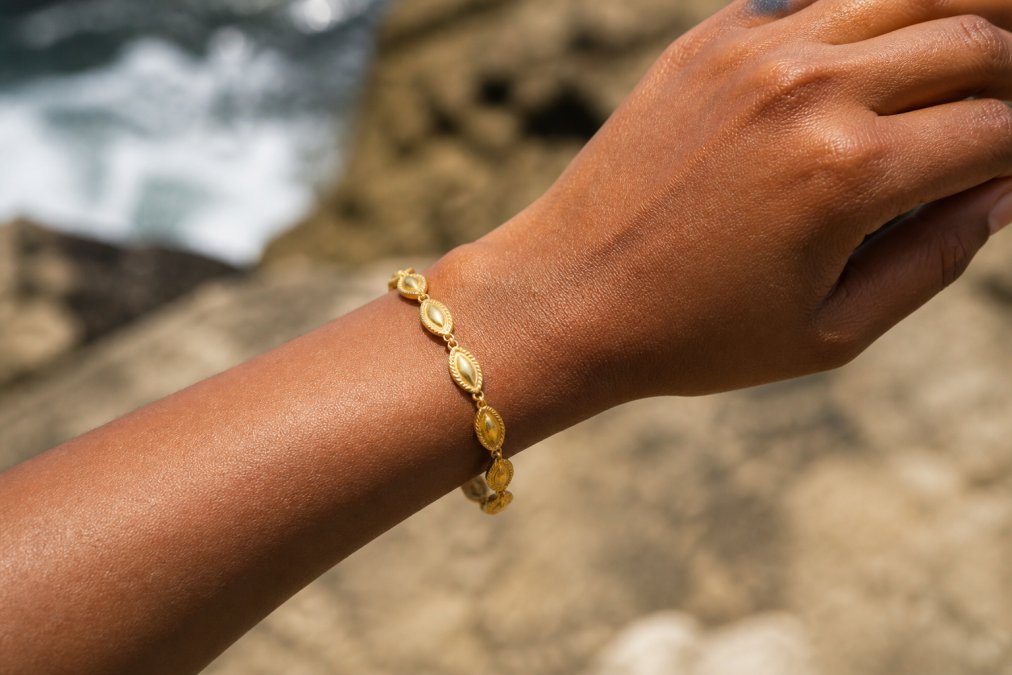
This doesn't mean gold-plated pieces are disposable. Many people wear gold-plated jewelry for years without visible degradation, especially if the plating is thick and the piece is worn occasionally. A gold-plated necklace worn a few times a week will last far longer than a gold-plated ring worn constantly.
Surface Wear and Micron Thickness
The thickness of the gold plating directly correlates with longevity. Standard gold plating is typically 0.5 to 1 micron thick, offering minimal durability against daily wear. Heavy gold-plated pieces, at 2.5 to 5 microns or more, provide substantially better protection and can withstand regular contact without showing base metal for months or years.
Solid brass experiences surface wear differently. The metal doesn't disappear; instead, it develops patina and oxidation, a darkening considered desirable in many African jewelry traditions. Unlike gold plating, which eventually fails and reveals a different metal underneath, brass wear is gradual and aesthetic.
Oxidation, Tarnishing, and Patina Development
Solid brass oxidizes naturally when exposed to air and moisture, developing a darker patina that's actually a protective layer preventing deeper corrosion. Many find this patina beautiful and characteristic of authentic brass jewelry.
Gold plating doesn't oxidize the same way, but the base metal underneath can. If the plating wears through, the exposed brass will oxidize, creating discoloration. This is a visual sign that a gold-plated piece is reaching the end of its life. Gold-plated pieces require more vigilant maintenance to prevent accelerated wear at exposed areas.
Skin Sensitivity and Nickel-Free Considerations
One of the most important practical considerations is how each material interacts with your skin. Nickel allergies are common and cause green skin reactions, itching, and contact dermatitis (peer-reviewed research).
High-quality solid brass made from pure copper and zinc without nickel additives is naturally nickel-free and excellent for anyone with known nickel sensitivity. Artisans at Prideful Pieces of Africa prioritize nickel-free brass because they understand their customers' needs.
Gold-plated jewelry's safety depends entirely on the base metal. If the base is nickel-free brass, the piece is safe as long as the plating remains intact. However, if the plating wears through and exposes a nickel-containing base metal, a previously safe piece can trigger a reaction. For maximum safety with sensitive skin, solid brass is the more reliable choice.
How to Clean Brass Jewelry at Home
Keeping brass jewelry clean is straightforward and doesn't require expensive products or professional services. Regular maintenance extends the life of both solid brass and gold-plated pieces.
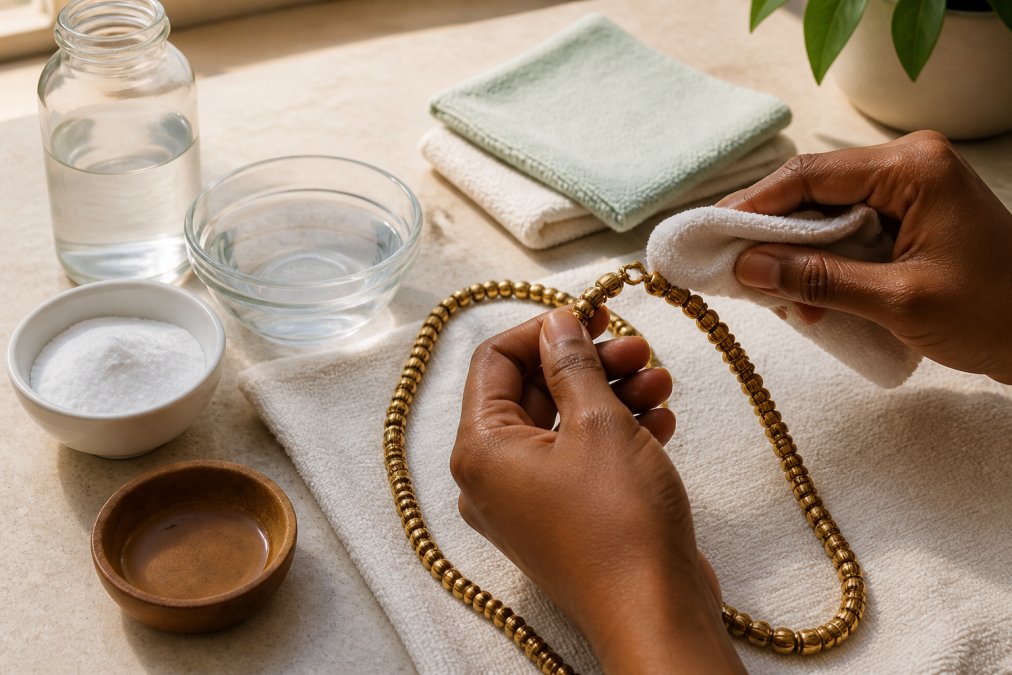
For solid brass, mix mild dish soap with warm water, dip a soft cloth into the solution, and gently wipe the jewelry. For heavier tarnish, create a paste of baking soda and water, apply it gently with a soft cloth, and rub in circular motions. Rinse thoroughly and dry completely.
For gold-plated pieces, avoid abrasive methods entirely. Stick to warm soapy water and a soft cloth, never use baking soda paste or harsh scrubbing. Pat dry gently rather than rubbing. Store gold-plated jewelry in a dry place, ideally in a soft pouch, to minimize exposure to moisture and friction.
Benefits of Buying Fair Trade Jewelry
When you choose fair trade jewelry from Prideful Pieces of Africa, you're supporting a direct relationship between artisans and customers, ensuring fair compensation and ethical working conditions.
Fair trade jewelry guarantees transparency in the supply chain. You know where your piece was made, who made it, and how the artisan was compensated. Fair wages allow artisans to invest in their families, educate their children, and improve their living conditions, creating stability and dignity in communities historically undervalued in the global marketplace.
Fair trade also encourages sustainable practices. Artisans have the resources and incentive to use environmentally responsible methods, including careful material sourcing, waste minimization, and avoiding harmful chemicals in plating and finishing processes.
Cost-Benefit Analysis for African Jewelry
The decision between gold plated vs solid brass often comes down to budget and intended use. Gold-plated pieces typically cost less upfront but may not last as long as hoped. A gold-plated piece that wears out in a year provides poor long-term value, even if the initial purchase was affordable.
Solid brass pieces cost more upfront but offer superior longevity and lower maintenance requirements. A solid brass bracelet or necklace is an investment in a piece that will age beautifully and remain wearable for years or decades. When you factor in durability and reduced replacement needs, solid brass often represents better value over time.
When you purchase fair trade jewelry, you're paying a price that reflects the true cost of ethical production, including fair wages, sustainable practices, and transparent sourcing. Consider your lifestyle and wear patterns: if you wear jewelry occasionally, gold plating may serve your needs well. If you have favorite pieces you wear regularly or want heirloom-quality items, solid brass offers superior longevity.
Frequently Asked Questions
Does solid brass jewelry turn your skin green?
Solid brass can cause a green or dark reaction on skin when copper content reacts with sweat and oils. This is oxidation, not an allergy, and washes off easily. Gold-plated brass reduces this risk because the plating acts as a protective barrier between the brass base metal and your skin. Nickel-free solid brass options and proper jewelry maintenance minimize discoloration.
What are the main benefits of buying fair trade jewelry?
Fair trade jewelry ensures artisans receive transparent, equitable compensation for their work. When you buy fair trade pieces, your purchase directly supports families, funds education, and provides access to clean water in artisan communities. Handcrafted fair trade jewelry also preserves cultural traditions and reduces environmental harm compared to mass-produced alternatives. Each piece carries authentic cultural significance and the knowledge that your money creates real, measurable impact.
How can you tell the difference between gold plated and solid brass?
Gold-plated jewelry has a thin layer of gold coating over a brass base metal, while solid brass is one continuous metal throughout. Gold-plated pieces typically feel lighter and show wear more visibly over time as the plating thins. Solid brass is heavier, develops a natural patina, and lasts longer with proper care. Check product descriptions for micron thickness (the plating layer measurement) and karat weight to understand what you're purchasing.
How do I clean brass jewelry at home without damaging it?
Use a soft cloth and mild soap with warm water for regular cleaning. For deeper tarnish, make a paste with baking soda and water, gently rub the jewelry, then rinse and dry thoroughly. Avoid harsh chemicals and abrasive scrubbers that strip the plating or damage patina. Store brass jewelry in a dry place away from moisture to slow oxidation. For gold-plated pieces, be gentler to preserve the protective coating.
This article was written using GrandRanker