

Cowrie Shell Jewelry Meaning: African Cultural Symbolism
Table of Contents
- From Currency to Adornment: The Historical Journey of the Cowrie Shell
- What Does African Cowrie Shell Jewelry Symbolize?
- Spiritual Benefits of Wearing Cowrie Shells
- Regional Meanings and the Unbroken Thread of Heritage
- Fair Trade Artisan Jewelry Benefits for Culture and Community
- How to Wear and Care for Your Cowrie Shell Jewelry
- Conclusion: Wearing a Piece of Living History
- Frequently Asked Questions
Last Updated: September 7, 2026
African cowrie shell jewelry carries a cultural meaning that spans centuries, from its origins as one of the world's most widespread currencies to its role as a spiritual talisman and symbol of heritage. For many with East African roots, wearing these shells is a way to keep an unbroken thread of identity alive. At Prideful Pieces of Africa, we see this connection daily: each handcrafted piece we offer carries the weight of history, and understanding that history transforms how you wear it. Below, we'll trace the shell's journey from trade routes to adornment and explain what it still means today.
From Currency to Adornment: The Historical Journey of the Cowrie Shell
The cowrie shell's story begins in the Indian Ocean, particularly around the Maldives, where these small sea snails were harvested and traded across Asia, the Middle East, and Africa. Their durability, uniform size, and resistance to counterfeiting made them an ideal medium of exchange. Historical records show cowrie shells functioned as currency along the Guinea Coast and throughout West African trade networks, where they held genuine monetary value for centuries (si.edu).
This economic role shifted dramatically during the transatlantic slave trade. European traders flooded African markets with cowries, inflating supply and devaluing the currency while using the shells to purchase enslaved people. The shell that once represented prosperity became entangled with one of history's darkest chapters. Yet African communities reclaimed the cowrie, transforming it from a symbol of exploitation into one of resilience, resistance, and cultural identity.
What Does African Cowrie Shell Jewelry Symbolize?
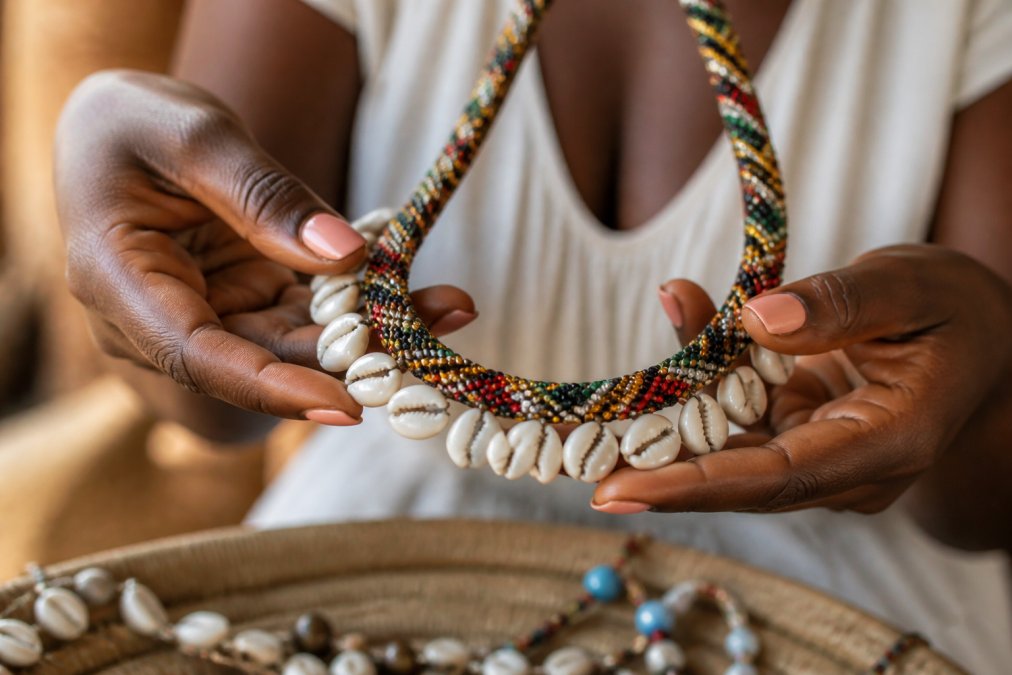
Cowrie shell jewelry symbolizes a complex blend of spiritual protection, fertility, prosperity, and ancestral connection that varies across regions but shares core themes. The shell's shape, resembling an eye or a source of life, has made it a sacred object in many traditions. Scholars note that cowries have appeared in burial sites and religious artifacts across the continent for millennia, indicating their enduring significance as a spiritual talisman Smithsonian National Museum of African Art resources.
Fertility, Femininity, and the Divine Feminine
Across many African cultures, the cowrie shell is a fertility symbol closely linked to femininity and the divine feminine. The shell's opening, which resembles a womb or an eye, connects it to ideas of birth, protection, and continuity. Women have traditionally worn cowrie jewelry during important life stages, including marriage and motherhood, as an amulet believed to promote abundance and safeguard the family line.
Protection, Prosperity, and Spiritual Talismans
Beyond fertility, cowrie shells function as protection amulets meant to ward off negative energy and attract good fortune. In many traditions, the shells are incorporated into jewelry worn by both men and women to invite wealth and prosperity into their lives. The belief is that the shell's sacred nature creates a barrier against harm while drawing positive circumstances toward the wearer.
Spiritual Benefits of Wearing Cowrie Shells
The spiritual benefits of wearing cowrie shells center on grounding the wearer in ancestral power and providing a sense of protection and purpose. Many people who wear cowrie jewelry describe feeling a tangible connection to their lineage, as though the shells carry the prayers and experiences of those who came before. This sense of ancestral presence can offer emotional strength during difficult times.
The shells are also associated with abundance and good fortune. Wearing them is thought to align the individual with the natural flow of prosperity, encouraging success in business, relationships, and personal endeavors. For those seeking a deeper spiritual practice, cowrie shells can serve as a focal point for meditation or intention-setting, reminding the wearer of their roots and their resilience.
Regional Meanings and the Unbroken Thread of Heritage
The meaning of cowrie shell jewelry is not uniform across the continent; it shifts with geography, language, and history. Understanding these regional variations is key to appreciating the depth of the tradition.
West Africa: Royalty, Divination, and the Spirit World
In West Africa, cowries are deeply embedded in spiritual and royal practice. Among the Yoruba people of Nigeria, the shells are sacred to Ọṣun, the deity of rivers, fertility, and love. Devotees wear cowrie-studded regalia during festivals, and the shells are used in Ifá divination, where their patterns of fall are interpreted by a babalawo (priest). In the Kingdom of Dahomey (present-day Benin), cowries adorned the thrones and ceremonial swords of royalty, signifying the king's wealth and divine mandate. The shells also appear on Gelede masks, worn in ceremonies honoring women and ancestors, reinforcing their connection to the feminine and the spiritual.
East Africa: Status, Rites of Passage, and Community Identity
Moving east, the symbolism shifts toward social status and communal milestones. Among the Maasai and Samburu of Kenya, cowrie shells are integrated into elaborate beadwork collars and headpieces worn during coming-of-age ceremonies. The quantity and arrangement of shells indicate a woman's age, marital status, and family's standing. For the Swahili people of the coast, cowries historically served as currency and later became decorative elements in bridal jewelry, symbolizing the bride's value and the family's prosperity. Unlike the overtly spiritual focus in parts of West Africa, East African usage often emphasizes social identity and the continuity of the community through generations.
The Diaspora: Reclamation and Pan-African Identity
In the Americas and Europe, the meaning of cowrie shells has been transformed by the African Diaspora. For descendants of enslaved Africans, the shells serve as a powerful symbol of reconnection to a heritage that was violently severed. In African American and Afro-Caribbean communities, wearing cowrie jewelry is a deliberate act of cultural reclamation, often associated with Pan-Africanism and spiritual traditions like Santería and Candomblé, where the shells remain ritual objects. Here, the cowrie is not just an ornament; it is a statement of identity, resilience, and a visible link to an ancestral homeland that was denied for generations.
The Unbroken Thread
This regional diversity underscores that cowrie shell jewelry is not a monolithic artifact but a living tradition. When you wear a piece, you participate in a practice that has adapted and survived through generations. The shells serve as a tangible link to ancestors, a reminder of where you come from, and a declaration that your heritage remains vibrant and relevant today. The specific meaning may change from the courts of Dahomey to a Maasai village to a Brooklyn street, but the underlying thread of connection remains unbroken.
Fair Trade Artisan Jewelry Benefits for Culture and Community
Choosing fair trade artisan jewelry benefits both the wearer and the communities where the pieces originate. When you purchase directly from artisans or through transparent sourcing, you help ensure that the cultural knowledge required to create these pieces is preserved and valued. Fair wages allow artisans to continue their craft rather than abandoning it for less meaningful work.
The benefits extend beyond the individual artisan. Fair trade practices often fund community essentials, including education and clean water, creating a cycle of positive impact. Prideful Pieces of Africa partners with skilled artisans in East Africa, ensuring each piece is shaped by a single artisan, never a machine. This approach means every cowrie shell necklace is one-of-a-kind, and your purchase directly supports a family in Kenya and contributes to a child's school day. When you buy fair trade, you are not just acquiring jewelry; you are investing in the preservation of culture and the well-being of the people who keep it alive.
How to Wear and Care for Your Cowrie Shell Jewelry
Cowrie shell jewelry pairs well with both casual and formal attire, making it a versatile addition to any wardrobe. For a modern look, try layering a cowrie necklace with simple metal chains or wearing cowrie earrings with a neutral-toned outfit to let the natural texture stand out. The shells also work beautifully as accents on bracelets or woven into belts for a subtle nod to heritage.
| Care Task | How Often | Why It Matters |
|---|---|---|
| Wipe with a soft, dry cloth | After each wear | Removes oils and dirt that dull the shell's luster |
| Avoid prolonged water exposure | Always | Water can weaken the cord and damage the shell surface |
| Store in a cool, dry place | When not wearing | Prevents cracking and discoloration from humidity |
| Keep away from harsh chemicals | Always | Perfume and lotion can erode the shell's natural finish |
Since cowrie shells are organic materials, they require gentle handling. A common mistake is soaking the jewelry to clean it, which can loosen the shell from its setting or fray the threading. Instead, simply wipe the shells and store them properly to ensure they remain an heirloom for years. The durability of cowrie shells is one reason they have survived as trade goods and adornments for so long, and with basic care, your piece will last just as long.
Conclusion: Wearing a Piece of Living History
Cowrie shell jewelry is far more than a fashion accessory; it is a wearable artifact that connects you to centuries of trade, spirituality, resistance, and resilience. Understanding its cultural meaning deepens your appreciation and ensures you honor the traditions it represents. As interest in cultural identity grows among younger generations, these pieces offer a tangible way to express pride and maintain an unbroken thread with the past National Museum of African American History and Culture resources.
When you choose a handcrafted piece from Prideful Pieces of Africa, you receive jewelry that is unique by design and meaningful by nature. Knowing that your purchase supports fair wages, education, and clean water for the families who crafted it adds another layer of significance. We invite you to explore our collection and find a cowrie shell piece that speaks to your story.
Frequently Asked Questions
Why do Africans wear cowrie shells?
Africans wear cowrie shells for their deep cultural and spiritual significance. Historically used as currency along trade routes, the shells became symbols of wealth, status, and prosperity. They are also worn as protective amulets and are strongly associated with fertility, femininity, and connection to ancestral heritage. Wearing cowrie shell jewelry is a way to carry these blessings and express a tangible link to a rich cultural identity.
What is the spiritual meaning of wearing a cowrie shell necklace?
The spiritual benefits of wearing cowrie shells are tied to their symbolism as an ocean gift. They are believed to offer protection against negative energies and evil spirits. The shell's shape, resembling an eye, is thought to provide spiritual sight and ward off the 'evil eye.' They also represent prosperity and abundance, acting as a talisman to attract good fortune and connect the wearer to the divine feminine and ancestral power.
Are cowrie shells associated with witchcraft?
Cowrie shells are not inherently associated with witchcraft. Their meaning is context-dependent. In many African spiritual traditions, they are sacred objects used for divination and communication with ancestors, serving as a spiritual talisman. This practice is a form of religious and cultural expression, not witchcraft. The negative association stems from colonial and biased historical perspectives that misunderstood indigenous African spiritual systems.
What is the historical significance of cowrie shells as currency?
Cowrie shells were one of the world's most widely used forms of currency for thousands of years. Sourced primarily from the Maldives, they traveled vast trade routes across Asia, Africa, and Europe. On the African continent, their monetary value was immense, and they were also tragically used to purchase enslaved people during the Atlantic slave trade. This history makes the shells potent symbols of both immense wealth and profound historical pain.
Wearing cowrie shell jewelry is an act of remembrance and celebration, but finding an authentic piece requires trust. Prideful Pieces of Africa ensures every item is handcrafted by a single East African artisan, with fair wages and transparent sourcing that supports families and communities. Get started with Prideful Pieces of Africa and wear a piece of living history that honors both your heritage and the hands that made it.